The Best Books on Breakups: How to Grieve It and Move On
Heartbreak is real injury — brain imaging shows romantic loss lighting up the same circuitry as physical pain and withdrawal — and yet it comes with no sick leave and a culture that expects you over it by the third week. The good books take the wound seriously and give it a program. Eight, ranked.
The best book on breakups is Guy Winch’s How to Fix a Broken Heart — heartbreak treated as the genuine injury it is, with the science of why it hurts this much. Add Susan Elliott’s Getting Past Your Breakup for the structured recovery program, and Attached to decode the pattern you just left.
- Heartbreak is withdrawal, not weakness Winch’s frame: romantic loss activates the same brain machinery as addiction withdrawal — the craving, the idealizing, the relapse texts. Knowing it’s chemistry strips the shame off the struggle.
- No contact is the treatment, not a punishment Elliott and the recovery shelf converge: every check-in re-doses the addiction. The rule isn’t about the ex — it’s about giving your own nervous system a chance to recalibrate.
- The story you tell decides the recovery Idealizing the ex and gap-filling the ambiguity prolongs the pain; an honest inventory — what was actually there, what you actually lost, what you’d been ignoring — is what closes the case.
This guide is part of our psychology books to understand yourself silo — a breakup is brutal self-knowledge on a deadline: who you were in the relationship, what you abandoned to keep it, and what the grief is actually about.
Why it hurts this much — the science of heartbreak
The imaging is unambiguous: show the newly broken-hearted a photo of the ex and the brain responds like an addict shown the drug — reward circuitry craving a dose that’s gone. Winch’s clinical addition is the list of ways we keep using: checking their feed, replaying the best days, chasing closure conversations that re-open the wound. The mind idealizes what it lost — grief edits the relationship down to its highlight reel — and then mourns the edit rather than the reality.
There’s a second injury underneath: the identity one. Long relationships braid the self into a we, and the breakup tears the braid — which is why the bereft report not knowing who they are, not just missing who they had. Anderson’s abandonment work maps the primitive layer (the panic is old, often older than the relationship), and Fisher’s rebuilding blocks sequence the reconstruction. The recovery isn’t forgetting; it’s a self re-woven on its own loom.
Which book for which heartbreak
Start with Winch’s How to Fix a Broken Heart — short, science-grounded, and precise about the self-inflicted parts: the feed-checking, the idealizing, the closure-chasing. Elliott’s Getting Past Your Breakup is the full program — no contact, grief work, identity rebuilding — written by a grief counselor who’s blunt about the relapse traps. Anderson’s Journey from Abandonment to Healing goes deepest on the panic layer: the five stages of abandonment grief, for the breakup that feels like annihilation.
Attached earns its place as the autopsy tool — anxious-avoidant mechanics explain a remarkable share of doomed relationships, and decoding yours is the best insurance for the next one. Fisher and Alberti’s Rebuilding is the venerable workbook — nineteen blocks from denial to freedom, worn smooth by forty years of divorce groups. Behrendt’s It’s Called a Breakup Because It’s Broken is the tough-love comedy for the relapse-prone, and Priebe and Strayed hold the reflective wing — attachment-literate essays and the letters that read like a wise friend at 2 a.m.
Independently researched and ranked by our editorial team. As an Amazon Associate, this site earns from qualifying purchases made through the links below.
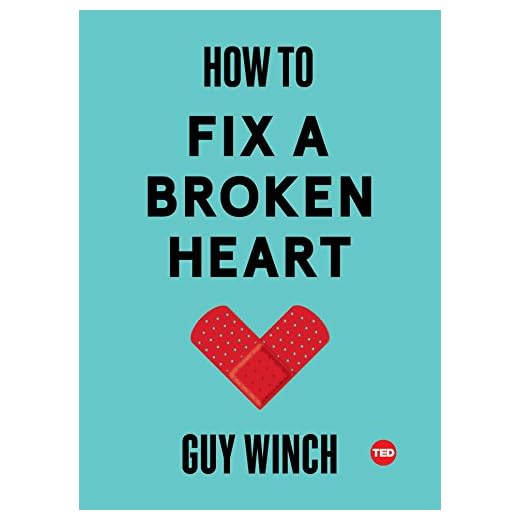


#1: How to Fix a Broken Heart — Best overall
Guy Winch
A psychologist’s short, humane treatment of romantic loss as real injury: why the brain treats it like withdrawal, and the specific habits — feed-checking, idealizing, closure-chasing — that keep the wound open.
- Heartbreak treated as real injury — the withdrawal science strips the shame off
- Names the self-inflicted wounds precisely: feed-checking, idealizing, closure-chasing
- Short enough to finish in the acute phase, when attention is wrecked
- Compassionate without indulging the relapse behaviors
- Brief by design — readers wanting a full program need Elliott next
- Covers pet loss alongside breakups, which not every reader wants
#2: Getting Past Your Breakup — Best program
Susan J. Elliott
A grief counselor’s structured program: the no-contact rule and why it’s non-negotiable, the inventory work that undoes idealizing, and the identity rebuild. The book most often credited with actually getting people through.
- The complete recovery protocol: no contact, grief work, inventory, rebuilding
- Blunt about relapse traps — checking in, staying friends, keeping mementos in reach
- The relationship-inventory work genuinely undoes the idealizing
- Written by a grief counselor who recovered from the devastation she describes
- The no-contact absolutism, though correct, will fight readers who share kids or workplaces
- Exercise-heavy — skimmers get a fraction of the value
#3: The Journey from Abandonment to Healing — Best for devastation
Susan Anderson
The five stages of abandonment grief — shattering, withdrawal, internalizing, rage, lifting — from a therapist who treats the panic as old attachment injury reactivated. For heartbreak that hit something ancient.
- Maps the five stages of abandonment grief with uncanny accuracy — readers feel found
- Takes the panic layer seriously as old attachment injury, not overreaction
- Concrete exercises for the identity rebuild, not just the grief
- The right depth for breakups that triggered something ancient
- The stage framework can read as more universal than grief research supports
- Heavier and slower than the acute phase sometimes tolerates
#4: Attached — Best autopsy tool
Amir Levine & Rachel Heller
Anxious, avoidant, secure — the attachment mechanics that explain a startling share of doomed pairings. Read after the acute phase: it turns a private catastrophe into a legible pattern with an exit.
- Made attachment styles usable for ordinary dating and relationships
- The anxious-avoidant trap described so recognizably it reads like surveillance
- Concrete scripts and checklists, not just typology
- Simplifies the science; styles are more continuous and changeable than the book implies
- Noticeably harsh toward avoidant readers
#5: Rebuilding — The divorce classic
Bruce Fisher & Robert Alberti
Forty years of divorce-recovery groups distilled: denial, grief, anger, self-worth, trust, freedom — a staged climb with exercises, best worked slowly. The steadiest companion for the long version of this loss.
- Nineteen blocks in tested order — forty years of divorce groups behind the sequence
- Covers the full arc: denial through grief, anger, self-worth, trust, sexuality, freedom
- Works as a group text or solo workbook
- Especially strong for long marriages where identity fully merged
- Dated language and examples survive every revision
- The staged model implies a tidiness real grief ignores
#6: It's Called a Breakup Because It's Broken — Best tough love
Greg Behrendt & Amiira Ruotola-Behrendt
The Superfun Breakup Handbook: no contact enforced with jokes, a breakup buddy, and zero patience for ‘maybe we’ll get back together.’ Shallow on grief, unmatched on the first sixty days.
- Tough love that actually lands — no contact enforced with jokes instead of lectures
- The ‘he’s not coming back’ realism the relapse-prone need on repeat
- Breakup-buddy system and sixty-day structure give the acute phase a container
- Fast, funny, and finishable at 2 a.m.
- Shallow on grief — this is triage, not treatment
- The jokey register misfires for devastated readers
2 more titles round out our list, all shown in the quick picks above: This Is Me Letting You Go by Heidi Priebe (2016) — attachment-literate reflection when the ache needs language; Tiny Beautiful Things by Cheryl Strayed (2012) — the 2 a.m. letters — grief, love, and getting up anyway.
How the top picks compare
|
Best overall
How to Fix a Broken Heart
|
Best program
Getting Past Your Breakup
|
Best for devastation
The Journey from Abandonment to Healing
|
Best autopsy tool
Attached
|
The divorce classic
Rebuilding
|
|
|---|---|---|---|---|---|
|
|
|
|
|
|
|
| Our rating | 9.0 /10 | 8.9 /10 | 8.7 /10 | 9.1 /10 | 8.5 /10 |
| Format | Psychology | Self-help / recovery | Psychology / recovery | Popular psychology | Self-help / divorce |
| First published | 2018 | 2009 | 2000 | 2010 | 1981 |
| Price | $11.48 | $10.29 | $25.00 | $9.01 | $23.48 |
| BUY NOW | BUY NOW | BUY NOW | BUY NOW | BUY NOW |
How to choose a breakup book
-
How raw you areWeek one and month six need different books.Look forWinch or Behrendt for the acute phase; Attached and the identity work once you can think about patterns without spiraling.AvoidDoing the relationship autopsy while still in withdrawal — analysis becomes another way to keep touching the wound.
-
Grief-shaped or panic-shapedOrdinary loss and abandonment terror run on different circuits.Look forElliott's program for grief that needs structure; Anderson when the breakup triggered something old and bottomless.AvoidShaming yourself for the intensity — the panic layer is attachment biology, not proof you loved harder than a sane person.
-
Program or companySome readers need steps; others need a voice in the room.Look forElliott and Fisher for staged work with exercises; Strayed and Priebe when what you need at 2 a.m. is company, not homework.AvoidUsing beautiful essays as a substitute for the unglamorous parts — no contact, sleep, and the inventory still do the healing.
How we chose these books
-
Firsthand reading
Rankings start from our editors’ full reads of every title on the list — including the slow middles and the failed first attempts — not from publisher copy.
-
Reader-review analysis
We mined verified-purchase reviews, Goodreads consensus, and Reddit reading threads for recurring, specific complaints: print size, abridgments, translation quality, abandonment points.
-
Edition comparison
Where multiple translations or editions exist, we compared them and linked the printing most readers should actually buy — and flagged the known trade-offs.
Which breakup book should I read first?
How to Fix a Broken Heart — it’s short, it explains why you feel insane (you’re in withdrawal, not weak), and it names the habits keeping the wound open. Then Elliott’s Getting Past Your Breakup when you’re ready for the full program.
Does the no-contact rule really matter?
It’s the closest thing the field has to consensus. Every contact re-doses an addicted reward system and resets the clock. No contact isn’t cruelty or games — it’s the condition under which your nervous system can actually recalibrate. Elliott and Behrendt both build their programs on it.
How long does it take to get over a breakup?
There’s no honest formula — the pop-culture ‘half the relationship’s length’ has no evidence behind it. Recovery tracks with attachment style, the loss’s meaning, and what you do: no contact, real grief work, and rebuilding predict faster healing than time alone.
Should I stay friends with my ex?
Not during recovery. Friendship keeps the attachment system partially fed — enough contact to prevent healing, not enough to satisfy. The books’ consensus: full withdrawal first; genuine friendship, if it’s ever real, only becomes possible after the craving dies.
Bottom line
Winch for the science of the wound, Elliott for the program, Anderson for the panic layer, Attached for the autopsy. It’s withdrawal, not weakness — no contact, grieve the reality rather than the highlight reel, and rebuild on your own loom.