The Best Books on Midlife Crisis: The Second Half, Faced on Purpose
The midlife crisis is mortality's first serious visit — the point where the road behind is long enough to audit and the road ahead is visibly finite. The data says distress at this age is real but usually not a crisis; the literature says the unrest is information. Either way, the questions are Yalom's givens wearing a station wagon: death, freedom, meaning, and the lives you didn't live. Eight books, ranked.
The best book on midlife crisis is Kieran Setiya’s Midlife: A Philosophical Guide — an actual philosopher applying actual philosophy to regret, missed lives, and the sense that everything is projects. Add Hollis’s The Middle Passage for the Jungian depth reading, and Yalom’s Staring at the Sun for the mortality underneath it all.
- The U-curve is real, modest, and temporary Life-satisfaction data across dozens of countries dips in the forties and recovers strongly after — Rauch’s happiness curve. Knowing the trough is normal, unearned, and self-resolving changes how you sit in it.
- The first-half self was built for a different job Hollis’s Jungian reading: the personality assembled in youth — pleasing parents, winning careers — is a provisional structure, and midlife distress is the deeper self presenting its invoice. The task isn’t repair; it’s succession.
- Regret responds to philosophy better than to sports cars Setiya’s contribution: the ache of unlived lives is structural — every choice forecloses others — and there are actual philosophical moves (valuing the particular over the optimal, atelic activity over projects) that treat it at the root.
This guide is part of our psychology books to understand yourself silo — midlife is when the provisional self built for other people’s approval comes up for review, which makes it less a crisis than the most clarifying appointment on the calendar.
What's actually happening at midlife
Start with the data, which is calmer than the folklore. The U-curve — life satisfaction declining through the thirties, bottoming in the mid-forties, then rising into some of life’s happiest decades — shows up across countries and income levels, and Rauch’s careful account stresses how undramatic it usually is: not affairs and convertibles but a diffuse, guilty disappointment that feels illegitimate given objectively fine circumstances. The classic crisis is the exception; the trough is closer to a developmental season with a documented far side.
The depth psychologists read the season’s content. Hollis’s Jungian account: the first adulthood runs on a provisional personality — assembled from parental expectation and cultural script — and at midlife the psyche withdraws its cooperation, presenting symptoms (deadness, restlessness, inexplicable griefs) that are actually summonses. Beneath both readings sits the existential floor Yalom names outright: the arithmetic of remaining time has become impossible to ignore, and death anxiety — however disguised as career panic or marital claustrophobia — is the engine room of the whole passage.
Which book for which season
Setiya’s Midlife is the best single book: philosophy applied like medicine to the actual complaints — regret over roads not taken (his treatment of loving the particular life you have over the optimal one you didn’t is worth the cover price), the emptiness of endless projects, and the atelic remedy: activities complete in every moment, done for themselves. Hollis’s Middle Passage is the depth reading — demanding, unconsoling, and the book most likely to reframe the whole decade. Yalom’s Staring at the Sun addresses the engine directly: death anxiety, and the rippling, connection, and awakening that answer it.
The rest serve specific needs. Rauch’s Happiness Curve is the data-driven consolation — the trough is normal and it ends — ideal for readers who feel ungrateful for their own unhappiness. Brooks’s From Strength to Strength is for the achievement-addicted: the decline of fluid intelligence is real, and the pivot to crystallized strengths — teaching, synthesis, wisdom — is the actual second-half career move. Rohr’s Falling Upward gives the passage a spiritual grammar — the necessary fall the first half can’t plan for — and Sheehy’s Passages remains the vivid 1976 map that named the terrain, while Hollis’s Finding Meaning extends the work into the decades after.
Independently researched and ranked by our editorial team. As an Amazon Associate, this site earns from qualifying purchases made through the links below.


#1: Midlife: A Philosophical Guide — Best overall
Kieran Setiya
An MIT philosopher on regret, missed lives, mortality, and the project treadmill — with real arguments, not affirmations. The atelic chapter alone reorganizes how you spend a Tuesday.
- Actual philosophy applied to actual complaints — regret, missed lives, the project treadmill
- The atelic/telic distinction is the book’s gift: activities complete in every moment
- Treats regret at the root — loving the particular life over the optimal one
- Short, witty, and honest about the author’s own crisis
- Philosophical argument is the method — readers wanting warmth should add Rauch
- Light on the marriage, career, and body particulars other books cover
#2: The Middle Passage — The depth reading
James Hollis
Hollis’s Jungian classic: midlife misery as the summons from a deeper self the first adulthood was built to ignore. Demanding, unconsoling, and the book readers cite decades later.
- The provisional-personality frame explains distress that circumstance can’t
- Unconsoling in the useful way — it takes the summons seriously
- Jungian depth without jargon walls; Hollis writes clean, hard sentences
- The book readers report reorganized their entire reading of their own lives
- No program, no steps — insight is the only offer
- The Jungian frame (shadow, Self, soul) asks buy-in some readers won’t extend
#3: Falling Upward — The spiritual grammar
Richard Rohr
Rohr’s two-halves-of-life frame: the first builds the container — identity, career, ego — and the second discovers what it’s for, usually via a fall the container can’t prevent. The spiritual companion to Hollis.
- The two-halves frame — building the container, then discovering its contents — travels far
- Generous, non-dogmatic spirituality that welcomes doubters
- Strong on necessary suffering — why the fall can’t be planned or skipped
- Short enough for the season it addresses
- Repetitive — the one idea circles rather than develops
- Readers allergic to religious language will translate constantly
#4: Staring at the Sun — The engine room
Irvin D. Yalom
Yalom on mortality’s awakening experiences — and midlife is a scheduled one. Rippling, connection, and the examined life as the honest answers to the arithmetic everyone starts doing at fifty.
- Yalom’s most personal statement on death anxiety — written in his mid-70s with his own mortality in the room
- The rippling concept — our influence persisting through others — is the book’s genuine consolation
- Full of usable clinical material: awakening experiences, the epicurean arguments, dream work
- Short and direct compared to the magnum opus — the accessible door to the death material
- Repeats case material from earlier books — longtime readers will recognize passages
- The philosophical consolations can feel thin against the terror the book honestly raises
- Less structured than his other nonfiction; it circles rather than builds
#5: The Happiness Curve — The data consolation
Jonathan Rauch
Rauch assembles the international evidence for the midlife dip and its strong recovery, plus the reframe that changes the trough: it’s developmental, not diagnostic, and gratitude problems aren’t character problems.
- The U-curve evidence assembled carefully across countries and decades
- The reframe works: the trough is developmental, not diagnostic
- Excellent on the gratitude trap — feeling bad about feeling bad
- Practical counsel: normalize, don’t catastrophize, wait actively, stay connected
- Data averages flatten individual variation — your forties may not comply
- Thin on what to do beyond reframing and patience
#6: From Strength to Strength — Best for achievers
Arthur C. Brooks
Brooks faces the decline of first-curve powers honestly and maps the jump to the second: teaching, synthesis, relationships, and subtraction. The strivers’ manual for not dying on the first mountain.
- Faces fluid-intelligence decline honestly instead of denying it
- The second-curve pivot — synthesis, teaching, wisdom — is a real career strategy
- Strong on subtraction: pruning the striver’s life back to what carries meaning
- Blends research, faith traditions, and his own downshift credibly
- Aimed squarely at high achievers; ordinary-career readers will translate
- The spiritual turn in late chapters outpaces some readers’ appetite
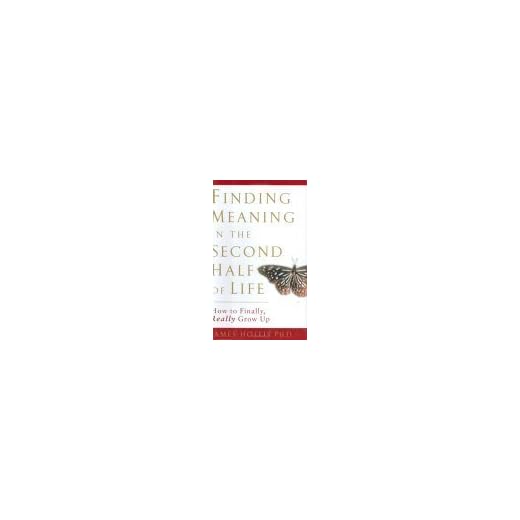
2 more titles round out our list, all shown in the quick picks above: Passages by Gail Sheehy (1976) — the 1976 book that named the terrain; Finding Meaning in the Second Half of Life by James Hollis (2005) — Hollis’s fuller program for the decades after the passage.
How the top picks compare
|
Best overall
Midlife: A Philosophical Guide
|
The depth reading
The Middle Passage
|
The spiritual grammar
Falling Upward
|
The engine room
Staring at the Sun
|
The data consolation
The Happiness Curve
|
|
|---|---|---|---|---|---|
|
|
|
|
|
|
|
| Our rating | 9.1 /10 | 9.0 /10 | 8.5 /10 | 9.2 /10 | 8.4 /10 |
| Format | Philosophy / self-help | Jungian psychology | Spirituality | Existential psychology | Social science |
| First published | 2017 | 1993 | 2011 | 2008 | 2018 |
| Price | $10.99 | $21.58 | $14.60 | $17.54 | $10.70 |
| BUY NOW | BUY NOW | BUY NOW | BUY NOW | BUY NOW |
How to choose a midlife book
-
Consolation, philosophy, or depth workThe shelf treats the same season at three depths.Look forRauch if you need the trough normalized; Setiya for the regret and meaning arguments; Hollis when you're ready for the full excavation.AvoidTaking the U-curve as the whole story — the data says you'll feel better; it doesn't answer what the unrest was trying to tell you.
-
Whether achievement is the woundFor strivers, midlife is often specifically a first-curve crisis.Look forBrooks on the fluid-to-crystallized pivot, and Setiya's atelic activities — the antidote to a life that's all finish lines.AvoidDoubling down on the first curve — more velocity is the striver's favorite way to postpone the question the decade is asking.
-
Appetite for the mortality questionDeath arithmetic is the engine; books differ in how directly they face it.Look forYalom if you're willing to look straight at it — the anxiety decreases with exposure, and the examined finitude clarifies everything else.AvoidA whole midlife program that never mentions death — the renovations tend not to hold when the foundation goes uninspected.
How we chose these books
-
Firsthand reading
Rankings start from our editors’ full reads of every title on the list — including the slow middles and the failed first attempts — not from publisher copy.
-
Reader-review analysis
We mined verified-purchase reviews, Goodreads consensus, and Reddit reading threads for recurring, specific complaints: print size, abridgments, translation quality, abandonment points.
-
Edition comparison
Where multiple translations or editions exist, we compared them and linked the printing most readers should actually buy — and flagged the known trade-offs.
Which midlife book should I read first?
Setiya’s Midlife for the thinking reader, Rauch’s Happiness Curve if you mostly need to know the trough is normal, Hollis’s Middle Passage if the distress feels deeper than circumstance. Yalom’s Staring at the Sun belongs in every version of the sequence.
Is the midlife crisis even real?
The dramatic version is mostly myth — only a minority have a classic crisis. The dip is real: life satisfaction reliably bottoms in the mid-forties across countries before rising again. So: real season, wrong name. Distress without drama is the common form, and it usually resolves — ideally with something learned.
Why do I feel unhappy when my life is objectively fine?
That’s the signature of the trough — Rauch calls it the gratitude trap, and the U-curve research suggests expectation recalibration, not hidden failure, drives it. The depth psychologists add: ‘objectively fine’ measures the first-adulthood checklist, and the discontent may be the part of you that checklist never consulted.
Is a midlife crisis really about death?
Usually, underneath — Yalom’s claim, and the existential literature’s: at midlife the arithmetic flips from time-since-birth to time-until-death, and the anxiety migrates into career panic, marital restlessness, or the body’s mirror. Facing the mortality directly — which the research says reduces rather than feeds the anxiety — tends to shrink the proxy battles to their real size.
Bottom line
Setiya for the philosophy, Hollis for the depth reading, Rauch for the data’s consolation, Yalom for the mortality underneath. The trough is normal and it ends — the question is whether you leave it with the same provisional self you brought in.