The Best Books on Self-Esteem: What Actually Builds It (and What Doesn’t)
Self-esteem books divide into two eras: the classic project of raising it, and the modern correction that says chasing the feeling is the trap — act first, and confidence follows. The honest shelf needs both, plus the books on where low self-worth comes from. Eight picks, ranked.
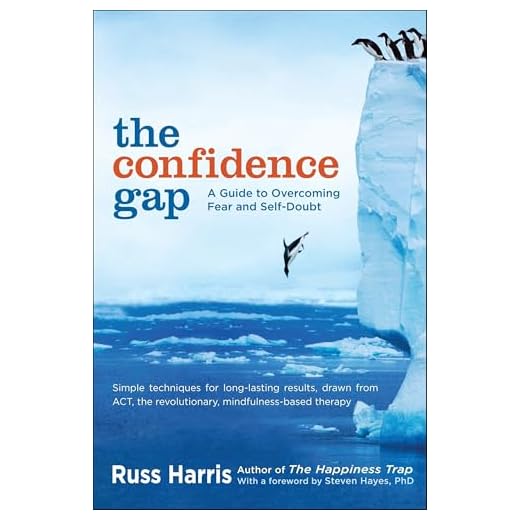
The best book on self-esteem is Nathaniel Branden’s The Six Pillars of Self-Esteem — still the deepest account of what self-esteem is and the practices that generate it. Pair it with Russ Harris’s The Confidence Gap for the modern ACT correction, and Schiraldi’s workbook if you want structured exercises.
- Self-esteem is a practice, not a verdict Branden’s six pillars — living consciously, self-acceptance, responsibility, assertiveness, purpose, integrity — locate worth in how you operate, not how you compare.
- The modern correction: action before confidence ACT-based books like The Confidence Gap invert the old order — you don’t wait to feel confident to act; acting while afraid is what confidence is made of.
- Low self-worth usually has a history Gibson’s work on emotionally immature parents explains why the inner critic sounds like someone specific — sometimes the roots need addressing before the exercises hold.
This guide is part of our psychology books to understand yourself silo — self-esteem is where self-knowledge either becomes self-acceptance or curdles into the inner prosecutor these books exist to retire.
Two eras of self-esteem — and why the new one corrects the old
Nathaniel Branden built the classic case: self-esteem is “the reputation you acquire with yourself,” earned through six practices — living consciously, self-acceptance, self-responsibility, self-assertiveness, living purposefully, and personal integrity. The strength of Six Pillars is that none of the six is a feeling; all are operations you can run on a bad day. Its era’s weakness was inflation: the 1990s self-esteem movement promised that feeling good about yourself would fix everything, and the research never cooperated.
The modern correction came from two directions. Acceptance and commitment therapy, in books like The Confidence Gap, argues the pursuit of the feeling is itself the trap — confidence is a byproduct of valued action taken while afraid, so the work is defusing from the critic’s chatter, not winning the argument with it. And the self-compassion research showed contingent self-esteem — worth that needs success and comparison — is fragile precisely when needed most. The best current reading treats Branden’s pillars as behavior, Harris as the engine, and drops the verdict-keeping entirely.
Roots, workbooks, and the honest sequence
For many readers the critic has a biography. Lindsay Gibson’s Adult Children of Emotionally Immature Parents explains, without melodrama, how growing up around emotional unavailability installs the conviction that your needs are excessive and your worth conditional — and what the adult repair looks like. Brené Brown’s The Gifts of Imperfection works the adjacent seam of shame and perfectionism. If the exercises in the workbooks keep sliding off, one of these two is usually the missing first book.
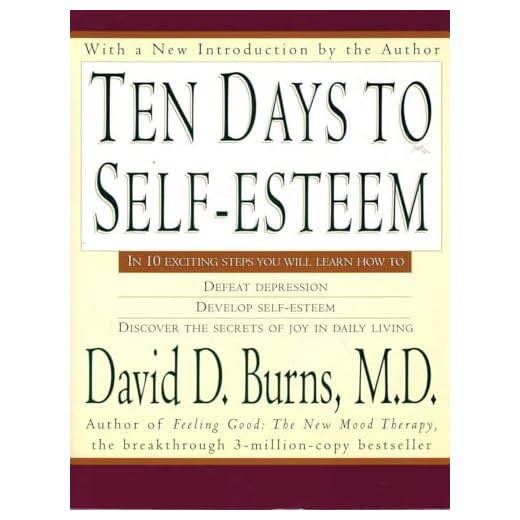
Then the structured work: Schiraldi’s Self-Esteem Workbook is the standard course — unconditional worth, realistic thinking, then growth — and Burns’s Ten Days to Self-Esteem delivers the CBT version with his usual worksheets and a title nobody should take literally. The vintage shelf still moves copies: Psycho-Cybernetics holds up as the original self-image book if you read past its 1960 salesmanship, and The Mountain Is You repackages the self-sabotage conversation for readers who want it in this decade’s voice. Rank them below the moderns; read them if their voice is the one you’ll actually finish.
Independently researched and ranked by our editorial team. As an Amazon Associate, this site earns from qualifying purchases made through the links below.



#1: The Six Pillars of Self-Esteem — Best overall
Nathaniel Branden
The classic: self-esteem as the reputation you acquire with yourself, built through six daily practices rather than affirmations. Still the book everything else on this list argues with.
- The deepest account of what self-esteem actually is — a practice, not a verdict
- Six pillars are operations you can run on a bad day, not feelings to summon
- Sentence-completion exercises remain surprisingly powerful
- Predates and survives the self-esteem movement’s collapse
- Long-winded — the core fits in half the pages
- Occasional 1990s corporate-seminar flavor
#2: The Confidence Gap — Best modern take
Russ Harris
Harris dismantles the wait-until-you-feel-confident trap: defuse from the critic, clarify values, act while afraid. The most useful single reframe in the genre.
- The single most useful reframe in the genre: act first, confidence follows
- ACT defusion techniques — unhooking from the critic rather than debating it
- Kills the wait-until-ready trap explicitly and repeatedly
- Repetitive by design; the idea is one chapter, the book is many
- ACT jargon (‘fusion,’ ‘workability’) takes adjusting to
#3: Adult Children of Emotionally Immature Parents — Best on the roots
Lindsay C. Gibson
Gibson’s calm, precise account of how emotionally immature parenting installs conditional worth — and how the adult repair works. For many readers, the real first book.
- Explains where the inner critic learned its lines — calmly, without parent-bashing
- The typology of emotionally immature parents is instantly recognizable
- Practical: detachment with love, realistic expectations, self-directed repair
- Readers with adequate parenting will find it aimed past them
- Light on formal research citation for its claims
#4: The Self-Esteem Workbook — Best workbook
Glenn R. Schiraldi
The standard structured program — grounding worth unconditionally before building skills, with research-based exercises in a sane order. Second edition is the one to buy.
- Sane sequence: unconditional worth first, skills second, growth third
- Research-grounded exercises without hype
- Second edition updated with newer findings on the worth-versus-performance split
- Dry — motivation must come from you
- Some exercises feel dated next to the ACT material
#5: The Gifts of Imperfection — Best on shame
Brené Brown
Brown’s ten guideposts for wholehearted living — the book for readers whose self-esteem problem is really a shame problem wearing a disguise.
- The tightest and most practical of her books — ten guideposts, 130 pages
- Wholehearted living operationalized into daily practices
- The best single gift-book in her catalog
- Aphoristic; readers wanting the research go to Daring Greatly
- The guidepost format can feel like ten small sermons
#6: The Mountain Is You — Best on self-sabotage
Brianna Wiest
Self-sabotage as unmet needs in disguise — Wiest’s essayistic take carries less research than the clinical books but reaches readers the workbooks bounce off.
- Self-sabotage reframed as unmet needs in disguise — a genuinely useful lens
- This decade’s voice; reaches readers clinical books bounce off
- Short essays suit fragmented attention
- Essayistic, not evidence-based — quotable over rigorous
- Repetition across chapters
2 more titles round out our list, all shown in the quick picks above: Psycho-Cybernetics by Maxwell Maltz (1960) — the original self-image argument, 1960 salesmanship included; Ten Days to Self-Esteem by David D. Burns (1993) — Burns’s worksheets aimed straight at self-worth.
How the top picks compare
|
Best overall
The Six Pillars of Self-Esteem
|
Best modern take
The Confidence Gap
|
Best on the roots
Adult Children of Emotionally Immature Parents
|
Best workbook
The Self-Esteem Workbook
|
Best on shame
The Gifts of Imperfection
|
|
|---|---|---|---|---|---|
|
|
|
|
|
|
|
| Our rating | 9.0 /10 | 8.8 /10 | 8.9 /10 | 8.6 /10 | 8.8 /10 |
| Format | Psychology | Psychology / ACT | Psychology | Workbook | Self-help |
| First published | 1994 | 2011 | 2015 | 2016 | 2010 |
| Price | $11.86 | $15.80 | $10.21 | $19.00 | $9.98 |
| BUY NOW | BUY NOW | BUY NOW | BUY NOW | BUY NOW |
How to choose a self-esteem book
-
Verdict or practiceBooks that raise the feeling age worse than books that change the operations.Look forBranden's pillars and Harris's ACT moves — both give you things to do that don't require feeling worthy first.AvoidAffirmation-heavy books — for low self-esteem readers, research finds positive self-statements can backfire.
-
Whether the roots need addressing firstExercises slide off when the critic has a biography the book ignores.Look forGibson if your inner critic sounds like a specific parent; Brown if it prosecutes imperfection everywhere.AvoidGrinding a workbook for months while the family-of-origin material stays untouched.
-
Structure appetiteThe shelf runs from philosophy to daily worksheets.Look forSchiraldi or Burns if you want assignments; Branden or Wiest if you want understanding that seeps into behavior.AvoidBuying the workbook you know you won't write in — an underlined trade paperback beats a blank program.
How we chose these books
-
Firsthand reading
Rankings start from our editors’ full reads of every title on the list — including the slow middles and the failed first attempts — not from publisher copy.
-
Reader-review analysis
We mined verified-purchase reviews, Goodreads consensus, and Reddit reading threads for recurring, specific complaints: print size, abridgments, translation quality, abandonment points.
-
Edition comparison
Where multiple translations or editions exist, we compared them and linked the printing most readers should actually buy — and flagged the known trade-offs.
Which self-esteem book should I read first?
The Six Pillars of Self-Esteem for the fullest understanding, or The Confidence Gap if you want the modern, action-first approach. If your self-criticism traces to a difficult upbringing, start with Gibson’s Adult Children of Emotionally Immature Parents instead — roots before exercises.
Do affirmations work for self-esteem?
For people who already feel decent about themselves, mildly. For low self-esteem, studies have found repeating positive self-statements can actually worsen mood — the gap between claim and belief becomes fresh evidence. That’s why the better books teach practices and actions, not phrases.
Is self-esteem even the right goal? I keep hearing about self-compassion.
The research increasingly favors self-compassion — worth without verdicts or comparison — over the older project of raising self-esteem. In practice the good self-esteem books already made the move: Branden’s pillars are practices, Harris explicitly abandons feeling-chasing. Our self-compassion guide covers the other shelf.
How is low self-esteem different from depression?
They overlap but differ: low self-esteem is a stable negative appraisal of your worth; depression is an episodic illness with mood, sleep, appetite, and energy symptoms — worthlessness among them. Persistent low mood deserves proper assessment, not just a workbook; our depression books guide covers that shelf and when to seek help.
Bottom line
Branden for the deep account, Harris for the act-first correction, Gibson if the critic has a biography, Schiraldi for structure. Skip the affirmations; self-esteem is a reputation you build with practices, not a feeling you talk yourself into.