The Best Couples Therapy Books: 9 Picks That Actually Work
Couples books divide into three schools: Gottman measures, Johnson attaches, Perel provokes. The good news is they're complementary — friendship, bond, and desire are three different systems. Here are the nine books worth a couple's shelf, ranked, with each one's blind spot named.
The best couples therapy book is John Gottman’s The Seven Principles for Making Marriage Work — forty years of observational research turned into exercises couples can run at the kitchen table. Sue Johnson’s Hold Me Tight is its equal for emotional repair, and Esther Perel’s Mating in Captivity owns the desire question.
- Three schools, three jobs Gottman repairs the friendship, Johnson repairs the bond, Perel revives desire — diagnose which system is failing before you buy.
- Research beats vibes Gottman’s claims come from four decades of observing real couples; Johnson’s EFT has the strongest therapy outcome data — start with the tested ones.
- Books work when both partners do A couples book read by one partner is a diary; the exercises assume two people at the table.
This guide is part of our psychology books to understand yourself silo — because the self you most need to understand usually shows up in your closest relationship.
The three schools of couples work, mapped
The Gottman school is empirical: decades of couples observed in the “Love Lab,” distilled into predictors — the Four Horsemen of criticism, contempt, defensiveness, and stonewalling — and counter-moves like repair attempts and love maps. Its strength is diagnosis and drills; its limit is that knowing the research rarely melts a frozen emotional bond on its own.
That bond is Sue Johnson’s territory. Emotionally Focused Therapy treats a distressed couple as two people caught in a protest-withdraw loop around the question are you there for me? — attachment theory applied to adults, with the best outcome data in the field. And desire is Esther Perel’s: her argument that intimacy and eroticism run on opposite fuels — closeness versus distance, safety versus mystery — explains the sexless good marriage better than either other school.
Which book, for which couple
For a solid relationship that has gone scratchy, start with The Seven Principles and do the exercises — they are concrete, slightly corny, and effective. For a couple stuck in the same escalating fight or the same cold silence, Hold Me Tight goes deeper, and Terrence Real’s Us is the blunt modern alternative when one partner’s grandiosity or contempt is the presenting problem.
For desire that faded while everything else stayed good, Perel’s Mating in Captivity — and after infidelity, her The State of Affairs is the least moralizing, most useful book in print. Getting the Love You Want suits couples drawn to depth work on childhood patterns; Eight Dates is the lightest-lift option: six structured conversations disguised as date nights. If it’s reached crisis, none of these replaces an actual couples therapist — they make the therapy faster.
Independently researched and ranked by our editorial team. As an Amazon Associate, this site earns from qualifying purchases made through the links below.




#1: The Seven Principles for Making Marriage Work — Best overall
John Gottman & Nan Silver
Four decades of observational research turned into a workbook — love maps, repair attempts, the Four Horsemen. The most evidence-grounded couples book ever written.
- Built on Gottman’s observational research — thousands of couples, decades of follow-up
- The Four Horsemen framework predicts divorce with unnerving accuracy
- Exercises are concrete and immediately usable
- The lab-prediction claims are stronger in marketing than in the underlying studies
- Workbook tone; romance-averse readers may find it clinical
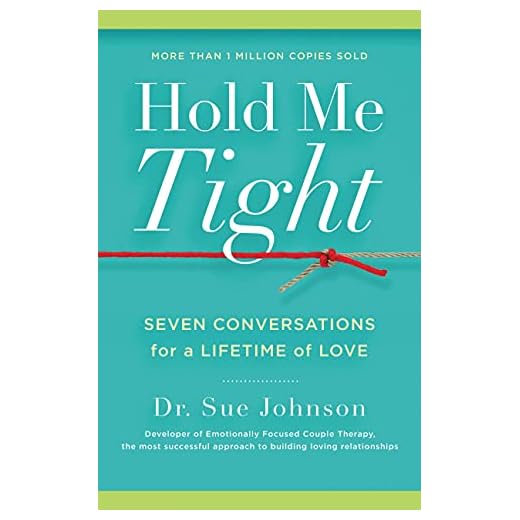
#2: Hold Me Tight — Best for emotional repair
Sue Johnson
Seven conversations built on attachment science — the demon dialogues named, the raw spots found, the bond rebuilt. EFT has the strongest outcome data in couples therapy.
- Written by the founder of EFT — the couples therapy with the strongest outcome research
- The ‘demon dialogues’ give couples a shared language for their worst loops
- Seven structured conversations you can actually do at home
- Repetitive across the middle conversations
- Assumes both partners are willing — the stuck-partner problem is unaddressed
#3: Us — Best modern voice
- Real’s ‘adaptive child versus wise adult’ frame lands instantly in arguments
- Unusually honest about power, patriarchy, and who does the emotional labor
- Strong on moving from me-versus-you to us-versus-the-problem
- Anecdote-heavy relative to the Gottman or Johnson books
- Real’s confrontational style divides readers
#4: Getting the Love You Want — Best depth approach
Harville Hendrix & Helen LaKelly Hunt
The Imago classic: we marry our unfinished business, and the marriage is where it either heals or repeats. Dated in places, still the standard for depth-oriented couples work.
- The Imago insight — we marry our unfinished business — reframes recurring fights
- The structured dialogue technique is genuinely de-escalating
- Decades of couples workshops behind the exercises
- The psychoanalytic machinery is speculative — evidence is thinner than for EFT or Gottman
- New Age register in places
#5: Mating in Captivity — Best on desire
Esther Perel
Perel’s landmark argument: love wants closeness, desire wants distance, and merging kills the spark it meant to protect. The most intellectually alive book in the genre.
- The essential book on desire in long-term relationships — nobody else touches the subject this well
- Perel’s paradox — love needs closeness, desire needs distance — reorganizes how couples think
- Elegant prose; a genuine pleasure to read
- Diagnosis, mostly — prescriptions are deliberately few
- Some couples need the safety-building books first
#6: The State of Affairs — Best after infidelity
Esther Perel
Perel treats infidelity as something to understand before judging — why people who love their partners stray, and how couples survive it. The least moralizing, most useful book on the subject.
- The only major book that treats infidelity with curiosity instead of only condemnation
- Useful to betrayed, betrayer, and therapist alike
- Reframes affairs as information about the marriage without excusing them
- Its sympathy for complexity can read as moral fence-sitting
- Less practical structure than her audience often wants
#7: Eight Dates — Lightest lift
John Gottman, Julie Schwartz Gottman, Doug Abrams & Rachel Carlton Abrams
Eight structured conversations — trust, sex, money, dreams — packaged as date nights. Gottman research in its most doable form; a fine first couples book.
- The lightest-lift format in couples books — eight guided conversations over eight dates
- Gottman-derived questions that reliably go deeper than couples expect
- Works for strong couples as maintenance, not just repair
- Slight by design — serious distress needs the fuller books
- Some dates land as scripted for conversation-averse partners
2 more titles round out our list, all shown in the quick picks above: Wired for Love by Stan Tatkin (2012) — couples who like a brain-based frame; Come As You Are by Emily Nagoski (2021) — understanding desire differences without blame.
How the top picks compare
|
Best overall
The Seven Principles for Making Marriage Work
|
Best for emotional repair
Hold Me Tight
|
Best depth approach
Getting the Love You Want
|
Best on desire
Mating in Captivity
|
|
|---|---|---|---|---|
|
|
|
|
|
|
| Our rating | 9.3 /10 | 9.1 /10 | 8.8 /10 | 8.7 /10 |
| Format | Couples / research-based | Couples / attachment | Couples | Couples / psychodynamic |
| First published | 2015 | 2008 | 2022 | 2019 |
| Price | $10.08 | $14.06 | $10.58 | $20.99 |
| BUY NOW | BUY NOW | BUY NOW | BUY NOW |
How to choose a couples book
-
Which system is failingFriendship, emotional bond, and desire fail differently.Look forGottman for friendship and conflict, Johnson for the bond, Perel for desire — match the book to the actual complaint.AvoidBuying a desire book for an attachment problem, or drills for a couple that needs repair first.
-
Evidence behind the methodCouples advice ranges from lab data to charisma.Look forGottman's observational research and Johnson's EFT outcome trials — the two best-tested approaches in the field.AvoidBooks built on one therapist's anecdotes with no research lineage at all.
-
Will both partners engageEvery exercise in these books assumes two participants.Look forA format your actual partner will tolerate — Eight Dates converts readers who'd never finish a 300-page book.AvoidAssigning your partner a book as an argument move — it reads as criticism, the first Horseman.
How we chose these books
-
Firsthand reading
Rankings start from our editors’ full reads of every title on the list — including the slow middles and the failed first attempts — not from publisher copy.
-
Reader-review analysis
We mined verified-purchase reviews, Goodreads consensus, and Reddit reading threads for recurring, specific complaints: print size, abridgments, translation quality, abandonment points.
-
Edition comparison
Where multiple translations or editions exist, we compared them and linked the printing most readers should actually buy — and flagged the known trade-offs.
What is the best couples therapy book?
Gottman’s The Seven Principles for Making Marriage Work — no other couples book rests on comparable research. If your problem is less about habits and more about a frozen or explosive emotional bond, Sue Johnson’s Hold Me Tight is the better starting point.
Gottman or Sue Johnson — which should we read?
Different jobs. Gottman gives you diagnostics and drills for friendship and conflict; Johnson rebuilds the underlying attachment bond. Rough guide: recurring fights about logistics and resentment, start Gottman; the same desperate fight or a growing cold distance, start Johnson.
Can a book replace couples therapy?
No — and the honest books say so. What a book can do is make problems legible earlier, give you shared vocabulary, and make therapy faster if you go. For entrenched distress, an EFT or Gottman-trained therapist plus the matching book beats either alone.
Which book helps after an affair?
Esther Perel’s The State of Affairs, without much competition — it’s the rare book that helps couples understand what happened before deciding what’s next, and it works whether you ultimately stay or leave. Pair it with Hold Me Tight if you choose to rebuild.
Bottom line
Gottman for the friendship, Johnson for the bond, Perel for the desire — diagnose first, then buy. Do the exercises with both partners at the table, and let the book make the therapy faster, not replace it.