The Best EMDR Books: For Clients, Skeptics, and Clinicians
EMDR began with a walk in the park in 1987 — Francine Shapiro noticing her distress fade as her eyes tracked — and grew into one of the most validated trauma treatments in the guidelines, still trailing an aura of strangeness it has mostly outlived. The books split cleanly: for clients, for skeptics, for clinicians. Eight, ranked.
The best EMDR book for most readers is Francine Shapiro’s Getting Past Your Past — the founder’s own self-help translation of the model. Clinicians start with her Basic Principles textbook; Every Memory Deserves Respect is the accessible middle path explaining why the method works on trauma.
- The past stays present until it's reprocessed Shapiro’s adaptive information processing model: trauma gets stored unprocessed — with its original images, beliefs, and body states — and today’s triggers replay the file. EMDR targets the file, not the story about it.
- The evidence is real; the mechanism debate is too EMDR sits in the major treatment guidelines for PTSD with strong trial support — while researchers still argue over how much the eye movements themselves add. Both facts are worth holding.
- It's a protocol, not a party trick Real EMDR is an eight-phase protocol with history-taking, preparation, and safety scaffolding — the books matter because the method’s reputation suffers most from people doing fragments of it badly.
This guide is part of our books for therapists silo — EMDR is now standard equipment in the trauma-informed toolkit, and the reading path from curious client to trained clinician runs through these shelves.
What EMDR is — the model, the evidence, the argument
The adaptive information processing model is the theoretical spine: overwhelming experience can be stored in raw form — image, belief, affect, body sensation, frozen together — and present-day triggers reactivate the whole package, which is why a veteran’s heart races at fireworks and an adult’s shame flares at a tone of voice. EMDR’s eight-phase protocol has the client hold fragments of the memory while tracking bilateral stimulation, and something in that dual attention lets the file finally process — the memory stays, the charge drains, the belief updates.
The evidence conversation deserves honesty in both directions. EMDR carries strong randomized-trial support for PTSD and a place in the major clinical guidelines — that argument is over. The live argument is mechanism: dismantling studies ask whether bilateral stimulation adds beyond the exposure and reconsolidation it rides on, with working-memory taxation the leading account of what the eye movements contribute. The best books — Baldwin and Korn especially — treat the debate as a feature: you can use a treatment honestly while science argues about its engine.
The reading path — client, skeptic, clinician
For clients and general readers, Shapiro’s Getting Past Your Past is the obvious door — the founder translating her own model into self-help, with the safe subset of techniques usable outside a therapist’s office and a clear map of what full treatment involves. Every Memory Deserves Respect is the modern companion: a client’s questions answered by a leading EMDR trainer, photographs and plain language, ideal for the skeptical spouse or the trauma survivor deciding whether to start. Van der Kolk’s Body Keeps the Score supplies the wider trauma frame that makes EMDR’s logic land.
For clinicians the sequence is settled: Shapiro’s Basic Principles is the canonical textbook — the model, the eight phases, the protocols — and formal training builds on it. Parnell’s Attachment-Focused EMDR is the essential complication: relational trauma needs resourcing and attunement the standard protocol underweights. Marich’s EMDR Made Simple is the friendly bridge for the newly trained, Hensley’s guide the protocol-by-protocol desk reference, and Robin Shapiro’s Easy Ego State Interventions the parts-work supplement for the cases where a single adult self isn’t who shows up to session.
Independently researched and ranked by our editorial team. As an Amazon Associate, this site earns from qualifying purchases made through the links below.
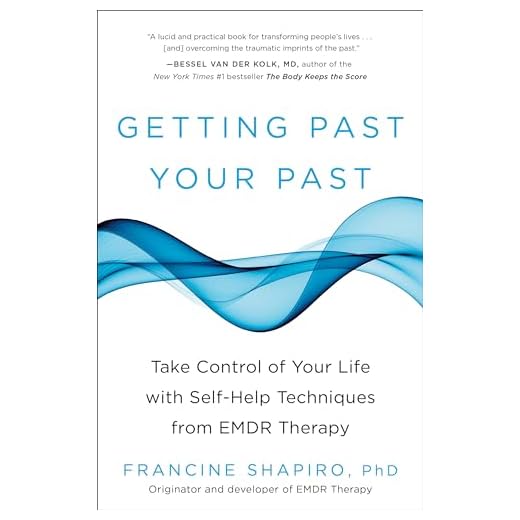




#1: Getting Past Your Past — Best for clients
Francine Shapiro
Shapiro’s public-facing book: how unprocessed memories run present-day reactions, self-use techniques that are safe outside session, and an honest map of what full EMDR treatment involves. Start here unless you’re the clinician.
- The founder translating her own model — no telephone-game distortion
- Self-use techniques are deliberately the safe subset, clearly fenced from full reprocessing
- Case examples make the unprocessed-memory model click
- Honest map of what full treatment involves and when to seek it
- Prose is serviceable rather than graceful
- Readers wanting the mechanism debate need Baldwin and Korn
#2: Eye Movement Desensitization and Reprocessing (EMDR) Therapy — The canonical text
Francine Shapiro
The third-edition textbook: adaptive information processing, the full protocol, special populations, and the research record. Dense, definitive, and the required spine of every formal EMDR training.
- The canonical textbook — model, eight phases, protocols, research record, from the source
- Third edition updates the evidence base and special populations
- Required spine of formal training, and it earns the role
- The AIP model articulated with full precision
- Dense clinical prose — this is the textbook, priced and paced like one
- Useless as self-help, by design
#3: Every Memory Deserves Respect — Best explainer
- Client and trainer alternating voices — the question you’d ask gets asked
- The mechanism debate handled honestly: strong outcomes, argued engine
- Photographs and design make trauma education strangely humane
- Ideal for the skeptical spouse, referring physician, or deciding patient
- Not a treatment manual — clinicians need Shapiro and Parnell
- The dual-voice format occasionally repeats itself
#4: The Body Keeps the Score — The trauma frame
Bessel van der Kolk
The book that moved trauma to the center of mental health — including a chapter of early EMDR advocacy. Read it for the frame that makes reprocessing logical; read its critics for calibration.
- The standard trauma text for both clinicians and general readers, a decade on the bestseller lists
- Part one’s neuroscience gives patients an explanation for symptoms they had read as personal failure
- Strong, early case for body-based treatment when talk alone stalls
- Long, and the middle sections are dense with study summaries
- Some claims — EMDR mechanisms, neurofeedback — outrun the current evidence, and the case material is graphic
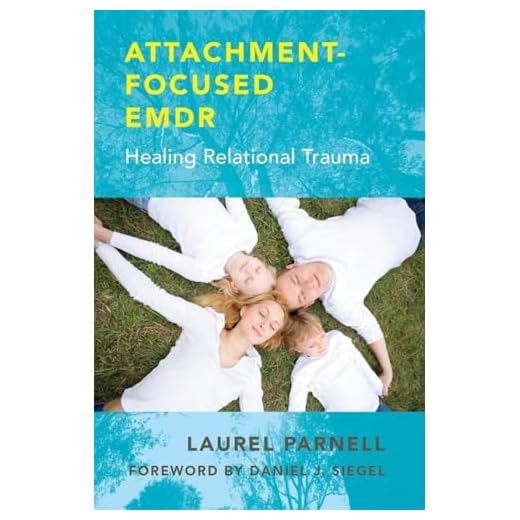
#5: Attachment-Focused EMDR — Best clinical evolution
Laurel Parnell
Parnell’s modification for developmental and attachment wounds: extensive resource-building, ideal-parent imagery, and a looser, attunement-led protocol. The essential second clinical book after the textbook.
- The essential adaptation for developmental and relational trauma
- Resource-building and ideal-parent imagery fill the standard protocol’s gap
- Attunement-led flexibility grounded in long clinical experience
- The consensus second book after the textbook
- Departures from standard protocol draw criticism from strict-fidelity camps
- Assumes training — not an entry point
#6: EMDR Made Simple — Best bridge
Jamie Marich
Marich’s demystification: the eight phases in working language, client-readiness in practice, and permission to be flexible where the manual reads rigid. The book trainings quietly recommend after the weekend ends.
- The plain-language bridge from weekend training to real practice
- Client-readiness and preparation handled with practical honesty
- Permission to flex where the manual reads rigid — and where not to
- Marich’s recovery-informed voice suits messy real-world cases
- Simple means simple — depth lives in Shapiro and Parnell
- Some sections date as the training landscape evolves
2 more titles round out our list, all shown in the quick picks above: A Guide to the Standard EMDR Therapy Protocols by Barbara J. Hensley (2016) — protocol-by-protocol, for the working clinician; Easy Ego State Interventions by Robin Shapiro (2016) — parts work for the cases one adult self doesn’t cover.
How the top picks compare
|
Best for clients
Getting Past Your Past
|
The canonical text
Eye Movement Desensitization and Reprocessing (EMDR) Therapy
|
The trauma frame
The Body Keeps the Score
|
Best clinical evolution
Attachment-Focused EMDR
|
|
|---|---|---|---|---|
|
|
|
|
|
|
| Our rating | 9.0 /10 | 8.9 /10 | 8.7 /10 | 9.3 /10 |
| Format | Self-help / psychology | Clinical textbook | Psychology / self-help | Clinical science |
| First published | 2012 | 2017 | 2021 | 2014 |
| Price | $10.49 | $61.00 | $14.15 | $42.52 |
| BUY NOW | BUY NOW | BUY NOW | BUY NOW |
How to choose an EMDR book
-
Client or clinicianThe shelf splits harder than most — textbooks won't help your healing, and self-help won't train you.Look forGetting Past Your Past or Every Memory Deserves Respect as a client; the Basic Principles textbook plus formal training as a clinician.AvoidSelf-administering full reprocessing from any book — the self-use techniques Shapiro published are deliberately the safe subset, and the books themselves say so.
-
What kind of traumaSingle-incident and developmental trauma need different versions of the method.Look forThe standard protocol coverage for single-incident PTSD; Parnell's attachment-focused adaptation when the wound is childhood-long.AvoidForcing complex relational trauma through the standard protocol at speed — the resourcing phase exists because unprepared reprocessing can flood.
-
Your skepticism budgetEMDR attracts both true believers and reflexive dismissal.Look forBaldwin and Korn for the honest middle — strong evidence for outcomes, live debate about mechanism, both stated plainly.AvoidBooks or trainers who treat the eye movements as magic, or critics who treat guideline-listed outcomes as placebo — the truth is duller and more useful than either camp.
How we chose these books
-
Firsthand reading
Rankings start from our editors’ full reads of every title on the list — including the slow middles and the failed first attempts — not from publisher copy.
-
Reader-review analysis
We mined verified-purchase reviews, Goodreads consensus, and Reddit reading threads for recurring, specific complaints: print size, abridgments, translation quality, abandonment points.
-
Edition comparison
Where multiple translations or editions exist, we compared them and linked the printing most readers should actually buy — and flagged the known trade-offs.
Which EMDR book should I read first?
As a client or curious reader: Getting Past Your Past, or Every Memory Deserves Respect if you want the skeptic-friendly explainer. As a clinician: Shapiro’s Basic Principles textbook, with Parnell’s Attachment-Focused EMDR as the second purchase.
Does EMDR actually work, or is it pseudoscience?
The outcomes are real: strong randomized-trial support for PTSD and inclusion in major clinical guidelines. The honest caveat is mechanism — researchers still debate how much the bilateral stimulation adds beyond exposure and reconsolidation. Effective treatment, unfinished science.
Can I do EMDR on myself from a book?
You can safely use the self-regulation subset Shapiro published — resourcing, safe-place work, the techniques in Getting Past Your Past. Full reprocessing of significant trauma is a different matter: the protocol’s preparation phases exist because unprocessed material can flood, and every responsible book routes you to a trained clinician for that part.
How is EMDR different from IFS or somatic therapy?
They share the premise that trauma lives in the nervous system, not the narrative. EMDR reprocesses specific stuck memories via dual attention; IFS works with the internal parts organized around wounds; somatic approaches track the body’s incomplete responses. Many trauma therapists sequence or blend all three — the shelves next door cover the other two.
Bottom line
Getting Past Your Past for clients, the Basic Principles textbook for clinicians, Baldwin and Korn for skeptics, Parnell for attachment wounds. The outcomes are validated, the mechanism still argued — and the protocol, done properly, is the point.