The Best Psychology Audiobooks: 6 Listens That Actually Work in Audio
Some psychology books die in audio — dense arguments and diagrams don't survive the commute. These six thrive there: narrative-first books, strong narrators, and ideas that land by ear. Chosen for the format, not despite it.
The best psychology audiobook is Maybe You Should Talk to Someone by Lori Gottlieb — narrative-driven, funny, and built for listening. Man’s Search for Meaning and When Nietzsche Wept are superb in audio too, while What Happened to You? benefits from Perry and Winfrey narrating their own conversation.
- Narrative survives audio; argument struggles Case stories and memoirs work by ear — heavily structured theory books mostly don’t.
- Author-narrated is a coin flip Perry and Winfrey’s conversational format is made for audio; some author readings elsewhere are famously flat.
- Match length to listening life A 5-hour Frankl fits a week of commutes; Kahneman’s 20 hours is a season-long commitment.
This list is part of our psychology book gifts and audiobooks silo — the formats shelf, for books that travel as sound.
What makes a psychology book work in audio
Three things predict a good listen. Story structure first: case histories and memoirs carry you the way podcasts do, while numbered frameworks and studies evaporate between exits. Narration second: a professional reader with range — or an author whose voice is the material, as with the Perry–Winfrey conversation. Length last: audio hours are real hours, and a 20-hour listen is a commitment a 300-page book never was.
The books below were chosen by those tests. It’s why Gottlieb outranks denser books she wouldn’t outrank in print, and why we include a novel — fiction is audio’s home turf, and When Nietzsche Wept teaches as much existential psychotherapy as most textbooks.
Listening notes, pick by pick
Maybe You Should Talk to Someone is the format’s showcase — four braided storylines, comic timing, and a narrator (Brittany Pressley) who earns the awards attention the audiobook received. Man’s Search for Meaning is short, spoken-plain, and hits differently by ear — it began as lectures, and audio restores that. Sacks’s case tales are self-contained — perfect for interrupted listening.
What Happened to You? is genuinely better in audio than print: it is literally a conversation, and Perry and Winfrey reading their own halves is the intended experience. Thinking, Fast and Slow is the one demanding listen we kept — it works if you treat it as a season, not a week. And When Nietzsche Wept turns a commute into 1882 Vienna; fiction narration at full power.
Independently researched and ranked by our editorial team. As an Amazon Associate, this site earns from qualifying purchases made through the links below.




#1: Maybe You Should Talk to Someone — Best overall listen
Lori Gottlieb
A therapist enters therapy after a blindside breakup, while her own patients’ stories braid through — funny, moving, and constructed like great radio. The consensus best psychology audiobook of its decade.
- The rare therapy book that works as pure entertainment — a therapist in therapy, told with sitcom timing and real depth
- Four patient storylines braided with Gottlieb’s own crisis show both chairs of the room honestly
- Smuggles in real clinical ideas — idiot compassion, the four ultimate concerns, stages of change — without lecturing
- In audio, Brittany Pressley’s narration makes it one of the medium’s best psychology listens
- Breezier than Yalom — readers wanting existential weight will finish hungry
- The celebrity-adjacent Hollywood frame occasionally grates
- Neat narrative arcs tidier than most real therapy
#2: Man's Search for Meaning — The essential short listen
Viktor E. Frankl
The camp memoir and meaning-psychology classic runs under five hours in audio — and since it began as spoken lectures, the format restores something print flattens.
- First-person Holocaust testimony fused with a psychiatry of meaning — there is nothing else like it
- Short (about 165 pages); part one can be read in a single sitting and rarely lets go
- The core claim — a ‘why’ makes almost any ‘how’ bearable — has held up in palliative and trauma care
- The Beacon edition includes Frankl’s 1984 postscript on tragic optimism
- Verified buyers regularly complain the Beacon mass-market printing has small, tight type — pick the larger trade paperback if your eyes are older
- Part two, the logotherapy lecture, is far drier than the memoir; many readers stall there
- Light on method — it tells you meaning matters, not how a session works
#3: The Man Who Mistook His Wife for a Hat — Best for interrupted listening
Oliver Sacks
Twenty-four neurological case histories, each complete in one sitting — the ideal structure for real listening lives, and Sacks’s wonder survives narration fully intact.
- The case-history book that has recruited more people into psychology and neurology than any other
- Sacks treats each patient as a person with a world, not a lesion with symptoms — the humane model of clinical writing
- Twenty-four self-contained essays, perfect between classes
- Neurology from the early 1980s; several explanations have been superseded
- Later critics questioned the ethics of literary case portraits — worth discussing, not dismissing
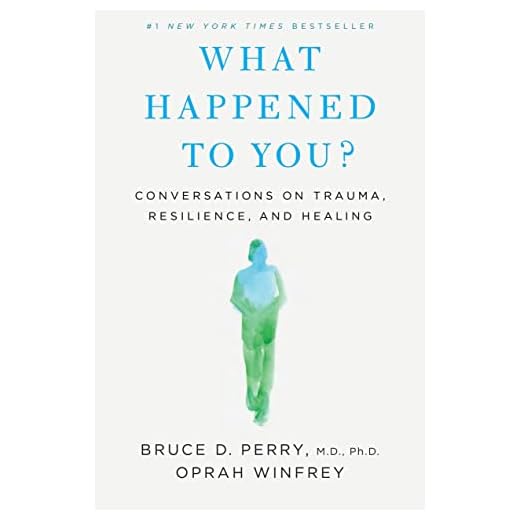
#4: What Happened to You? — Better in audio than print
Bruce D. Perry & Oprah Winfrey
A book that is literally a conversation, read by its two participants — Perry’s developmental science and Winfrey’s lived experience in the format the material was born in.
- The reframe in the title — from ‘what’s wrong with you’ — has changed how ordinary readers talk about trauma
- Perry’s brain-development sequences (regulate, relate, reason) made accessible through conversation with Winfrey
- The most approachable entry point on this list for someone new to the topic
- The interview format stays introductory — depth readers will want van der Kolk or Herman next
- Winfrey’s celebrity framing puts some readers off the science inside
#5: When Nietzsche Wept — Best fiction listen
Irvin D. Yalom
Yalom’s Vienna novel — Breuer, Nietzsche, and the invention of the talking cure — is fiction narration at full power, and smuggles a semester of existential psychotherapy into the drive.
- Yalom’s best novel — Breuer, Nietzsche, and the invention of the talking cure in 1882 Vienna
- Real intellectual history woven into genuine page-turner plotting
- The therapy-reversal twist lands the book’s deepest idea: the healer needs healing
- A painless, absorbing introduction to both existential philosophy and psychotherapy’s origins
- Philosophical dialogues sometimes run past plausibility for the period
- Characters occasionally speak in lecture form — Yalom the teacher shows through
- Historical liberties (the meeting never happened) bother literal-minded readers
#6: Thinking, Fast and Slow — The long-haul listen
Daniel Kahneman
The map of human judgment works in audio if you respect its scale — treat it as a podcast season, pause often, and the two-systems framework installs itself for life.
- A Nobel laureate’s summary of the heuristics-and-biases program — the single most influential psychology book of its decade
- System 1/System 2 became the shared vocabulary for reasoning about reasoning
- Every chapter hands students a study they can cite for years
- Several priming studies it showcases failed replication — read chapter 4 with modern skepticism
- Long, and drier than its reputation suggests
How to choose a psychology audiobook
-
StructureAudio favors narrative; print favors reference.Look forMemoirs, case tales, and novels — books that move in stories.AvoidWorkbook-style titles in audio — exercises and diagrams don't survive the format.
-
NarratorThe reader is half the experience.Look forSampled narration before buying; conversational books read by their authors.AvoidAssuming author-read is better — some brilliant writers are flat readers.
-
Hours vs. lifeAudio length is lived time, not page count.Look forUnder 8 hours for commutes; long books only if listening is your main reading.AvoidStarting a 20-hour listen the week before it's due back to the library.
How we chose these books
-
Firsthand reading
Rankings start from our editors’ full reads of every title on the list — including the slow middles and the failed first attempts — not from publisher copy.
-
Reader-review analysis
We mined verified-purchase reviews, Goodreads consensus, and Reddit reading threads for recurring, specific complaints: print size, abridgments, translation quality, abandonment points.
-
Edition comparison
Where multiple translations or editions exist, we compared them and linked the printing most readers should actually buy — and flagged the known trade-offs.
What is the best psychology audiobook?
Maybe You Should Talk to Someone by Lori Gottlieb — its braided storylines and professional narration make it the rare psychology book that’s arguably best consumed in audio. Man’s Search for Meaning is the essential short listen beside it.
Are audiobooks as good as reading for retention?
For narrative books, research finds comprehension is broadly comparable between listening and reading. Dense expository text favors print, where the eye can loop back — which is exactly why this list favors story-driven psychology over frameworks and diagrams.
Which books should I avoid in audio format?
Workbooks and heavily structured texts — CBT worksheets, skills manuals, anything with exercises or tables. Buy those in print and spend the audio hours on memoirs, case histories, and novels, which the format serves beautifully.
Do these audiobooks work for people new to psychology?
Yes — every pick here assumes no background. Gottlieb and Sacks are the friendliest doors, Frankl the most profound, and the Yalom novel proves you can absorb serious existential psychotherapy while stuck in traffic.
Bottom line
Gottlieb is the showcase, Frankl the essential short listen, Sacks the interruptible one. Perry–Winfrey is better in audio than print, the Yalom novel is fiction doing a textbook’s work, and Kahneman rewards whoever grants it a whole season.