What to Read After Man’s Search for Meaning: 6 Books That Continue the Path
Man's Search for Meaning tends to leave readers changed and unsure where to go next — more Frankl? More testimony? The psychology of meaning itself? These six books answer all three pulls, ranked by how directly they continue the path.
The best book to read after Man’s Search for Meaning is Edith Eger’s The Choice — a fellow Auschwitz survivor who became a psychologist, writing fifty years deeper into the healing. Frankl’s own Yes to Life is the closest companion, while Wiesel’s Night gives the testimony without consolation.
- Three directions from here Deeper testimony (Wiesel, Eger), more Frankl (Yes to Life, The Will to Meaning), or the wider psychology of meaning (May).
- Eger is the fullest sequel The Choice does what no other book does — continues both the survival story and the psychology, from inside both.
- Don't skip the hard one Night refuses the consolation the other books offer; it belongs on the path precisely for that.
This guide is part of our best books on the meaning of life silo — Frankl’s classic is the door most readers enter through; here is what lies past it.
Why this book creates its own reading list
Man’s Search for Meaning is really two books — a camp memoir and a psychology of meaning — and readers finish it hungry in two different directions. Some want more witness: what happened, told without softening. Others want more theory: if meaning is the primary human motivation, how does a life actually find it? The books below serve both hungers, and the best sequels serve them at once.
It helps to know what Frankl’s book deliberately is not. It is not the darkest testimony (Wiesel is darker), not the fullest psychology (Frankl wrote those systems elsewhere), and not the last word — Eger, who survived the same camp at sixteen, spent fifty years as a clinician extending exactly this work. The sequel shelf is richer than the original’s fame suggests.
The six, and what each continues
The Choice continues everything: Eger’s Auschwitz survival, her decades as a psychologist treating trauma, and her Frankl-inflected insight that our worst prison is the mind — she corresponded with Frankl himself. Yes to Life is Frankl in 1946 again, warmer and spoken; The Will to Meaning is his mature theory for readers who want the system behind the memoir.
Night is the counterweight — testimony that offers no redemptive frame, and the necessary companion to any book that does. Rollo May’s Man’s Search for Himself extends the diagnosis to ordinary peacetime emptiness — the meaning problem without the camps — and When Breath Becomes Air brings the whole question to a modern deathbed, written by a surgeon who read the existentialists and then had to live them.
Independently researched and ranked by our editorial team. As an Amazon Associate, this site earns from qualifying purchases made through the links below.



#1: The Choice — The fullest sequel
- Edith Eger — Auschwitz survivor turned psychologist — is the closest living continuation of Frankl’s arc, and he personally encouraged her career
- The dance-for-Mengele scene and her return to Auschwitz are among the most powerful passages in survivor literature
- Second half shows the ideas working in her clinical practice with patients
- The therapy vignettes resolve more neatly than real treatment does
- Emotionally heavy — readers fresh from Frankl may want to pace themselves
#2: Yes to Life: In Spite of Everything — More Frankl, same year
Viktor E. Frankl
Three lectures from eleven months after liberation, lost until 2020 — the memoir’s ideas in a live spoken voice. The shortest, warmest next step there is.
- Three lectures delivered in 1946, months after liberation — the historical immediacy is the point
- Short enough for one evening; the most accessible Frankl after MSFM
- Daniel Goleman’s introduction sets the historical context well
- Overlaps heavily with Man’s Search for Meaning — buyers often report half of it feels familiar
- These are transcribed lectures, looser and less polished than his written books
#3: Night — The testimony
Elie Wiesel
Wiesel’s spare, devastating record of Auschwitz and Buchenwald at fifteen. It offers none of Frankl’s redemption — which is exactly why the two books belong together.
- The essential witness text of the Holocaust — spare, unconsoling, and necessary
- Wiesel’s refusal of redemption arcs is the counterweight Frankl readers need
- Two hours of reading that permanently recalibrates the meaning of the word ‘suffering’
- Offers no framework or comfort — that is its integrity, but know it going in
- The Marion Wiesel translation is the one to buy; older editions read stiffer
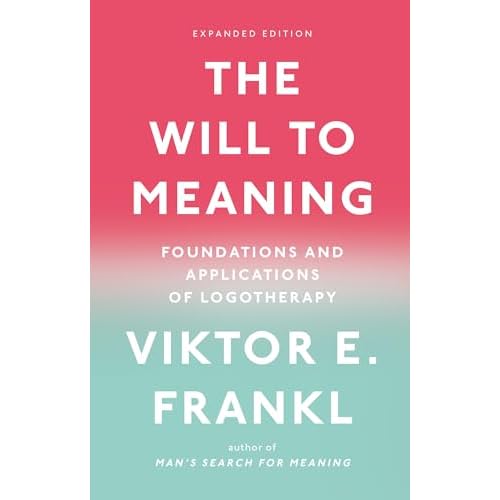
#4: The Will to Meaning — The theory
Viktor E. Frankl
Logotherapy’s foundations stated tightly — meaning as the primary motivation, and the clinical method that follows. The right book when the memoir’s ideas demand structure.
- The most systematic statement of logotherapy’s foundations and its answer to Freud and Adler
- Short — the theory without the 400-page commitment
- The 2014 Plume reissue is the easiest edition to find and read
- Assumes you have already read Man’s Search for Meaning
- Compiled partly from lectures, so key points repeat across chapters
- Abstract throughout — almost no extended case material
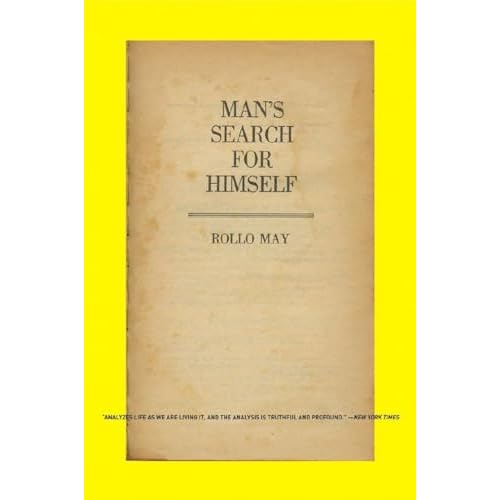
#5: Man's Search for Himself — The peacetime sequel
Rollo May
May’s 1953 classic on emptiness, loneliness, and anxiety in ordinary modern life — the same existential hunger Frankl found in the camps, located in the commuter and the crowd.
- May’s most readable book — anxiety, loneliness, and emptiness in plain mid-century prose
- The ‘hollow people’ diagnosis of modern emptiness anticipated the culture-of-narcissism critiques by decades
- Practical chapters on selfhood and courage that general readers can actually use
- 1953 references and gender assumptions date whole passages
- The middle chapters circle the same argument more than once
#6: When Breath Becomes Air — The modern echo
Paul Kalanithi
A neurosurgeon diagnosed with terminal cancer at thirty-six writes his way toward what matters — Frankl’s question asked again in a California hospital, with unbearable grace.
- Written by a neurosurgeon while he was dying of lung cancer — no other book has this vantage point
- Kalanithi held a literature MA before medicine, and the prose shows it
- His wife Lucy’s epilogue, describing his death, is the strongest chapter in the book
- Unfinished by nature — it ends abruptly, because he died
- The Stanford-perfection arc distances some readers before the illness narrative begins
How to choose your next step
-
Which hunger
Frankl’s book leaves readers wanting testimony, theory, or both continued.
Look forEger if both; Wiesel for witness; The Will to Meaning for the system.AvoidGrabbing another Frankl reflexively — his later books repeat more than they add. -
Consolation tolerance
These books differ sharply in how much comfort they offer.
Look forNight when you can bear testimony without redemption; Eger and Kalanithi when you need the human warmth.AvoidReading Night in a fragile season — it is essential and unsparing. -
Era
The meaning question didn’t end in 1945.
Look forMay for the 1950s diagnosis of ordinary emptiness; Kalanithi for the question in our own time.AvoidTreating meaning literature as only Holocaust literature — the question is larger.
How we chose these books
-
Firsthand reading
Rankings start from our editors’ full reads of every title on the list — including the slow middles and the failed first attempts — not from publisher copy.
-
Reader-review analysis
We mined verified-purchase reviews, Goodreads consensus, and Reddit reading threads for recurring, specific complaints: print size, abridgments, translation quality, abandonment points.
-
Edition comparison
Where multiple translations or editions exist, we compared them and linked the printing most readers should actually buy — and flagged the known trade-offs.
What should I read after Man's Search for Meaning?
Edith Eger’s The Choice is the strongest single answer — an Auschwitz survivor who became a psychologist, continuing both the testimony and the healing psychology. If you want more Frankl specifically, Yes to Life is three lectures from the same year in a warmer spoken voice.
Is The Choice really comparable to Frankl's book?
It stands beside it rather than beneath it. Eger survived the same camp, corresponded with Frankl, and then did what he couldn’t — spent fifty years clinically treating trauma before writing. Readers who wished Frankl’s book said more about the long work of healing find exactly that in Eger.
Should I read Night if I found Frankl's book hopeful?
Yes — especially then. Wiesel’s testimony offers no meaning-frame and no consolation, and reading it guards against turning the Holocaust into an inspirational backdrop. Frankl gives the response to horror; Wiesel makes sure you have seen the horror itself.
What if I want the psychology of meaning without Holocaust memoirs?
Rollo May’s Man’s Search for Himself locates the same emptiness in ordinary modern life, and When Breath Becomes Air brings the question to a contemporary deathbed. Our meaning-of-life hub collects the wider philosophical shelf.
Bottom line
The Choice continues Frankl’s path furthest — same camp, same psychology, fifty more years of healing. Around it: Yes to Life for his voice, Night for the unconsoled truth, The Will to Meaning for theory, May and Kalanithi for the question in other times.