Haruki Murakami Books in Order: The Novelist of Wells, Cats, and Missing Women
Murakami's fiction runs on a simple, repeatable event: an ordinary life develops a hole in it — a wife vanishes, a cat disappears, a phone call arrives — and the protagonist descends, often literally down a well, into the unconscious underneath the everyday. Boiling spaghetti, jazz records, and grief over lost people mark the route. Eight books, ordered for the newcomer.
Start Haruki Murakami with Norwegian Wood for the realist door or Kafka on the Shore for the full surrealist experience — then The Wind-Up Bird Chronicle, his masterpiece, when you’re ready to go down the well. Save 1Q84’s thousand pages for confirmed devotees.
- The surrealism is psychology, not decoration The wells, second moons, and talking cats map inner states — dissociation, grief, the unconscious — with dream-accurate logic. Read the strange events as the protagonist’s psyche made walkable and the books snap into focus.
- Loss is the engine of every plot Someone is always already gone — a wife, a friend, a version of the self — and the quest to recover them is really mourning with a map. Murakami’s repeated lesson is Yalom’s too: what’s lost isn’t retrieved, but the search transforms the searcher.
- Two Murakamis share the shelf The realist of Norwegian Wood — grief, sex, and memory played straight — and the surrealist of Wind-Up Bird. Most books mix the modes, but knowing which register you’re buying prevents half the bad first impressions.
This guide is part of our existentialism for readers silo — Murakami is the great contemporary novelist of isolation and the search for what vanished: loneliness, mourning, and meaning hunted through dream logic rather than argument.
Where to start — three doors
The realist door is Norwegian Wood — the 1987 novel of student grief that made him famous in Japan against his will: two young people orbiting a suicide, memory as the narrator’s only country, no magic anywhere. If you need to know the writer can move you before you follow him underground, start here. The surrealist door is Kafka on the Shore — a runaway teenager and an old man who talks to cats, prophecies, fish falling from the sky — the most welcoming version of the full strangeness, because its two-track structure keeps pulling you forward even when explanation is withheld.
The third door is the masterpiece itself. The Wind-Up Bird Chronicle begins with a missing cat and a missing wife and descends — via a dry well, a psychic prostitute, and the atrocities of Manchuria — into the deepest book he has written: personal mourning opening into historical memory, the suburban and the monstrous sharing one unconscious. Start there only if you already trust that withheld answers are part of the design; otherwise arrive by way of one of the first two doors, then go down the well properly.
The deeper shelf — and how to read him
Hard-Boiled Wonderland and the End of the World is the early structural marvel — alternating chapters, a cyberpunk Tokyo and a walled dream-town, converging on a quietly devastating choice about consciousness itself; many longtime readers’ secret favorite. 1Q84 is the maximalist epic — two moons, a cult, an assassin, and the love story the whole apparatus exists to protect — rewarding for devotees, punishing as an introduction. A Wild Sheep Chase is where the signature voice first fully arrives: the shrugging narrator, the impossible quest, the metaphysics played deadpan.
Around the novels, two shorter doors. What I Talk About When I Talk About Running is the memoir — running, writing, and the discipline under the dreaming, the closest he comes to explaining himself. Men Without Women collects the late stories of abandoned men — the Yalom themes at their most exposed: isolation, the unmourned loss, the conversation that arrives too late. Read him for atmosphere rather than resolution; the mysteries are load-bearing, the endings are chords rather than verdicts, and the boiling of the spaghetti is part of the liturgy.
Independently researched and ranked by our editorial team. As an Amazon Associate, this site earns from qualifying purchases made through the links below.




#1: Norwegian Wood — The realist door
Haruki Murakami
Toru, Naoko, Midori, and the suicide that shadows them — the tender, explicit, magic-free novel that made Murakami famous. If you need proof of feeling before strangeness, start here.
- The realist proof — grief, memory, and first love with no magic and full force
- Naoko and Midori are his most fully human characters
- The book to test whether Murakami moves you before the strangeness starts
- Autumnal atmosphere that readers carry for decades
- Unrepresentative — loving it doesn’t predict loving the surreal shelf
- The sexual frankness and passive narrator divide readers
#2: The Wind-Up Bird Chronicle — The masterpiece
Haruki Murakami
A missing cat, a vanished wife, a dry well, and Manchuria: the suburban and the monstrous sharing one unconscious. His fullest achievement — arrive after one of the doors, then descend properly.
- His fullest achievement — private mourning opening into historical atrocity
- The well sequences are the deepest sustained writing he has done
- Lieutenant Mamiya’s Manchuria testimony is unforgettable
- The book where all the motifs finally carry their full weight
- Long, digressive, and deliberately unresolved — trust is required
- The English edition is abridged from the Japanese, notoriously
#3: Kafka on the Shore — The surrealist door
Haruki Murakami
Fifteen-year-old Kafka runs; old Nakata talks to cats; fish fall from the sky; the two tracks converge like a dream deciding to make sense. The best first taste of unexplained Murakami.
- The most welcoming full-strangeness Murakami — two tracks that pull relentlessly
- Nakata is his most beloved character; the cat conversations earn their fame
- The Oedipal machinery gives the dream logic real mythic stakes
- Ideal first book for readers ready to skip the realist on-ramp
- Explanations are withheld on principle — solution-hunters will finish frustrated
- The metaphysics gets genuinely opaque in the final movement
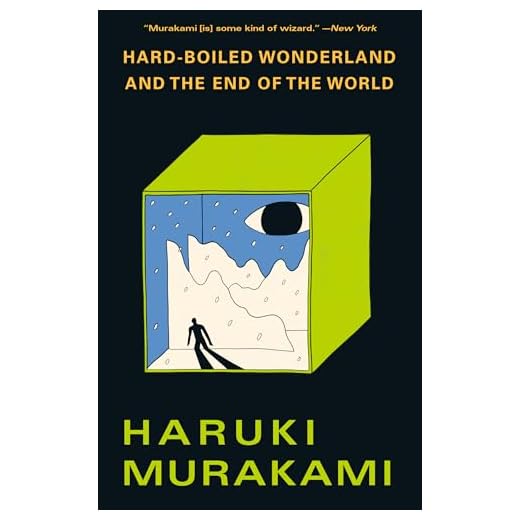
#4: Hard-Boiled Wonderland and the End of the World — The structural marvel
Haruki Murakami
Alternating chapters — a data-encrypting Tokyo noir and a walled town where people lose their shadows — meeting in a quietly devastating ending. Longtime readers’ secret favorite.
- The structural marvel — two worlds alternating toward one devastating convergence
- The walled town is his most beautiful sustained invention
- The ending’s quiet choice about consciousness lands harder every reread
- Early Murakami at maximum inventiveness with minimum sprawl
- The cyberpunk half has dated in its details
- Emotionally cooler than the later books — the devastation is cerebral first
#5: 1Q84 — The epic
Haruki Murakami
Aomame climbs off a gridlocked expressway into a year with two moons; Tengo rewrites a dangerous novel; a cult closes in around the love story the whole machine protects. Maximal Murakami — devotees only.
- The full Murakami cosmology at maximum scale — two moons, Little People, the cult
- Aomame is his strongest female protagonist
- The love story survives the apparatus and justifies it
- Devotees get every motif, orchestrated
- A thousand pages with significant middle-volume sag
- Fatal as an introduction — the repetitions read as padding without the back catalog
#6: A Wild Sheep Chase — The voice arrives
Haruki Murakami
An ad man, a photograph, and a sheep with a star on its back that may run history from inside its hosts — the early novel where the shrugging narrator and the impossible quest first click into place.
- The signature voice arrives — deadpan narrator, impossible quest, metaphysics served dry
- The Sheep Man and the ending still land after four decades
- Compact by his standards; the strangeness is efficiently deployed
- The best window on where the whole project started
- Thinner characterization than the mature books
- Trails two earlier novellas readers may feel obliged to backfill
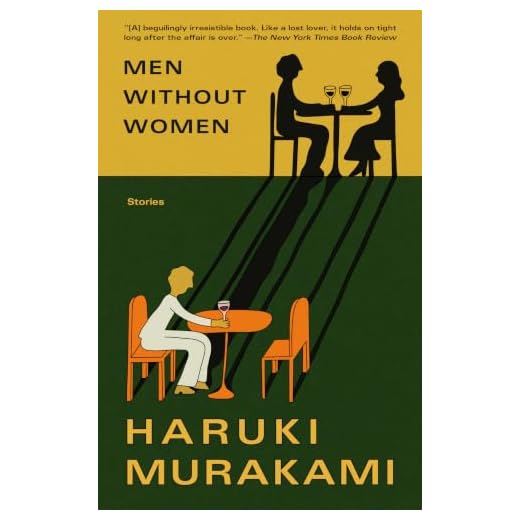
2 more titles round out our list, all shown in the quick picks above: What I Talk About When I Talk About Running by Haruki Murakami (2007) — the discipline under the dreaming; Men Without Women by Haruki Murakami (2014) — isolation and late-arriving grief, undiluted.
How the top picks compare
|
The realist door
Norwegian Wood
|
The masterpiece
The Wind-Up Bird Chronicle
|
The surrealist door
Kafka on the Shore
|
The structural marvel
Hard-Boiled Wonderland and the End of the World
|
The epic
1Q84
|
|
|---|---|---|---|---|---|
|
|
|
|
|
|
|
| Our rating | 9.0 /10 | 9.4 /10 | 9.1 /10 | 8.9 /10 | 8.4 /10 |
| Format | Literary fiction | Literary / surreal | Literary / surreal | Literary / speculative | Literary / epic |
| First published | 1987 | 1994 | 2002 | 1985 | 2009 |
| Price | $17.00 | $10.45 | $7.99 | $10.20 | $20.50 |
| BUY NOW | BUY NOW | BUY NOW | BUY NOW | BUY NOW |
How to choose your first Murakami
-
Realist or surrealist doorThe two registers make very different first impressions.Look forNorwegian Wood if you want earned emotion with no magic; Kafka on the Shore if you're ready for cats that talk and rules that don't.Avoid1Q84 first — a thousand pages of maximal Murakami has ended many potential readerships at the door.
-
Your tolerance for unresolved mysteryHe withholds explanations on principle.Look forComfort with dream logic — the strange events are psychological weather, and the endings are chords, not verdicts.AvoidReading for solutions — tallying unexplained threads misses that the unexplained is the medium, not the flaw.
-
Repetition as feature or bugThe motifs — wells, cats, jazz, vanished women — recur for decades.Look forThe variations: each book reworks the descent-and-loss material at different depths, and devotees read the repetition as liturgy.AvoidBingeing the catalog back to back — spaced out, the books feel like recurring dreams; crammed, they feel like one dream rerun.
How we chose these books
-
Firsthand reading
Rankings start from our editors’ full reads of every title on the list — including the slow middles and the failed first attempts — not from publisher copy.
-
Reader-review analysis
We mined verified-purchase reviews, Goodreads consensus, and Reddit reading threads for recurring, specific complaints: print size, abridgments, translation quality, abandonment points.
-
Edition comparison
Where multiple translations or editions exist, we compared them and linked the printing most readers should actually buy — and flagged the known trade-offs.
Where should I start with Haruki Murakami?
Norwegian Wood for the realist door, Kafka on the Shore for the surrealist one — then The Wind-Up Bird Chronicle, the masterpiece, once you trust the method. Do the novels in any order after that; only 1Q84 demands existing devotion.
Do I need to read Murakami's books in order?
No — no series, no continuity, and publication order front-loads the roughest early work. The order that matters is register: one door book, then the masterpiece, then wherever the shelf pulls you. The motifs connect everything regardless of sequence.
Why is Murakami so strange — what do the wells and cats mean?
The surrealism is the psychology: descents into wells are descents into the unconscious, the vanished women are losses that grief can’t process in daylight, and the parallel worlds are dissociation given geography. He composes by dream logic on purpose — the strangeness is how the books think, not an obstacle to what they think.
Is Norwegian Wood typical of his work?
No — it’s his deliberate exception: realist, explicit, magic-free, written to prove he could. If you loved it, know the rest of the shelf bends reality; if it left you cold, the surrealist books are different enough that Kafka on the Shore deserves a separate audition.
Bottom line
Norwegian Wood or Kafka on the Shore as the door, Wind-Up Bird as the summit, 1Q84 for devotees only. An ordinary life develops a hole; the descent is mourning with a map — and the search transforms the searcher, which is the whole existential point.