No Longer Human summary: Dazai’s notebooks, themes and ending explained
Osamu Dazai's No Longer Human (Ningen Shikkaku, 1948) is the confession of Oba Yozo, a man who feels he has never understood other people and survives by playing the fool for them.
It is short, often read in a sitting or two, and it is still among the best-selling novels in Japan. This guide gives a spoiler-light outline first, then the themes and characters, and keeps the ending behind a clear warning. It also covers which English edition to read and the question every reader eventually asks: how much of this is Dazai himself.
No Longer Human is told through three notebooks written by Oba Yozo, framed by an outside narrator who has seen three photographs of him and later meets someone who knew him. The notebooks trace his life from a childhood spent clowning to hide his fear of people, through drink, a failed suicide pact and addiction, to a quiet, emptied-out end. Read it in Donald Keene’s 1958 translation first.
No Longer Human depicts suicide attempts, addiction and the sexual abuse of a child. Dazai died by suicide in June 1948, shortly after finishing it; that fact is part of the book’s history, not the key to its meaning. A novel can be good company, but it sits alongside professional support, not in place of it. If any of this is close to home, talk to someone you trust or a professional. In the US you can call or text 988.
What Dazai's No Longer Human is, and why it still finds readers
Dazai wrote No Longer Human in the spring of 1948 and it was serialized that year, with the last installments appearing after his death in June, at 38. The Japanese title, Ningen Shikkaku, means something close to being disqualified as a human being, and that phrase is the hinge of the book. Donald Keene’s English translation followed in 1958 and is still the version most English readers meet. Like the other guides in the site’s book summaries and study guides, this one gives you the shape of the novel and marks every spoiler, but it cannot stand in for reading a book whose effect lives in its voice.
If you are new to the author, the site’s Osamu Dazai reading order recommends starting exactly here, with this novel in Keene’s translation, then moving to The Setting Sun and the lighter stories. This page assumes you have picked up the book or are about to, and want to know what you are holding.
Why does a grim seventy-year-old novella keep selling? Partly because Yozo describes a feeling many readers recognise and rarely see named: performing normality while privately sure you are faking it. Partly because the book has a second life in manga and anime, including Junji Ito’s adaptation and a fictional character named after Dazai in a popular series, which sends a steady stream of younger readers to the original. And partly because it is simply well made. Its frame, its restraint and its flat, self-mocking voice do more than its bleak events.
The three notebooks and the narrator who frames them
The book opens not with Yozo but with a prologue by an unnamed narrator who describes three photographs of a man he has never met. In the first, a small boy smiles in a way the narrator finds unpleasant and false. In the second, a handsome student smiles too, and the effect is just as eerie. In the third, an older man with greying hair shows no expression at all. Before we read a word of Yozo’s own, we have been told to distrust his face.
- Prologue. The outside narrator and the three photographs.
- The First Notebook. Yozo’s childhood in a large, wealthy household in northern Japan, and his discovery that clowning keeps people from looking at him too closely.
- The Second Notebook. School and then Tokyo: a classmate who sees through the act, an art student named Horiki who introduces him to drink and the city’s underside, and a relationship that ends in catastrophe.
- The Third Notebook. Adult life in two parts: dependence on a series of women, a marriage that seems to promise rescue, and a slide into addiction.
- Epilogue. The outside narrator again, explaining how the notebooks reached him and talking to a woman who knew Yozo.
That shape matters more than it first looks. The notebooks are a confession, and confessions are partial. The frame lets Dazai give us Yozo’s account in full and then, in a few pages at the end, set beside it a very different picture of the same man. Many readers race through the middle and skim the epilogue; it is worth slowing down for, because it changes how the whole book reads.
Clowning as Yozo's last link to other people
Yozo calls his clowning his last tie to humanity. As a child he cannot work out what other people want, why they eat at set times, or how they live with the hostility he senses under their politeness. So he makes them laugh. The act works so well that his family and teachers think him a cheerful, easy child, and that success is what frightens him: if the mask is this convincing, nobody will ever see what is underneath, and he will never find out whether there is anything there.
The theme lands hardest in the second notebook, when a plain, awkward classmate named Takeichi watches one of Yozo’s staged mishaps and quietly tells him he did it on purpose. It is the most frightening moment of Yozo’s young life, and Dazai plays it almost as a horror scene. Being seen through is worse, for Yozo, than any punishment. Readers who know Sartre’s idea of the look, or the masks that run through existentialist fiction, will find a Japanese cousin of the same fear here, written without any philosophical vocabulary.
Shame and the fear of ordinary people in No Longer Human
Yozo’s first notebook opens by saying his has been a life of much shame, and the word shame keeps returning. It is not guilt for particular acts, though he commits plenty. It is a background sense of being wrong in kind, of failing an exam everyone else passed without noticing they sat it. That is why the title is so blunt: the verdict the book reaches is not that Yozo did bad things but that he does not qualify. The first notebook also mentions, briefly and without detail, that servants in the household abused him as a small child, and that he told no one; he presents his silence as one more proof that he cannot trust the adults around him to understand.
What he fears most is not cruelty but ordinary people, the ones he calls human beings as if they were a separate species. In one of the book’s best scenes Yozo and Horiki play a word game, sorting nouns into comedies and tragedies and hunting for the opposite of crime. It reads as drunken banter, yet it is the closest the novel comes to stating its question outright: what would it mean to be innocent, and does Yozo’s kind of person get to ask?
Trust, innocence and what happens to Yoshiko
In the third notebook Yozo marries Yoshiko, a young woman whose defining quality is that she trusts everyone completely. For him she is almost a cure, proof that someone can live without suspicion. When that trust is exploited and she is assaulted by a man who has been doing business with Yozo, the novel treats the event less as a crime story than as the destruction of the one thing Yozo believed in. He witnesses part of it and does nothing, and the passivity is the point.
This is the hardest stretch of the book to read, and Dazai is deliberately uncomfortable about it: Yozo’s anguish centres on himself, not on Yoshiko, and readers have long argued over whether the novel sees that as clearly as we do. It is reasonable to read the episode as both a portrait of despair and an indictment of the man telling it.
Suicide, drink and addiction as the book portrays them
Yozo’s story includes suicide attempts, heavy drinking, morphine addiction and a long depression, and Dazai does not soften any of them. He is also notably unsentimental. Yozo’s despair is never presented as glamorous or wise; the tone is flat, even comic in places, and the consequences fall on other people’s lives as well as his own. That restraint is part of why the book has lasted. The novel is not a guide to anything, and it offers no advice about how to live.
Readers who want to stay with the subject in nonfiction rather than fiction may find more solid ground in the memoirs on the site’s list of memoirs of mental illness, written by people who came through to the other side and can say what helped.
Who's who: Yozo, Horiki, Yoshiko and the rest
| Character | Who they are | What they do in the story |
|---|---|---|
| Oba Yozo | The narrator of the notebooks, son of a wealthy, politically prominent family | Hides behind clowning, drifts through art, drink and women, and ends judging himself no longer human |
| The outside narrator | An unnamed writer who frames the notebooks | Describes the three photographs and, in the epilogue, explains how the notebooks reached him |
| Takeichi | A classmate at middle school | Sees through Yozo’s staged clumsiness and predicts that women will fall for him and that he will be a painter |
| Horiki Masao | An older art student in Tokyo | Introduces Yozo to drink and the city’s underside; a careless friend who turns up at the worst moments |
| Tsuneko | A bar hostess Yozo meets in Tokyo | Joins him in a suicide pact; she dies and he survives |
| Flatfish | A family acquaintance and Yozo’s guardian figure | Takes him in after the scandal and later helps steer him toward the hospital |
| Shizuko | A widowed magazine journalist with a young daughter | Gives Yozo a home and work drawing cartoons; he leaves to protect their happiness from himself |
| Yoshiko | A young woman from a tobacco shop | Marries Yozo; her complete trust is the thing he values most, until it is violated |
| The madam | The keeper of a bar Yozo frequented | Appears in the epilogue with a memory of Yozo that contradicts his own account |
Two things stand out once the cast is laid out. Almost every rescue Yozo receives comes from a woman, and almost every one ends badly for her. And the men around him, Horiki and Flatfish above all, are not villains but ordinary, self-interested people, which is exactly what Yozo cannot cope with. The novel never makes them monsters, so it never lets Yozo off as simply a victim.
How No Longer Human ends (spoilers from here)
The next three paragraphs describe the end of the third notebook and the epilogue. Skip to the translations section if you have not finished the book.
After the collapse of his marriage Yozo’s drinking turns into dependence on morphine. Horiki and Flatfish eventually take him to what he believes is a sanatorium and turns out to be a psychiatric hospital. It is there that he passes judgment on himself: he has been disqualified as a human being. The title arrives not as a dramatic climax but as a quiet sentence he writes down.
Released after his father’s death, he is sent by his eldest brother to live in a remote house in the countryside of his native region, looked after by an elderly servant. He is still in his late twenties, he says, but people take him for well over forty. The last notebook closes with him beyond happiness or unhappiness, observing only that everything passes. There is no final catastrophe, which many first-time readers expect; the ending is a flattening rather than a fall.
Then the epilogue. The outside narrator explains that the notebooks came to him through the madam of a bar where Yozo used to drink. Asked about him, she remembers him fondly, as a good, sweet young man, and says the trouble was his father. In a few lines the book sets an affectionate outside view against the self-condemning confession we have just read. Was Yozo inhuman, or a gentle person who judged himself by an impossible standard? Dazai leaves both readings standing, and that unresolved last page is the main reason the book rewards a second reading.
Keene's No Longer Human or Gibeau's A Shameful Life
There are two full English versions. Donald Keene’s No Longer Human (1958) is the classic: fluent, elegant, a little smoothed toward mid-century literary English, and the text most criticism in English quotes. New Directions has kept it in print for decades. Mark Gibeau’s later translation, published in 2018 as A Shameful Life, takes its title from the novel’s opening line rather than its Japanese title and aims at a closer, rougher rendering of Dazai’s voice.
| Donald Keene | Mark Gibeau | |
|---|---|---|
| English title | No Longer Human | A Shameful Life |
| First published | 1958 | 2018 |
| Feel of the prose | Polished and readable; smooths some of Dazai’s roughness | Closer to the colloquial, self-mocking tone of the original |
| Best for | A first reading, and for following English-language criticism | A second reading, or readers who want Dazai less tidied up |
Our advice matches the Dazai reading-order page: read Keene first. It is the version people will be referring to when you talk about the book, and its readability carries you through the darkest stretches. If the novel stays with you, Gibeau’s translation is a genuinely different experience rather than a duplicate, and reading the two side by side is one of the better ways to feel what is lost and kept in translation.

Osamu Dazai, translated by Donald Keene
The New Directions paperback of Donald Keene’s translation, the standard English text and the one this guide recommends for a first reading. About 177 pages in this edition, including the prologue, the three notebooks and the epilogue. It is short enough to read in one or two sittings.
Dazai's life and death, and why the novel is not his diary
The parallels are real and Dazai invited them. Like Yozo, he was born (in 1909, as Tsushima Shuji) into a wealthy, politically powerful family in the far north of Japan; he was drawn to leftist politics as a student in Tokyo; he survived a suicide pact in 1930 in which the woman died; and in the mid-1930s he became dependent on a painkiller and was committed to a psychiatric hospital. He died weeks after finishing this book, which is why so many readers treat it as a last testament.
That reading flattens it. Dazai was an extremely deliberate writer who spent years turning his own life into material, and the book’s structure, with its distrustful frame and contradicting epilogue, is the work of someone shaping a story, not transcribing one. Yozo is Dazai’s experience pushed through a single obsessive idea, and the epilogue’s kinder view of him is as much a part of the novel as the confession. Read the life alongside the book, not instead of it.
Readers who may not get on with Dazai's novel
- Readers who need a plot that builds to a climax: the book drifts, by design, and ends flat.
- Anyone who finds a self-pitying narrator hard to bear for 150-odd pages; Yozo rarely sees past himself.
- Readers going through a very dark period who want a book that offers hope; this one offers recognition, not a way out.
- Those who will be put off by how the women are written: they exist largely as Yozo’s rescuers and casualties.
- Readers looking for an argued philosophy of despair; Dazai shows a mood, he does not make a case.
None of these is a reason the book is bad. They are reasons it may be the wrong book for you now. If the lack of a way out is the problem, the novels on the site’s list of philosophical novels about meaning take the same questions somewhere more open.
Where to go after No Longer Human
The natural next step is more Dazai. The Setting Sun (1947), also translated by Keene, is the other major novel: a postwar story of a declining aristocratic family that shares No Longer Human‘s despair, told by a woman narrator with more fight in her. The full Dazai order puts it second, straight after this book.

Osamu Dazai, translated by Donald Keene
Dazai’s postwar novel of a declining aristocratic family, narrated by a woman with more fight in her than Yozo. About 175 pages in this New Directions edition.
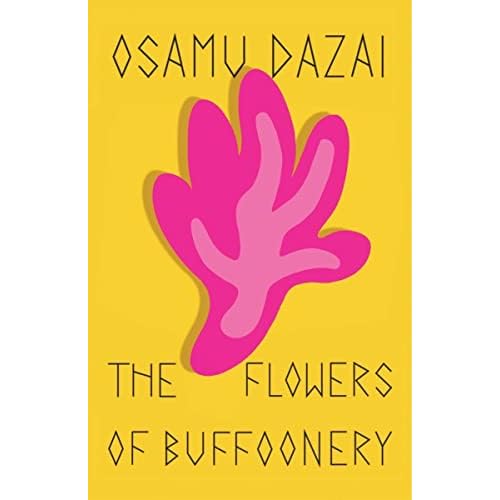
If Yozo himself is what stays with you, look for The Flowers of Buffoonery, an early Dazai novella whose hero is also named Oba Yozo: a young man recovering in a seaside sanatorium after a suicide pact, surrounded by friends who keep up a stream of jokes. Read after No Longer Human, it shows the clowning theme years before Dazai gave it its final form, and its self-interrupting narrator is a good corrective to the idea that Dazai only wrote in one dark register.
Osamu Dazai
An early novella with a hero also named Oba Yozo, recovering after a suicide pact among joking friends. It shows the clowning theme before No Longer Human. About 96 pages in this edition.
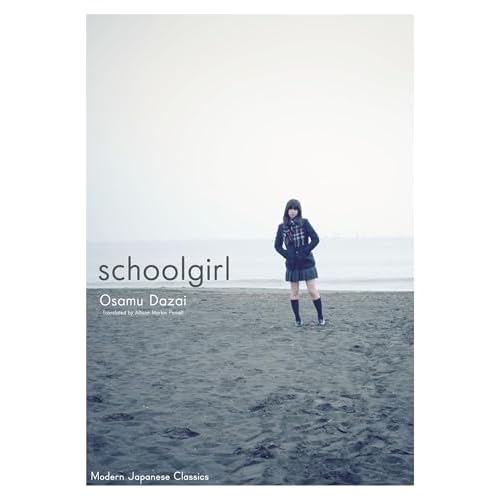
After that, the novella Schoolgirl shows the funnier, more playful writer: a single day in the head of a teenage girl, light where No Longer Human is heavy. It is the best quick proof that the confessional voice Dazai used for Yozo could also be warm and curious.
Osamu Dazai
One day in the head of a teenage girl: the funnier, warmer side of Dazai’s confessional voice. About 104 pages in this edition.
Within Japanese fiction, Natsume Soseki’s Kokoro (1914) makes a strong companion. It too ends in a long written confession by a man convinced he has failed other people, and it too leaves the reader weighing that confession against how others saw him. It is calmer and more formal than Dazai, which makes the contrast instructive.

Natsume Soseki
Soseki’s novel that ends in a long written confession by a man who believes he failed others; calmer and more formal than Dazai. About 256 pages in this edition.
Outside Japan, the closest relative is Dostoevsky’s Notes from Underground, another first-person confession by a man who despises himself and the people around him; the site’s Dostoevsky reading order places it. Camus’s The Stranger offers an outsider who, unlike Yozo, feels no shame at all, which makes it a fascinating companion; see Camus in order. Kafka’s estranged sons, especially in The Metamorphosis, are cousins too (Kafka in order). For a later Japanese novelist working with isolation in a gentler key, try the Murakami reading order.
What is No Longer Human about, in one sentence?
It is the notebooks of Oba Yozo, a man who has never understood other people and hides behind clowning, tracing his life through drink, a failed suicide pact and addiction to the point where he judges himself disqualified as a human being.
Is No Longer Human based on Osamu Dazai's life?
It draws heavily on it: his wealthy northern family, student politics, a suicide pact in which a woman died, addiction and a psychiatric hospital stay. But it is a shaped novel with a frame and an epilogue that question Yozo’s account, not a diary.
How long is No Longer Human?
It is short: the New Directions paperback of Keene’s translation runs to about 177 pages, and many people read it in one or two sittings.
Which translation of No Longer Human should I read?
Start with Donald Keene’s 1958 translation, the standard English text, published in paperback by New Directions. Mark Gibeau’s 2018 version, titled A Shameful Life, is a closer, rougher alternative worth reading second.
What does the ending of No Longer Human mean?
Yozo ends emptied out in a remote house, beyond happiness or unhappiness. The epilogue then has a woman who knew him remember him as a good, gentle young man, leaving open whether he was truly inhuman or simply judged himself too harshly.
Is No Longer Human a depressing book?
Yes, it is bleak, but it is flat and often wry rather than melodramatic. Readers in a fragile place may want to wait, and should treat it as a novel rather than a mirror or a guide.
No Longer Human rewards a reader who doubts its narrator
No Longer Human looks like a straightforward confession of despair, but its frame and epilogue make it a book about how a man sees himself versus how others saw him. Read it in Keene’s translation, slow down for the last pages, keep Dazai’s life beside the novel rather than in place of it, and go on to The Setting Sun.