Sylvia Plath poems: where to start, which eleven to read first, and which book holds them
Most people meet Sylvia Plath's poems as two titles, "Daddy" and "Lady Lazarus", read in a classroom as if they were the whole of her.
They are not. Plath wrote poems of new motherhood, hospital rooms, bees, hills, mirrors and riddles, and her best work is funny, precise and very strange about ordinary things. This page names eleven poems to read first, says in a line what each one does, and then settles the question that trips up most new readers: which book to buy, because the famous collection, Ariel, exists in two different versions.
Start with Ariel, in the Restored Edition that follows Plath’s own order, and read “Morning Song”, “Tulips”, “Ariel” and the bee poems before “Daddy”. Add The Collected Poems (1981), which holds everything including “Mirror”, “Metaphors” and “Edge”. Keep The Colossus, her first book, for when you want to see where the voice came from.
Eleven Sylvia Plath poems to read first, and what each one does
The list below runs roughly from the easiest way in to the poems that need the most context. It is not a ranking. Plath is still in copyright, so this page quotes no verse; each note says what the poem is doing so that you know what to watch for when you open the book. If you came here for her novel, journals or a biography, the site’s guide to all of Sylvia Plath’s books covers those; this page stays on the poetry.
- “Morning Song” (1961). A poem about the first weeks with a newborn that refuses greeting-card feeling: the mother is honest about feeling strange to her own baby, and then tender anyway. It opens Ariel in both versions.
- “Metaphors” (1959). A nine-line riddle in which every line is nine syllables, and the answer is pregnancy. The best proof that Plath could be playful and formally exact.
- “Mirror” (1961). The mirror itself speaks, flat and truthful, while a woman returns to it day after day. Short, much taught, and a clean introduction to how Plath gives voice to objects.
- “Tulips” (1961). A hospital patient wants blankness and rest, and a bunch of red flowers will not let her have it. Read it for the way a single image takes over a room.
- “The Colossus” (late 1950s). The speaker tends a vast broken statue that stands for a dead father. The title poem of her first book, and an early, more controlled version of a theme “Daddy” later blows open.
- “The Arrival of the Bee Box” (1962). One of five bee poems written in autumn 1962. A box of bees on the doorstep becomes a question about power and fear; read the whole sequence together.
- “Ariel” (1962). A dawn ride on a horse, written at speed and read at speed. The title poem of the famous book, and the clearest example of her late music.
- “The Applicant” (1962). A bitter comic monologue in the voice of a salesman interviewing a man for a wife. Satire of marriage as a product, closer to a sketch than a confession.
- “Daddy” (1962). A nursery-rhyme rhythm used for rage against a father and a husband, with Holocaust imagery that critics still argue about. Read it after the others, not first.
- “Lady Lazarus” (1962). A performer who returns from the dead for a leering crowd. It is about spectacle and survival as much as despair, and often misread as a simple confession.
- “Edge” (1963). One of the last poems she wrote, very still and very cold. It is in The Collected Poems and in the Ariel that Ted Hughes arranged, but not in Plath’s own Ariel selection.
Two notes on the list. First, “Mirror” and “Metaphors” are the poems searchers ask about most after the famous pair, and neither appears in Ariel; that is the single best reason to own The Collected Poems as well. Second, “Daddy” and “Lady Lazarus” read differently once you have heard the voice of “Morning Song” and the bee poems: you hear performance and dark comedy, not only a woman in pain.
Three Sylvia Plath poetry books to buy, in this order


Ariel as Ted Hughes arranged it, or Ariel in Plath's own order
Sylvia Plath died by suicide in February 1963, at thirty. She left a black folder holding a finished manuscript of poems titled Ariel, in an order she had chosen. Her estranged husband, the poet Ted Hughes, was her executor, and the Ariel published in 1965 in Britain, and the next year in the United States, was his arrangement, not hers. He dropped some of her poems, among them several of the most openly angry ones about the marriage, and added poems she wrote in her last weeks, including “Edge” and “Words”.
The difference changes what the book means. Plath’s own manuscript begins with “Morning Song” and ends with the bee sequence, so it closes on winter and the hope of spring. Hughes’s version ends with the darker late poems, and for decades readers took it as a book that walks steadily towards her death. In 2004 the Restored Edition put Plath’s selection and order back, with a foreword by her daughter, Frieda Hughes, and a facsimile of the typescript. The later poems Hughes had added appear at the back, so nothing is lost.
Which to read? For a first reading, the Restored Edition. It is the book Plath designed, it shows the range of the 1962 poems rather than only their bleakest edge, and it lets you read her death as a fact about her life rather than as the plot of the book. Read Hughes’s arrangement only if you are studying how Plath was received, since most criticism written before 2004 quotes from it. Hughes is also the reason we have the poems at all, and his long role as editor of her work is part of the story either way.
Sylvia Plath
The Ariel manuscript as Plath left it, opening with Morning Song and closing with the bee poems, with a reproduction of her typescript and a foreword by Frieda Hughes. The poems Ted Hughes added to the 1965 Ariel, such as Edge, are included at the back. Start here for Tulips, Ariel, Daddy, Lady Lazarus and The Applicant. This Harper Perennial paperback runs to about 256 pages, much of it facsimile.
Plath’s death is often treated as the key to every poem. It is a fact about her life, not the meaning of the work: many of these poems are about birth, bees, horses and marriage. If her poems, or anything else, bring up difficult feelings, they can sit alongside professional support. In the US you can call or text 988.
The Collected Poems: every Plath poem, in the order she wrote them
The Collected Poems, edited by Ted Hughes and published in 1981, prints the adult poems in the order of writing, with notes and a selection of fifty or so early poems at the back. In 1982 it won the Pulitzer Prize for Poetry, the first time the prize went to a poet after her death. If you buy one book of Plath’s poetry and only one, there is a case for this one: it is the only place where “Mirror”, “Metaphors”, “Edge”, the Ariel poems and the early work all sit together.
Reading it in order is its own experience. You can watch the formal student poems of the mid-1950s loosen in the transitional poems of 1960 and 1961, the years of “Mirror”, “Tulips” and the radio verse play “Three Women”, and then break into the rush of October 1962, when she wrote many of the Ariel poems in a matter of weeks. Two smaller posthumous books, Crossing the Water and Winter Trees, gathered much of that middle period; everything in them is here too, so you do not need them separately.
The trade-off is that chronology erases Plath’s own design for Ariel, and a long book of poems in date order is easier to browse than to read through. That is why it comes second here: read Ariel as a book first, then use The Collected Poems to find the poems around it.
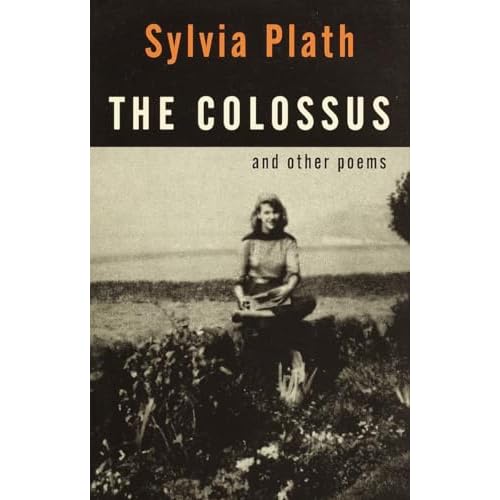
The Colossus, Plath's first book, and why it can wait
The Colossus and Other Poems was the only collection of poems Plath published in her lifetime, first in Britain in 1960 and in a slightly different American edition a couple of years later. It is a book of sea, rock, gardens and family ghosts, written in tight stanzas and dense vocabulary. The title poem, with its giant broken father-statue, is the obvious way in, and the book shows a poet working hard at craft before she found the speed of 1962.
It is third because many readers find it cooler and more effortful than Ariel, and every poem in it is also in The Collected Poems. Buy it on its own when you want to read her first book the way readers met it in 1960, or when you are writing about how her style changed. It is a short book, and a good one to carry.
Ariel Restored, Collected Poems and The Colossus compared
Read first Ariel: The Restored Edition | Everything The Collected Poems | Where it began The Colossus and Other Poems | |
|---|---|---|---|
| | | |
| Our rating | 9.4 /10 | 9.2 /10 | 8.3 /10 |
| First published | Ariel 1965; Restored Edition 2004 | 1981 | 1960 (UK) |
| Poems from our list | Morning Song, Tulips, Ariel, bee poems, The Applicant, Daddy, Lady Lazarus; Edge at the back | All eleven | The Colossus |
| Arranged by | Plath | Date of writing (ed. Ted Hughes) | Plath |
| BUY NOW | BUY NOW | BUY NOW |
Reading order for Plath's poems after the first eleven
Once you have read the Restored Ariel through, go to The Collected Poems and read the poems of 1961 and early 1962 in a row: this is where Plath’s voice turns, and poems such as “Tulips”, “Mirror” and “Elm” make more sense side by side. Then read “Three Women”, the verse play for three voices set in a maternity ward, which is one of the least known and most humane things she wrote. Finally read the last poems of January and February 1963 in date order, including “Edge” and “Words”, knowing that she did not choose them for Ariel.
Some readers like to pair the poems with prose. Plath’s novel, The Bell Jar, and her journals both throw light on the poetry; the site’s Sylvia Plath books guide sets out the order for those and a biography. If what draws you to Plath is the way a writer turns inner life into form, the site’s guide to the best novels about therapy collects fiction that does that work in prose, and the Virginia Woolf reading order is the natural next step for a reader who wants that intensity at novel length.
Common misreadings of Sylvia Plath's poems
The first misreading is that Plath is a single-mood poet. The label “confessional” stuck to her early, and it hides how much of her work is satire, riddle and performance. “The Applicant” is a comic sketch; “Metaphors” is a joke with a precise rule; “Lady Lazarus” is a stage act, with a speaker who mocks the crowd that came to watch.
The second is that the poems are autobiography to be decoded. The poems draw on her life, her father’s early death, her marriage and her children, but the speakers are made things. Reading “Daddy” as a factual account of Otto Plath, for example, misses that the poem builds a mythic figure out of fairy tale and history, which is exactly why its Holocaust imagery is still debated.
The third is that Ariel was always a book about dying. That reading rests largely on Hughes’s arrangement. Plath’s own order ends in a beehive over winter, waiting for spring. Readers are free to weigh how much that ending should count, but they should know that the book was designed to end there. For more novelists whose lives are read into their work, the Osamu Dazai reading order and the site’s page on novels about psychiatrists take up the same question from other directions.
What are Sylvia Plath's most famous poems?
“Daddy”, “Lady Lazarus”, “Ariel”, “Tulips”, “Morning Song”, “Mirror” and “Edge” are the most read, with “Metaphors” and “The Applicant” close behind. Most come from 1961 to early 1963.
Which book has the poem "Mirror"?
“Mirror” (1961) is not in Ariel. You will find it in The Collected Poems, and it first appeared in book form in the posthumous collection Crossing the Water.
Should I read Ariel or the Ariel Restored Edition?
The Restored Edition for a first reading: it prints Plath’s own selection and order. The original 1965 Ariel was arranged by Ted Hughes, who removed some poems and added later ones such as “Edge”. The Restored Edition includes those added poems at the back.
Does The Collected Poems include everything in Ariel?
Yes. It holds every adult poem Plath wrote, arranged by date of writing, so it includes all the Ariel poems in both versions, plus early work in an appendix. It won the Pulitzer Prize for Poetry in 1982.
Where should a beginner start with Sylvia Plath's poems?
Read “Morning Song”, “Metaphors”, “Mirror” and “Tulips” first, then “Ariel” and the bee poems, and only then “Daddy” and “Lady Lazarus”. In book form, start with Ariel in the Restored Edition.
When did Sylvia Plath die?
Sylvia Plath died by suicide in London in February 1963, at thirty. Ariel and most of her famous poems were published after her death.
Plath's poems start with Morning Song and the Restored Ariel, not Daddy
Read Ariel in Plath’s own order first, and meet “Morning Song”, “Tulips”, “Ariel” and the bee poems before “Daddy” and “Lady Lazarus”. Add The Collected Poems for everything else, including “Mirror”, “Metaphors” and “Edge”. Keep The Colossus for when you want her beginnings.