The Best Books on Attachment Theory: From Bowlby to Attached
Attachment theory is the rare psychology framework that survived both the replication crisis and its own TikTok fame. These eight books run from the dating-app-era field guide to Bowlby's original lectures — ranked by what each actually delivers, with the hype separated from the science.
The best book on attachment theory for most readers is Attached by Amir Levine and Rachel Heller — the clearest popular guide to anxious, avoidant, and secure styles in adult romance. Go deeper with Robert Karen’s Becoming Attached for the science’s full story, and Bowlby’s A Secure Base for the source.
- Styles are patterns, not diagnoses Anxious, avoidant, and secure are learned strategies that shift with experience — the good books treat them as starting points, not sentences.
- Popular first, then the science Attached takes an afternoon; Becoming Attached tells you where the ideas came from and which claims are solid.
- The theory earns its fame in couples work Attachment is the engine behind EFT, the best-tested couples therapy — Hold Me Tight is where theory becomes repair.
This guide is part of our psychology books to understand yourself silo — few frameworks explain your patterns as efficiently as knowing your attachment style.
What attachment theory actually claims — and what it doesn't
John Bowlby’s wager was that the infant’s bond to a caregiver is not sentimentality but survival equipment, and that the strategies a child learns for keeping a caregiver close — protest, cling, go quiet, go it alone — persist as templates for adult love. Mary Ainsworth’s Strange Situation experiments turned the idea into measurable categories, and fifty years of longitudinal work has followed those infants into adulthood.
What the theory does not claim is as important. Styles are tendencies, not types — most people are secure, many are mixed, and style shifts with relationships and with work. The internet version that treats “avoidant” as an astrology sign or a reason to write someone off is a caricature; the books below are the corrective.
Where to start, by what you need
If you want to understand your own romantic patterns this month, start with Attached — it converts the research into a working vocabulary in an afternoon, and its protest-behavior checklist alone has paid for millions of copies. If your relationship needs repair rather than diagnosis, go straight to Hold Me Tight: Sue Johnson’s Emotionally Focused Therapy is attachment theory turned into conversations, with the strongest outcome data in couples work.
For depth, two paths. Robert Karen’s Becoming Attached is the biography of the science — Bowlby, Ainsworth, the fights and the findings — and the single best book for judging what the theory can bear. Clinicians and serious readers should then meet Bowlby directly in A Secure Base, and see the modern clinical synthesis in Wallin’s Attachment in Psychotherapy. Fern’s Polysecure extends the frame to non-monogamy — the rare extension book with real substance.
Independently researched and ranked by our editorial team. As an Amazon Associate, this site earns from qualifying purchases made through the links below.
How to choose an attachment book
- Your actual question
Dating patterns, couple repair, parenting, and theory are four different books.
Look forAttached for your own patterns, Hold Me Tight for a relationship, Raising a Secure Child for kids, Karen for the science.AvoidReading a dating-focused book and expecting it to explain the whole research tradition. - Nuance about styles
The theory’s popularity has outrun its precision.
Look forBooks that treat styles as changeable strategies and mention earned security.AvoidAnything using attachment styles as fixed types, diagnoses, or reasons to dismiss whole categories of people. - Depth of evidence
Claims range from fifty-year longitudinal data to weekend-workshop speculation.
Look forAuthors who cite Ainsworth, Main, and the longitudinal studies — Karen and Wallin are the benchmarks.AvoidBooks that stretch attachment to explain everything from career choice to astrology-adjacent typing.



#1: Attached — Best overall
Amir Levine & Rachel Heller
The book that carried attachment theory into dating life — anxious, avoidant, secure, with checklists sharp enough to sting. Simplified, occasionally harsh on avoidants, and massively useful.
- Made attachment styles usable for ordinary dating and relationships
- The anxious-avoidant trap described so recognizably it reads like surveillance
- Concrete scripts and checklists, not just typology
- Simplifies the science; styles are more continuous and changeable than the book implies
- Noticeably harsh toward avoidant readers
Read it if you want to understand your attachment style in dating and relationships.
Skip it if you want the full science; start with #3.
Pairs with Hold Me Tight (#2) if you are in a couple.
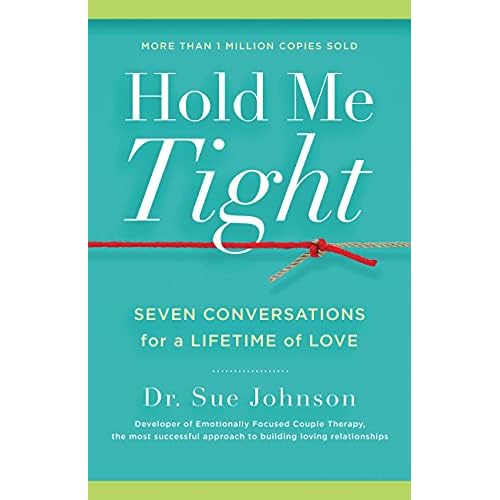
#2: Hold Me Tight — Best for couples
Sue Johnson
The founder of Emotionally Focused Therapy walks couples through seven structured conversations. Attachment science as practice — backed by the best outcome data in couples therapy.
- Written by the founder of EFT — the couples therapy with the strongest outcome research
- The ‘demon dialogues’ give couples a shared language for their worst loops
- Seven structured conversations you can actually do at home
- Repetitive across the middle conversations
- Assumes both partners are willing — the stuck-partner problem is unaddressed
Read it if you are in a relationship and want structured conversations to reconnect.
Skip it if you are single and want to understand your patterns.
Pairs with Attached (#1).
#3: Becoming Attached — Best on the science
Robert Karen
The definitive narrative history — Bowlby’s fight with psychoanalysis, Ainsworth’s experiments, the daycare wars. Reads like biography and doubles as the best evidence review for lay readers.
- The best narrative history of attachment science — Bowlby, Ainsworth, and the fights that built the field
- Reads like intellectual biography, not textbook
- Fair to the controversies, including the daycare wars
- Published 1994 — the neuroscience era and adult-attachment boom came after
- Long for readers who only want the practical takeaways
Read it if you want the story of how attachment research developed.
Skip it if you want practical relationship advice.
Pairs with A Secure Base (#4).
#4: A Secure Base — The source
John Bowlby
Bowlby’s late lectures — the theory stated by its architect, including the clinical applications. Formal mid-century prose, but shorter and clearer than the trilogy; the right primary text.
- Bowlby himself, in his most accessible late lectures
- The source of the core ideas every popularization waters down
- Short — the gentlest possible entry to the primary literature
- Still academic in register; lay readers may prefer to arrive via Karen
- Clinical examples are dated
Read it if you want Bowlby's own statement of the theory in short lectures.
Skip it if you want a modern, practical book.
Pairs with Becoming Attached (#3).
#5: Attachment in Psychotherapy — Best clinical synthesis
David J. Wallin
The modern clinical standard — attachment research, mentalization, and mindfulness woven into how therapy actually changes working models. Dense, rewarding, widely assigned in training.
- The standard bridge from attachment research to clinical practice
- Integrates mindfulness and mentalization with attachment theory unusually well
- Rich case material; therapists cite it constantly
- Written for clinicians — dense for general readers
- Its integration outpaces the research support in places
Read it if you are a therapist or student and want the clinical application.
Skip it if you are reading for your own relationships.
Pairs with A Secure Base (#4).
#6: Polysecure — Best extension
Jessica Fern
Fern applies attachment theory to consensual non-monogamy — and in doing so writes one of the clearest accounts of earned security anywhere. Useful well beyond its stated audience.
- The first serious application of attachment theory to consensual non-monogamy
- The HEARTS framework is useful well beyond its niche
- Compassionate, clinically grounded voice
- Audience-specific — monogamous readers will skim whole sections
- Leans on attachment constructs the research base hasn’t tested in CNM contexts
Read it if you are in or exploring a non-monogamous relationship.
Skip it if you want the standard theory first.
Pairs with Attached (#1).
2 more titles round out our list, all shown in the quick picks above: The Power of Attachment by Diane Poole Heller (2019) — somatic exercises toward earned security; Raising a Secure Child by Kent Hoffman, Glen Cooper & Bert Powell (2017) — applying the theory where it started — with kids.
How the top picks compare
Best overall Attached | Best for couples Hold Me Tight | Best on the science Becoming Attached | The source A Secure Base | Best clinical synthesis Attachment in Psychotherapy | |
|---|---|---|---|---|---|
|
|
|
|
|
| |
| Our rating | 9.1 /10 | 9.0 /10 | 8.9 /10 | 8.8 /10 | 8.7 /10 |
| Format | Popular psychology | Couples / self-help | Science history | Primary text | Clinical |
| First published | 2010 | 2008 | 1994 | 1988 | 2007 |
| Price | $9.01 | $14.99 | $24.78 | $24.99 | $69.99 |
| BUY NOW | BUY NOW | BUY NOW | BUY NOW | BUY NOW |
How we picked these attachment books
-
What we looked for
We included three kinds of book: popular guides that apply attachment styles to relationships, a history of the research, and texts by or for clinicians. Popular books simplify the theory, so we paired them with the source material for readers who want the full picture.
-
What shaped the list
We note where a book extends attachment ideas beyond the original research.
What is the best book on attachment theory?
For most readers, Attached by Levine and Heller — the fastest, clearest guide to how attachment styles play out in adult romance. For the science behind it, Robert Karen’s Becoming Attached; for couples, Sue Johnson’s Hold Me Tight; for the primary source, Bowlby’s A Secure Base.
Can your attachment style change?
Yes — the research term is earned security. Styles are learned strategies, not fixed traits, and they shift through secure relationships, therapy, and deliberate practice. Longitudinal studies find meaningful movement across adulthood; the better books treat your current style as a starting point.
Is attachment theory scientifically valid?
Its core is among the best-supported frameworks in developmental psychology — decades of longitudinal studies back the basic claims. What’s shakier is the pop version: adult styles are less stable and less predictive than internet quizzes imply. Becoming Attached is the best guide to which claims hold.
Should I read Bowlby directly?
If you’re a clinician or a completist, yes — A Secure Base is the accessible entry, far shorter than the Attachment and Loss trilogy. General readers lose little by starting with Karen’s history instead, which quotes the essential Bowlby while telling the fuller story.
Bottom line
Attached for your patterns, Hold Me Tight for your relationship, Becoming Attached for the science, Bowlby for the source. Styles are strategies, not sentences — every book worth reading on this list agrees on that.