The Best Psychology Books to Understand Yourself
Self-understanding is not one subject — it splits into meaning, attachment, trauma, thinking and emotion, and a book that is excellent on one is usually silent on the others. These eight cover the map between them, ranked by how much they change what a reader notices about their own life rather than by how much research each one summarises.
Independently researched and ranked by our editorial team. As an Amazon Associate, this site earns from qualifying purchases made through the links below.

Viktor E. Frankl
A concentration-camp memoir followed by the outline of logotherapy: that meaning is constructed through what you do, what you love, and the stance you take toward suffering you cannot change.

Bessel van der Kolk
The case that trauma is stored in the body and outlasts the story a person can tell about it. Sweeping, occasionally over-claimed, and the reason many readers finally sought treatment.

Amir Levine & Rachel Heller
Adult attachment theory in plain language: anxious, avoidant, secure, and what happens when the first two find each other. Reductive by design, and useful for exactly that reason.

Daniel Kahneman
Two systems, dozens of biases, and a Nobel laureate’s honest note that knowing about them does not immunise you. Long, and worth the length. Some priming studies have since failed to replicate; the core work on judgement stands.

David D. Burns
The original cognitive therapy self-help book, with the thought-record exercises intact. Dated in tone and still one of the few self-help books with trial evidence behind it.

Alice Miller
Ninety minutes of reading about children who learn to meet their parents’ emotional needs, and the adults they become. Uncomfortable in a way that is hard to unsee.

Daniel Goleman
The book that put self-awareness and emotional regulation into general use. The science has moved on and the claims were always broad — but the framework it gave people has held.
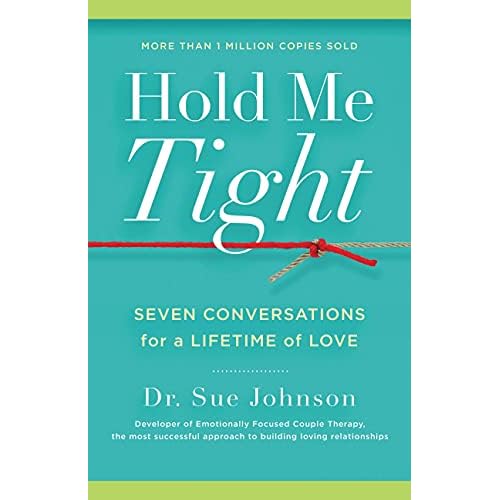
Sue Johnson
Emotionally focused therapy for readers: seven conversations that reframe recurring fights as attachment protests. The most evidence-backed relationship book on this list.
Quick comparison
| Rank | Book | Author | Award | Best for | Score |
|---|---|---|---|---|---|
| #1 | Man’s Search for Meaning | Viktor E. Frankl | Best overall | Meaning under pressure | 9.5 |
| #2 | The Body Keeps the Score | Bessel van der Kolk | Best on trauma | Why insight is not enough | 9.3 |
| #3 | Attached | Amir Levine & Rachel Heller | Best on relationships | Your pattern, named | 9.0 |
| #4 | Thinking, Fast and Slow | Daniel Kahneman | Best on thinking | How your judgement fails | 8.9 |
| #5 | Feeling Good | David D. Burns | Best practical | Doing something about it | 9.0 |
| #6 | The Drama of the Gifted Child | Alice Miller | Best on childhood | The cost of being the good one | 8.8 |
| #7 | Emotional Intelligence | Daniel Goleman | Best on emotion | The vocabulary | 8.6 |
| #8 | Hold Me Tight | Sue Johnson | Best on couples | The argument underneath the argument | 8.7 |
In this guide
- Best Books on Attachment Theory
- Best Books on Anxiety
- Best Books on Trauma
- Best Books on Emotional Intelligence
Frequently asked questions
Which psychology book should I read first to understand myself?
Frankl if the question underneath is ‘what is this for’, van der Kolk if it is ‘why do I react like this’, Attached if it is ‘why do my relationships go the same way’. Those three cover most of what people mean by the question.
Do self-help psychology books actually work?
Some do. Guided self-help based on cognitive behavioural therapy — Feeling Good is the classic example — has repeatedly outperformed waiting-list controls for mild to moderate depression and anxiety. Books without an exercise component mostly change vocabulary rather than behaviour, which is not nothing but is not treatment.
Is reading about psychology a substitute for therapy?
No, and the better books on this list say so themselves. Reading gives you a map; therapy gives you another person noticing what you leave out. If something here lands hard enough to unsettle you, that is a reason to talk to someone rather than to read faster.