Oliver Sacks Books in Order: Where to Start with the Great Case Histories
Oliver Sacks revived a dead form — the clinical case history as literature — and spent fifty years proving that neurology, honestly described, reads like Chekhov. Here are his eight essential books in the order that serves a new reader best, from the famous cases to the deathbed essays.
Start Oliver Sacks with The Man Who Mistook His Wife for a Hat — the case-history collection that made him famous and still the perfect introduction. Then Awakenings, his masterpiece, and An Anthropologist on Mars. Finish with On the Move, the autobiography that reveals the man behind the cases.
- The case histories are the core Hat and An Anthropologist on Mars are the essential Sacks — portraits of people, not deficits, in the Romantic-science tradition of Luria he claimed as his own.
- Awakenings is the masterpiece The 1969 L-DOPA trials on the sleeping-sickness patients — ecstatic awakening, tragic relapse — is his deepest book and the one that costs the most to read.
- The late Sacks is a different gift On the Move and Gratitude trade clinical portraits for self-portrait — motorcycles, amphetamines, love late in life, and how a scientist faces dying.
This guide is part of our great minds of psychology silo — Sacks did for the neurology case what Yalom did for the therapy tale: made the patient a person and the clinic a place where literature happens.
The clinical tale — what Sacks actually invented
Sacks called his tradition “Romantic science,” borrowing from his mentor A. R. Luria: the case history written so the person is never dissolved into the diagnosis. The man who mistakes his wife for a hat is not an agnosia; he is a musician who navigates his life by singing through it. That insistence — deficit and adaptation, loss and the strange gifts inside loss — is why the books outlived their science and why clinicians of every kind, therapists included, treat them as training in seeing patients whole.
The method peaks in Awakenings: post-encephalitic patients frozen for decades, briefly resurrected by L-DOPA in 1969, ecstatically awake, then tipped into chaos as the drug’s effects turned unstable. Sacks records the summer of resurrection and the autumn of relapse with a fidelity that made the book a play, a film, and a permanent argument that medicine’s deepest data is biography. W. H. Auden called it a masterpiece before the world did.
The reading order that works
Start with The Man Who Mistook His Wife for a Hat — twenty-four cases, each short, the full range of his curiosity and warmth on display. Then An Anthropologist on Mars, the mature sequel: seven longer portraits, including Temple Grandin, whose chapter gave the book its title and autism one of its landmark depictions. Only then Awakenings — it is deeper and darker, and it lands harder once you know his voice. That trio is the essential Sacks; everything after is choosing by appetite.
The thematic books each own a territory: Musicophilia on what music does to and for the brain, Hallucinations on the mind’s phantoms — including his own amphetamine years — normalized without being explained away. Then the self-portraits: On the Move is the astonishing autobiography — the motorcycling, record-setting weightlifter with crippling shyness who became medicine’s great writer, open at last about his sexuality and the thirty-five celibate years. Gratitude is four short essays written while dying of ocular melanoma; read it last, the way he wrote it.
Independently researched and ranked by our editorial team. As an Amazon Associate, this site earns from qualifying purchases made through the links below.




#1: The Man Who Mistook His Wife for a Hat — Start here
Oliver Sacks
The collection that made the clinical tale famous: agnosias, amnesias, phantom limbs, and the people living inside them. The right first Sacks by a wide margin.
- The perfect introduction — 24 short cases, full range of curiosity and warmth
- Made the clinical tale a literary form again
- Deficit and gift held together: the person is never dissolved into the diagnosis
- Endlessly giftable — works for clinicians and general readers alike
- Some 1980s neurology has been superseded
- Occasional clinical vocabulary sends readers to the glossary
#2: Awakenings — The masterpiece
Oliver Sacks
The sleeping-sickness patients woken by L-DOPA in 1969, and what came after. Ecstatic, tragic, and the fullest proof that medicine’s deepest data is biography.
- His masterpiece — the 1969 L-DOPA awakenings recorded with total fidelity
- Resurrection and relapse in one arc; medicine’s deepest data as biography
- The footnotes alone are a second, wilder book
- The heaviest Sacks emotionally — pace yourself
- Dense clinical detail in stretches; the case summaries reward patience
#3: An Anthropologist on Mars — Best follow-up
Oliver Sacks
Seven paradoxical tales, including the Temple Grandin chapter that reframed autism for a generation. Longer, deeper portraits than Hat — the ideal second book.
- The mature case histories — seven longer, deeper portraits
- The Temple Grandin chapter reframed autism for a generation
- Adaptation, not just deficit — every case is a life reorganizing itself
- Longer essays demand more commitment than Hat’s short cases
- Some science, particularly on autism, has moved on
#4: On the Move: A Life — The autobiography
Oliver Sacks
Motorcycles, weightlifting records, amphetamine addiction, decades of celibacy, late love — the shy clinician’s life told with the candor he gave his patients.
- An astonishing life honestly told — motorcycles, records, addiction, late love
- Finally candid about his sexuality and the 35 celibate years
- Explains where the empathy in the case histories came from
- Episodic structure; less shaped than the clinical books
- Assumes familiarity with the career it narrates
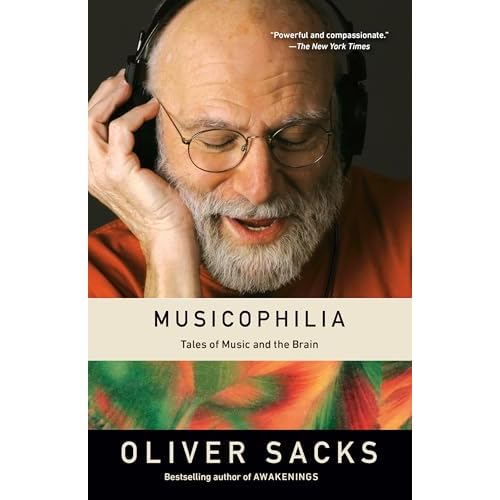
#5: Musicophilia — Best on music
Oliver Sacks
Musical hallucinations, amusia, savants, and the lightning-struck surgeon seized by Chopin — the case-history method applied to music, his most beloved theme.
- The case-history method applied to his most beloved theme
- Musical hallucinations and the lightning-struck pianist are unforgettable
- Deep love of music audible on every page
- Chapters vary in strength; some are single anecdotes stretched
- Less unified than the earlier collections
#6: Hallucinations — The mind's phantoms
Oliver Sacks
Charles Bonnet visions, migraine auras, grief apparitions, and a frank chapter on his own drug years — hallucination reclaimed from madness as part of the mind’s repertoire.
- Reclaims hallucination from madness — visions as part of the mind’s repertoire
- The chapter on his own amphetamine years is fearless
- Deeply comforting for anyone frightened by their own brain’s productions
- Catalog structure — more survey than story
- Individual cases get less room than in the portrait books
2 more titles round out our list, all shown in the quick picks above: Gratitude by Oliver Sacks (2015) — four essays on dying, written while doing it; The River of Consciousness by Oliver Sacks (2017) — the scientist-essayist at his most speculative.
How the top picks compare
Start here The Man Who Mistook His Wife for a Hat | The masterpiece Awakenings | Best follow-up An Anthropologist on Mars | The autobiography On the Move: A Life | Best on music Musicophilia | |
|---|---|---|---|---|---|
|
|
|
|
|
| |
| Our rating | 9.2 /10 | 9.0 /10 | 8.9 /10 | 8.8 /10 | 8.6 /10 |
| Format | Case histories | Case history / medicine | Case histories | Autobiography | Case histories / science |
| First published | 1985 | 1973 | 1995 | 2015 | 2007 |
| Price | $8.46 | $11.47 | $11.14 | $10.48 | $9.49 |
| BUY NOW | BUY NOW | BUY NOW | BUY NOW | BUY NOW |
How to choose your Sacks
- Cases, themes, or the life
Three kinds of Sacks book serve three kinds of curiosity.
Look forHat and Anthropologist for portraits, Musicophilia or Hallucinations if a theme pulls you, On the Move for the man.AvoidStarting with the essays or the autobiography — the case histories are what everything else assumes. - Emotional weather
The books range from delighted to devastating.
Look forAwakenings and Gratitude when you can afford to be moved; Musicophilia when you want wonder without the weight.AvoidReading Gratitude casually in a bookstore aisle — it is four pages of essays and it will take you apart. - Science currency
Some neuroscience has moved on; the observation hasn’t.
Look forThe portraits and the method — what it is like to be the patient — which no newer textbook replaces.AvoidTreating specific 1980s mechanisms as current — read him for the seeing, check the science elsewhere.
Which Oliver Sacks book should I read first?
The Man Who Mistook His Wife for a Hat — short cases, full range, and the voice that carries everything else. An Anthropologist on Mars second, Awakenings third once you’re attached; it’s the deepest and the saddest.
Is Awakenings a true story?
Yes — Sacks really did wake post-encephalitic patients with L-DOPA at Beth Abraham Hospital in 1969, and the ecstatic awakenings and painful relapses in the book are documented clinical history. The 1990 film with Robin Williams is fictionalized but faithful to the arc.
Do Sacks's books hold up scientifically?
The observations hold up better than some mechanisms — neuroscience has refined much since the 1980s. But the books were never primarily mechanism; they’re phenomenology, what conditions are like from inside a life. That data doesn’t expire, which is why medical schools still assign him.
Why do therapy readers love Sacks?
Same reason they love Yalom: both insist the patient is a person before a diagnosis, and both write clinical encounters as literature. Sacks’s cases are training in attention — the skill therapists call presence — practiced on brains instead of minds. His memoir pairs naturally with our psychiatrist-memoir list.
Bottom line
Hat first, An Anthropologist on Mars second, Awakenings when you’re ready to be wrecked, On the Move for the astonishing life, Gratitude last — exactly as he wrote it. The science ages; the seeing doesn’t.