The Best Books on Social Anxiety: For Shyness That Runs Your Life
Social anxiety is the fear that you'll be revealed — awkward, boring, defective — and judged for it, and it's the most common anxiety disorder after phobias. It's also among the most treatable: the CBT playbook is mature, and the self-help versions genuinely work. Eight books, ranked, from the science-warm to the workbook-rigorous.
The best book on social anxiety is Ellen Hendriksen’s How to Be Yourself — the warmest, most scientifically current account of the inner critic behind the fear. Add the Antony and Swinson workbook for structured exposure practice, and Gillian Butler’s Overcoming Social Anxiety for the classic CBT program.
- The Reveal is the core fear Hendriksen’s frame: social anxiety is the belief that something about you is fatally deficient and about to be exposed — the fear isn’t of people but of the verdict.
- Safety behaviors keep the fear alive Rehearsing sentences, avoiding eye contact, drinking to attend — the tricks that get you through the evening are what prevent the brain from learning you’d have been fine.
- Exposure works — gradually and on purpose The evidence is strong: graded, repeated contact with feared situations, minus the safety behaviors, retrains the alarm. Every serious book here is a delivery system for that.
This guide is part of our psychology books to understand yourself silo — social anxiety is self-knowledge with the volume distorted: the Inner Critic narrates a version of you that observers, the research shows, mostly never see.
What social anxiety is — and why it persists
The mechanism is a prediction machine gone conservative: the socially anxious brain forecasts judgment, generates a spotlight (everyone will notice), and floods the body before the doorbell rings. Two distortions do most of the work — the spotlight effect (people attend to you far less than it feels) and the post-event autopsy, in which the evening is replayed for evidence of failure. The research adds a merciful fact: anxiety is far less visible than it feels from inside — the trembling broadcast at full volume internally mostly doesn’t transmit.
Persistence is the puzzle exposure answers. Avoidance relieves the fear and thereby feeds it — every skipped party confirms the danger was real. Safety behaviors are subtler saboteurs: the rehearsed lines and phone-checking get you through the event while ensuring the brain credits the crutch, not you. That’s why the good books all converge on the same uncomfortable prescription — approach, gradually and repeatedly, with the crutches set down — and why the workbooks structure exactly that.
Which book for which reader
Start with Hendriksen’s How to Be Yourself — a clinician-scientist who has social anxiety herself, writing with unusual warmth about the Inner Critic and the Reveal, and folding the current science into something that reads like a friend who happens to be right. For structured practice, Antony and Swinson’s Shyness and Social Anxiety Workbook is the standard: hierarchies, exposure logs, cognitive tools, in clinic-tested order. Butler’s Overcoming Social Anxiety and Shyness is the leanest classic CBT alternative.
The rest of the shelf serves adjacent needs. Gazipura’s The Solution to Social Anxiety is the intensive pep-and-practice version — less measured than the clinicians, more momentum for readers who need a push. Cain’s Quiet is the essential companion rather than a treatment: introversion is not a disorder, and untangling temperament from fear changes what you’re actually working on. Cabane’s Charisma Myth gives the skills-forward reader presence exercises that double as exposure. And Aron’s Highly Sensitive Person serves the reader whose social overwhelm is sensory as much as social.
Independently researched and ranked by our editorial team. As an Amazon Associate, this site earns from qualifying purchases made through the links below.
How to choose a social anxiety book
- Company or curriculum
Some readers need to feel understood before they’ll practice; others want the program now.
Look forHendriksen for the companionable science; Antony and Swinson or Butler when you're ready to run actual exposures.AvoidReading warmly about exposure indefinitely — insight without approach behavior leaves the alarm untouched. - Anxiety or introversion — or both
Fear of judgment and preference for quiet are different things wearing similar clothes.
Look forCain to sort temperament from disorder — treat the fear, keep the temperament; many readers need exactly that permission.AvoidTrying to cure introversion into extroversion — the goal is choice restored, not personality replaced. - Severity and support
Self-help CBT works for mild-to-moderate social anxiety; severe cases deserve more.
Look forA therapist (or guided CBT, or medication assessment) when avoidance is shrinking your life — work, love, friendship — despite the books.AvoidWhite-knuckling severe social anxiety alone as a point of pride; treatment response rates argue loudly against it.


#1: How to Be Yourself — Best overall
Ellen Hendriksen
A clinical psychologist with social anxiety herself on the Reveal, the spotlight, and how exposure actually retrains the alarm — the most companionable serious book on the topic.
- The Reveal framing — fear of exposure, not of people — reorganizes the whole problem
- A clinician-scientist who has social anxiety herself; the warmth is earned
- Current science (safety behaviors, attention training) woven in without jargon
- Genuinely funny, which matters for a shame-adjacent topic
- Program structure is loose — pair with a workbook for systematic exposure
- Light on medication and severe presentations
Read it if you want a warm, modern explanation of why social anxiety persists and how to loosen it.
Skip it if you want worksheets; see #2.
Pairs with The Shyness and Social Anxiety Workbook (#2).
#2: The Shyness and Social Anxiety Workbook — Best workbook
Martin M. Antony & Richard P. Swinson
The standard self-guided treatment: build your fear hierarchy, run graded exposures, drop the safety behaviors, record the evidence. Clinic-grade structure at paperback price.
- The standard self-guided structure: hierarchies, graded exposures, logs
- Explicit about dropping safety behaviors — the detail that makes exposure work
- Clinic-tested sequencing from two leading anxiety researchers
- Covers cognitive tools and communication skills alongside exposure
- Workbook-dry; motivation must come from elsewhere
- Requires sustained effort most casual readers won’t give it — by design
Read it if you are ready to work through exposures on your own, week by week.
Skip it if you want to read rather than do exercises.
Pairs with How to Be Yourself (#1).
#3: Overcoming Social Anxiety and Shyness — Best classic CBT
Gillian Butler
Butler’s self-help course — patterns of thinking, reducing self-consciousness, building confidence — in the plainest effective form. The UK standard for a reason.
- The leanest proven CBT program on the shelf — no padding
- Butler helped build the treatment literature; the authority is real
- Excellent on reducing self-focused attention, the mechanism most self-help skips
- UK-standard self-help course structure with worksheets
- Plain to the point of gray — Hendriksen supplies the warmth this omits
- Less current on digital-era social fears
Read it if you want a short, plain CBT course.
Skip it if you want stories and examples; #1 has more.
Pairs with The Shyness and Social Anxiety Workbook (#2).
#4: Quiet — The essential companion
Susan Cain
Cain’s case for the quiet temperament in a loud culture. Not a treatment book — the diagnostic gift is separating what needs accepting (introversion) from what needs treating (fear).
- Separates introversion from anxiety — the diagnostic gift most anxious readers need first
- Restores dignity to the quiet temperament in an extrovert-normed culture
- Rich research storytelling: sensitivity, solitude, the extrovert ideal’s costs
- Changes what readers try to fix — often the most therapeutic move available
- Not a treatment book — no exposure program, no protocols
- The research syntheses occasionally stretch further than the studies
Read it if you are not sure whether you are anxious or simply introverted.
Skip it if you want treatment; this is not a treatment book.
Pairs with How to Be Yourself (#1).
#5: The Solution to Social Anxiety — Most motivational
Aziz Gazipura
A psychologist who clawed out of severe social anxiety himself: mindset work, self-acceptance, and escalating social boldness. Less measured than the clinicians, more fire.
- Written by someone who escaped severe social anxiety — the credibility lands
- Pairs self-compassion with escalating bold action, a genuinely effective combination
- High-energy voice that gets avoidant readers moving
- Strong on the identity level: from ‘anxious person’ to person practicing courage
- Less measured than the clinical books — enthusiasm occasionally outruns evidence
- Repetitive; the program could fit in half the pages
Read it if you respond to an energetic, motivational coach voice.
Skip it if you want a quiet, clinical tone.
Pairs with Not Nice by the same author, for approval-seeking.
#6: The Charisma Myth — Best skills-forward
Olivia Fox Cabane
Charisma decomposed into learnable behaviors. For the socially anxious, its real value is stealth exposure: practicing presence gives the spotlight something to do besides burn.
- Decomposes charisma into presence, warmth, and power — all learnable behaviors
- The exercises double as exposure with a purpose, which lowers their threat
- Practical for the workplace reader who needs skills this quarter
- Good on the inner-state work under the outer behaviors
- Not written for anxiety — clinical readers must adapt it
- Some techniques shade toward impression management over authenticity
Read it if you want to practise concrete social skills.
Skip it if you are in the early, most anxious stage; start with #1 or #2.
Pairs with How to Be Yourself (#1).
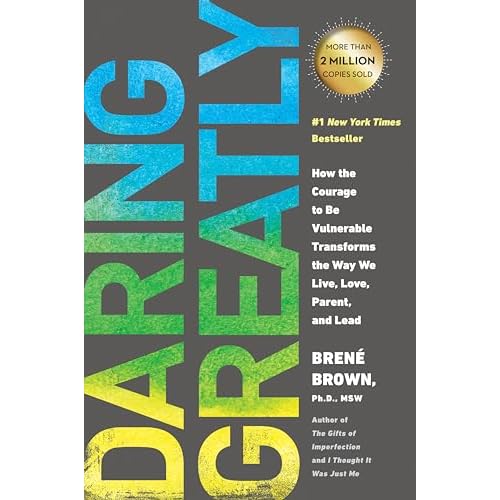
2 more titles round out our list, all shown in the quick picks above: The Highly Sensitive Person by Elaine N. Aron (1996) — when the overwhelm is sensory as much as social; Daring Greatly by Brené Brown (2012) — vulnerability as the alternative to hiding.
How the top picks compare
Best overall How to Be Yourself | Best workbook The Shyness and Social Anxiety Workbook | Best classic CBT Overcoming Social Anxiety and Shyness | The essential companion Quiet | Most motivational The Solution to Social Anxiety | |
|---|---|---|---|---|---|
|
|
|
|
|
| |
| Our rating | 9.1 /10 | 8.9 /10 | 8.6 /10 | 8.8 /10 | 8.4 /10 |
| Format | Psychology / self-help | CBT workbook | CBT self-help | Psychology / culture | Psychology / self-help |
| First published | 2018 | 2017 | 2016 | 2012 | 2013 |
| Price | $8.94 | $28.44 | $2.37 | $9.98 | $14.85 |
| BUY NOW | BUY NOW | BUY NOW | BUY NOW | BUY NOW |
How we picked these social anxiety books
-
What we looked for
Cognitive behavioural therapy with graded exposure is the best-studied treatment for social anxiety, so we gave priority to books that teach it step by step. We then added books for readers who first need to tell shyness and introversion apart from anxiety, and one skills book that works as gentle exposure practice.
-
What shaped the list
Each pick had to be written by a psychologist or clinician, or clearly labelled as a companion rather than treatment.
Which social anxiety book should I read first?
How to Be Yourself — Hendriksen’s warmth gets you willing, and her science is current. Then move to the Antony and Swinson workbook when you’re ready to structure real exposure practice; that pairing covers understanding and change between them.
What's the difference between social anxiety and introversion?
Introversion is a preference — quiet recharges you; social anxiety is a fear — judgment threatens you. Introverts leave parties content; the socially anxious leave and run the autopsy. Cain’s Quiet is the book for sorting which is which, and many readers discover they’re both.
Can social anxiety really be fixed with self-help books?
Mild-to-moderate cases respond meaningfully to self-guided CBT — the exposure-based workbooks have trial support, and completion is the active ingredient. Severe social anxiety usually needs a therapist, and that’s not failure: it’s the most treatable serious anxiety condition there is.
Do people actually notice my anxiety as much as it feels like?
No — this is one of the field’s most replicated comforts. The spotlight effect research shows observers notice far less than we assume, and visible anxiety symptoms transmit at a fraction of their felt intensity. The audience is mostly worrying about their own performance.
Bottom line
Hendriksen for the warm science, Antony and Swinson for the exposure program, Cain to separate temperament from fear. Approach gradually, drop the crutches, and remember the spotlight is mostly in your head — the research keeps saying so.