The Best Books on Sleep: The Science and the Fixes That Work
Sleep is the foundation the rest of psychology stands on — mood, memory, anxiety, and attention all degrade with it — and insomnia is the most common place the foundation cracks. The good news is unusually good: CBT-I outperforms sleeping pills in trials, and the best of it is available in paperback. Eight books, ranked.
The best book on sleep is Matthew Walker’s Why We Sleep — the case for sleep as the foundation under mood, memory, and health, argued from the lab. For actual insomnia, go straight to CBT-I: Gregg Jacobs’s Say Good Night to Insomnia or Colleen Carney’s workbook — the programs with the strongest evidence.
- Sleep is the foundation, not a luxury Walker’s synthesis: short sleep degrades memory consolidation, emotional regulation, immune function, and judgment — the deficits compound quietly, and almost no one is the exception they believe they are.
- For insomnia, CBT-I beats pills The trial evidence is consistent: cognitive behavioral therapy for insomnia outperforms medication over the long run — and its core moves (stimulus control, sleep restriction, dropping the effort) are teachable from a book.
- Trying harder is the trap Insomnia runs on effort and fear: the harder you chase sleep and the more you fear the night, the further it recedes. Every good program is, at bottom, a method for giving up the chase.
This guide is part of our psychology books to understand yourself silo — sleep is where self-knowledge gets physical: the third of your life that decides the quality of the other two-thirds.
What the science says — and what insomnia actually is
Walker’s book made the cultural case: sleep is when the brain files memory, flushes metabolic waste, and re-tunes the emotional circuitry — and chronic shortage tracks with obesity, cardiovascular disease, and mood disorder. The book has caught real criticism for overstating some claims, which is worth knowing and doesn’t sink the core: no serious researcher disputes that sleep is load-bearing. Read it as the why that makes the discipline worth it.
Insomnia itself is a different animal than sleep deprivation. The insomniac’s problem is rarely opportunity; it’s a conditioned arousal — bed wired to wakefulness by nights of trying — plus a fear of sleeplessness that keeps the system lit. That’s why sleep hygiene alone underwhelms and why CBT-I works: stimulus control re-wires the bed, sleep restriction rebuilds pressure, and the cognitive work dismantles the catastrophe (“I’ll be ruined tomorrow”) that fuels the arousal. The insomnia books below are ranked mostly by how faithfully they deliver that protocol.
Which book for which sleeper
For motivation and the big picture, Walker — then stop reading about sleep at midnight. For diagnosed-feeling insomnia, Jacobs’s Say Good Night to Insomnia is the classic Harvard CBT-I program in book form, and Carney and Manber’s Quiet Your Mind and Get to Sleep is the strongest workbook — Carney is a leading CBT-I researcher, and it shows in the sleep-diary rigor. Wu’s Hello Sleep is the best recent entry: current science, warm voice, and firm on the central paradox — sleep comes when you stop chasing it.
Winter’s The Sleep Solution is the pick for the sleep-anxious — a sleep physician cheerfully deflating the panic (you’re getting more sleep than you think; nobody dies of missing one night) while delivering solid CBT-I mechanics. Panda’s Circadian Code covers the timing layer — light, meals, and shift-work — the variable the insomnia books underweight. Ehrnstrom and Brosse add the ACT wing for veterans of failed programs, and Stevenson’s Sleep Smarter rounds it out for the optimizer who wants habits rather than therapy.
Independently researched and ranked by our editorial team. As an Amazon Associate, this site earns from qualifying purchases made through the links below.




#1: Why We Sleep — Best overall
Matthew Walker
The neuroscientist’s sweeping tour: memory, dreams, emotion, disease, and the compounding cost of the short night. Criticized for overreach in places, still the book that makes people take sleep seriously.
- The most persuasive case in print that sleep is load-bearing for everything
- Memory, dreaming, disease, and drowsy driving covered with narrative drive
- Changed public behavior at scale — the rare science book with a body count avoided
- The caffeine and alcohol chapters alone justify the cover price
- Documented overstatements — read with calibration, not as scripture
- Can feed sleep anxiety in the exact insomniacs drawn to it
#2: Say Good Night to Insomnia — Best CBT-I classic
Gregg D. Jacobs
The Harvard program in paperback: stimulus control, sleep scheduling, and cognitive restructuring of the insomniac’s catastrophes. Decades of use, trial evidence, and no prescription required.
- The Harvard CBT-I program in book form, with decades of use behind it
- Full protocol: stimulus control, scheduling, cognitive restructuring of the 3 a.m. catastrophes
- Directly addresses medication tapering with realistic expectations
- Calm, credible tone that itself lowers the arousal
- Aging references and formatting — the science holds, the packaging creaks
- Six-week structure demands the compliance it can’t enforce
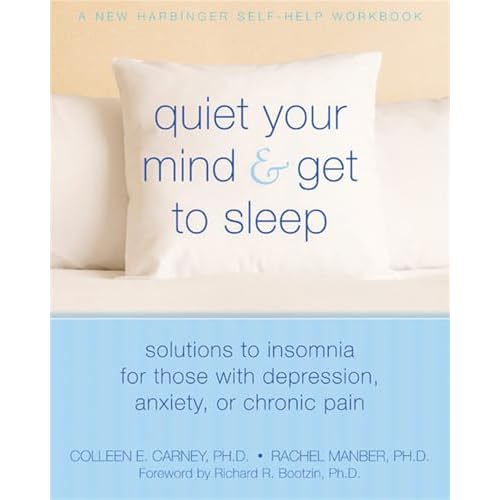
#3: Quiet Your Mind and Get to Sleep — Best workbook
Colleen E. Carney & Rachel Manber
From two leading insomnia researchers: the full protocol with proper sleep diaries, restriction math, and a chapter for insomnia tangled with depression and anxiety. The one to actually work through.
- Researcher-grade CBT-I — Carney is one of the field’s leading scientists
- Proper sleep diaries and restriction math, not vibes
- The only book here with a serious chapter on insomnia comorbid with depression and anxiety
- Honest about the hard weeks when restriction bites before it pays
- Workbook-dry — company is not the offer
- Restriction protocol needs medical caution for some conditions
#4: Hello Sleep — Best recent
Jade Wu
A behavioral sleep psychologist’s up-to-date guide, built on the paradox at insomnia’s center: sleep is a friendship to repair, not a performance to force. The warmest serious entry on the shelf.
- Science-current and warm — the friendliest serious CBT-I book available
- Built on the central paradox: effort is the enemy, and the program engineers effort out
- Excellent on sleep anxiety and the identity of ‘being an insomniac’
- Modern coverage: phones, tracking-app orthosomnia, menopause, pregnancy
- The conversational padding slows readers who just want the protocol
- Newer, so lacks the decades of track record Jacobs carries
#5: The Sleep Solution — Best for the sleep-anxious
W. Chris Winter
A sleep physician’s breezy, mildly irreverent tour — why you’re probably sleeping more than you think, why fearing wakefulness sustains it, and the practical protocol underneath the jokes.
- Deflates sleep panic better than any book on the shelf — you’re not dying, and fearing wakefulness sustains it
- A working sleep physician’s view: what clinics actually see and fix
- Solid CBT-I mechanics hidden under the jokes
- Excellent on sleep-aid realities and what the drugs do and don’t do
- The irreverence reads as flippant to the truly desperate
- Less structured than the workbook wing — you assemble the program yourself
#6: The Circadian Code — Best on timing
Satchin Panda
The circadian researcher’s case that when you eat, see light, and move matters nearly as much as how long you sleep — with time-restricted eating as the lever. Essential for shift workers and late-screen lives.
- Covers the layer insomnia books skip: light, meal timing, and the body clock
- Time-restricted eating research from the lab that led it
- Practical for shift workers, jet-lagged travelers, and late-screen lives
- Connects circadian disruption to metabolic and mood outcomes clearly
- Extrapolates from animal data further than some critics accept
- Not an insomnia treatment — pair it with a CBT-I book, don’t substitute
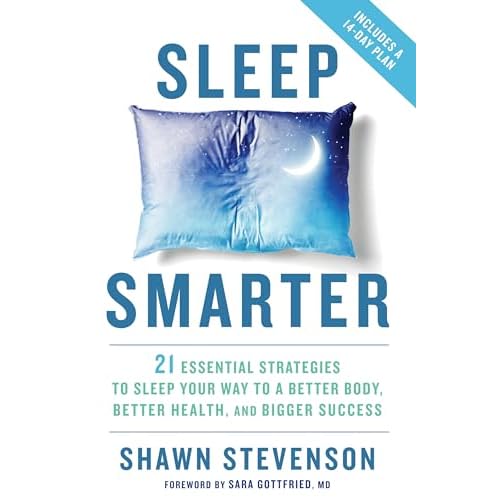
2 more titles round out our list, all shown in the quick picks above: End the Insomnia Struggle by Colleen Ehrnstrom & Alisha Brosse (2016) — when trying harder has failed — acceptance plus the protocol; Sleep Smarter by Shawn Stevenson (2016) — 21 practical levers for the optimizer.
How the top picks compare
Best overall Why We Sleep | Best CBT-I classic Say Good Night to Insomnia | Best workbook Quiet Your Mind and Get to Sleep | Best recent Hello Sleep | Best for the sleep-anxious The Sleep Solution | |
|---|---|---|---|---|---|
|
|
|
|
|
| |
| Our rating | 8.9 /10 | 8.8 /10 | 8.7 /10 | 8.6 /10 | 8.4 /10 |
| Format | Science | CBT-I program | CBT-I workbook | CBT-I / self-help | Sleep medicine |
| First published | 2017 | 1998 | 2009 | 2023 | 2017 |
| Price | $10.09 | $9.99 | $13.80 | $24.74 | $16.99 |
| BUY NOW | BUY NOW | BUY NOW | BUY NOW | BUY NOW |
How to choose a sleep book
- Knowledge or insomnia
The science books motivate; only the protocol books fix.
Look forWalker or Panda to understand the machine; Jacobs, Carney, or Wu if the actual problem is 3 a.m. and the ceiling.AvoidReading sleep science in bed as a sleep strategy — for an insomniac, Walker's alarming statistics are fuel for the fear that sustains the problem. - Whether you can tolerate the program
Real CBT-I gets harder before it works — restriction means short-term sleepiness.
Look forCarney or Jacobs if you'll follow a protocol faithfully; Winter or Wu if you need the fear deflated first.AvoidCherry-picking the comfortable parts — sleep hygiene without stimulus control and scheduling is the version that fails. - The timing layer
Some ‘insomnia’ is a circadian clock at war with the schedule.
Look forPanda if you're a shift worker, a night owl forced early, or a screen-at-midnight case — fix the clock before diagnosing the sleep.AvoidTreating a circadian mismatch with sleep restriction alone — you'll be disciplining a system that's simply set to the wrong time zone.
Which sleep book should I read first?
If sleep just isn’t a priority yet, Why We Sleep will fix your motivation. If you have insomnia, skip straight to the protocol: Jacobs’s Say Good Night to Insomnia or Carney’s workbook — and read Walker later, in daylight.
Does CBT-I really work better than sleeping pills?
Over the long run, yes — that’s the consistent trial finding, and it’s why clinical guidelines list CBT-I as first-line treatment. Pills work while you take them; CBT-I retrains the system. The book versions are less potent than a therapist but genuinely effective for many.
Is Why We Sleep reliable?
Mostly, with caveats — critics have documented overstated claims and some errors, and Walker’s alarmism can feed sleep anxiety. The core thesis stands on a broad literature. Read it for motivation, not as scripture, and don’t let it scare you at bedtime.
What actually helps me fall asleep faster?
The unsexy protocol: fixed wake time, bed only when sleepy, out of bed when wakeful, no clock-watching, light early and dim late. And the paradox the whole shelf teaches — effort is the enemy; sleep arrives when you stop applying for it.
Bottom line
Walker for why it matters, Jacobs or Carney for the protocol that fixes it, Wu for the modern warm version, Panda for the clock. Sleep is load-bearing — and the deepest rule is the paradox: stop chasing it, and it comes.