The Best Books on Shame: The Emotion That Hides and Runs Everything
Shame is the master emotion — the one that hides inside anger, perfectionism, addiction, and silence, convinced that the self, not the act, is what's wrong. Guilt says I did something bad; shame says I am bad, and that difference predicts everything from recovery to relapse. Eight books, ranked.
The best book on shame is Brené Brown’s Daring Greatly — the research that dragged the most hidden emotion into daylight, with vulnerability as the way through. Add Bradshaw’s Healing the Shame That Binds You for the toxic-shame classic, and DeYoung’s clinical text when shame is chronic and relational.
- Shame and guilt are different animals The research distinction runs the whole field: guilt evaluates the act and motivates repair; shame indicts the self and motivates hiding. Guilt-prone people apologize; shame-prone people disappear or attack.
- Shame can't survive being spoken Brown’s most-quoted finding: shame thrives on secrecy, silence, and judgment, and dies in empathy. The mechanism of every book here is some version of bringing it into contact.
- Chronic shame is relational injury DeYoung’s clinical definition — the self disintegrating in the presence of a dysregulating other — locates chronic shame in early relationships, which is why it heals in relationship too, not by argument.
This guide is part of our psychology books to understand yourself silo — shame is the emotion most invested in not being seen, which makes it the deepest self-knowledge assignment on the shelf.
What shame is — the anatomy of the hidden emotion
The affect theorists count shame among the primary emotions — Nathanson maps its faces along the compass of shame: withdrawal, avoidance, attack self, attack other — and the clinical literature agrees on its signature move: concealment. Unlike fear or grief, shame’s whole strategy is not to be seen, which is why it presents at the therapist’s office as anything but itself — rage, contempt, perfectionism, procrastination, addiction, the grandiosity that overcorrects it. Bradshaw’s coinage toxic shame named the pathological form: shame no longer an emotion that visits but an identity that stays.
The developmental account explains the stubbornness. Chronic shame, in DeYoung’s definition, is the experience of one’s self disintegrating in relation to a dysregulating other — a childhood of misattunement compressed into a felt sense that something in me is wrong. That’s why insight alone underperforms: the injury is relational and pre-verbal, and the repair runs through experiences of being seen without contempt — empathy in Brown’s research, the therapist’s regard in DeYoung’s consulting room, the self-compassion practices Engel builds for readers whose shame began with what was done to them.
Which book for which shame
Start with Brown’s Daring Greatly — the decade of shame research, the guilt/shame distinction, and vulnerability as the counterintuitive exit; it remains the book that makes the invisible emotion discussable at kitchen tables. Her earlier I Thought It Was Just Me is the underrated deeper cut — shame resilience worked out in detail, especially strong on the female registers of the emotion. Bradshaw’s Healing the Shame That Binds You is the recovery-movement classic: dated in places, unmatched at naming toxic shame and its family machinery.
Then the specialist wing. DeYoung’s Understanding and Treating Chronic Shame is the best clinical book on the subject — relational, precise, and useful far beyond the consulting room it was written for. Engel’s It Wasn’t Your Fault aims self-compassion directly at abuse-born shame, the gentlest entry here. Thompson’s Soul of Shame serves readers who want the neurobiology braided with a faith frame, Nathanson’s Shame and Pride supplies the affect-theory architecture underneath everyone else, and Brown’s Gifts of Imperfection rounds it out as the practice manual for the wholehearted alternative.
Independently researched and ranked by our editorial team. As an Amazon Associate, this site earns from qualifying purchases made through the links below.
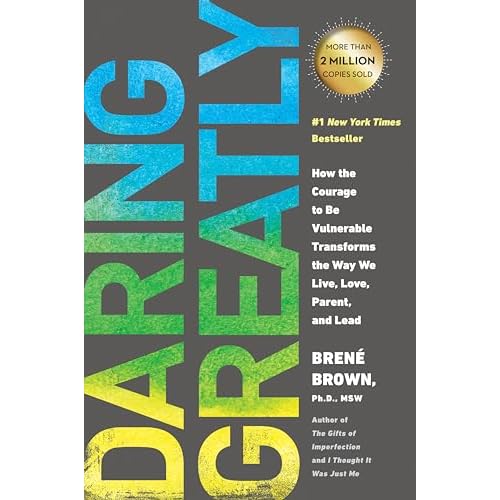


#1: Daring Greatly — Best overall
Brené Brown
Brown’s grounded-theory decade distilled: how shame differs from guilt, why it thrives in secrecy, and vulnerability as the arena move that disarms it. The book that made the hidden emotion discussable.
- The central statement — vulnerability reframed as courage rather than weakness
- Grounded in her grounded-theory research on shame
- The Roosevelt ‘arena’ frame has entered the language
- Qualitative research is presented with more certainty than method warrants
- Concepts repeat across her books; this one overlaps both neighbors
#2: Healing the Shame That Binds You — The recovery classic
John Bradshaw
The 1988 landmark that distinguished healthy shame from the toxic identity-level kind, traced it through family systems and addiction, and built the recovery playbook a movement ran on. Dated edges, durable core.
- Named toxic shame — the identity-level kind — and the field still uses his framing
- Traces shame through family systems and addiction with unmatched pattern recognition
- The healthy-shame/toxic-shame distinction gives readers permission to keep the useful kind
- Exercises and affirmations that recovery groups have road-tested for decades
- 1980s recovery-movement idiom — inner child work and all — dates some chapters
- Sweeping claims outrun the evidence in places; read for the map, not the statistics
#3: I Thought It Was Just Me — The deeper Brown
Brené Brown
Brown before the TED fame: the shame-resilience theory itself — recognizing triggers, critical awareness, reaching out, speaking shame — with the richest interview material of her books. The connoisseur’s pick.
- The shame-resilience theory in full — triggers, critical awareness, reaching out, speaking shame
- Richest interview material of any Brown book; the women’s voices carry the argument
- Strong on the cultural expectations that manufacture shame, not just the private feeling
- Deeper and more systematic than the TED-era bestsellers that followed
- Focused on women’s shame; male readers must translate some registers
- Pre-fame prose is denser than Daring Greatly — closer to the dissertation
#4: It Wasn't Your Fault — Best for abuse survivors
Beverly Engel
Engel’s program for shame that began with abuse or neglect: compassionate self-talk, mindful awareness of the shame spiral, and the slow replacement of the abuser’s voice with your own. The gentlest serious book here.
- Aims self-compassion directly at abuse-born shame — the right tool for the right wound
- Gentle pacing designed for readers whose nervous systems can’t tolerate confrontation
- Concrete practices: compassionate self-talk scripts, shame-spiral interruption, grief work
- Engel’s decades with survivors show in what she anticipates and forestalls
- Too gentle for readers who want research depth or clinical theory
- Exercises repeat across chapters; the program is slimmer than the page count
#5: Understanding and Treating Chronic Shame — Best clinical text
Patricia A. DeYoung
DeYoung’s definition — the self disintegrating in relation to a dysregulating other — reframed the field, and her relational treatment approach follows from it. Written for therapists; the most illuminating book on the list.
- The best clinical definition in the field: the self disintegrating with a dysregulating other
- Relational treatment approach follows rigorously from the relational diagnosis
- Illuminating far beyond the consulting room — self-aware readers will find themselves in it
- Integrates attachment, affect regulation, and psychodynamic thinking without jargon pileup
- Written for therapists; lay readers must work for the payoff
- Light on structured exercises — this is understanding, not a workbook
#6: The Soul of Shame — Best faith-integrated
Curt Thompson
A psychiatrist’s account of shame as attention hijacker and story-teller, woven with interpersonal neurobiology and a Christian narrative frame. For readers whose shame and faith are tangled together.
- Braids interpersonal neurobiology with a narrative, faith-informed frame — rare combination
- Sharp on shame as attention hijacker — the felt mechanics are well observed
- Serves readers whose shame and religious history are tangled together
- Warm clinical stories that never expose or moralize
- The Christian framing is load-bearing; secular readers may bounce
- Neuroscience is illustrative rather than rigorous — trust the therapy, not the brain claims
2 more titles round out our list, all shown in the quick picks above: Shame and Pride by Donald L. Nathanson (1992) — the affect-science architecture under everyone else; The Gifts of Imperfection by Brené Brown (2010) — the wholehearted alternative, guidepost by guidepost.
How the top picks compare
Best overall Daring Greatly | The recovery classic Healing the Shame That Binds You | The deeper Brown I Thought It Was Just Me | Best for abuse survivors It Wasn't Your Fault | Best clinical text Understanding and Treating Chronic Shame | |
|---|---|---|---|---|---|
|
|
|
|
|
| |
| Our rating | 9.0 /10 | 8.7 /10 | 8.6 /10 | 8.5 /10 | 8.8 /10 |
| Format | Psychology / self-help | Recovery / psychology | Psychology | Self-help / trauma | Clinical |
| First published | 2012 | 1988 | 2007 | 2015 | 2015 |
| Price | $9.79 | $10.73 | $9.48 | $18.43 | $43.59 |
| BUY NOW | BUY NOW | BUY NOW | BUY NOW | BUY NOW |
How to choose a shame book
- Where your shame comes from
Garden-variety shame and abuse-born shame need different books.
Look forBrown for the shame everyone carries; Engel and DeYoung when it traces to abuse, neglect, or a childhood of misattunement.AvoidTreating trauma-born shame with willpower reframes alone — the injury is relational, and the repair needs more than argument. - Research, recovery, or clinic
The shelf has three dialects — data, twelve-step-adjacent, and psychotherapeutic.
Look forBrown if you trust research language; Bradshaw if recovery culture is home; DeYoung for the clinical depth the others gesture at.AvoidDismissing a book for its dialect — Bradshaw's 1980s idiom and Brown's TED polish both carry the same durable mechanism: shame dies in empathy. - Reading alone or in company
Shame heals in contact — which has implications for how you use the books.
Look forBooks with practices you can bring to a therapist, group, or trusted friend — speaking shame is the intervention, not a supplement to it.AvoidUsing private reading to postpone the being-seen the emotion most fears and most needs — insight hoarded in secrecy feeds the mechanism.
Which shame book should I read first?
Daring Greatly — it gives you the research map and the vulnerability exit in one readable book. Go to Bradshaw if addiction or family dysfunction is central, or straight to Engel if the shame began with abuse.
What's the difference between shame and guilt?
Guilt evaluates behavior — I did something bad — and tends to motivate repair. Shame indicts the self — I am bad — and motivates hiding, attacking, or disappearing. The research finds guilt broadly adaptive and shame corrosive, which is why the books target one and spare the other.
Why is shame so hard to talk about?
Because concealment is shame’s core strategy — the emotion exists to make you hide, so speaking it works against its grain. That’s also the treatment: Brown’s data shows shame can’t survive being spoken and met with empathy. The silence isn’t incidental; it’s the habitat.
Can chronic shame actually heal?
Yes, though slowly — because chronic shame is relational injury, it heals through relational experience: therapy, empathy, self-compassion practice, being seen without contempt. Expect repetition rather than epiphany; the felt sense updates by accumulated experience, not by winning the argument.
Bottom line
Brown for the research and the exit, Bradshaw for toxic shame’s machinery, DeYoung for the clinical depth, Engel when it began with abuse. Guilt repairs, shame hides — and shame dies in empathy, not in argument.