Jungian Archetypes Explained: The Main Ones
There is no canonical list of twelve archetypes. That list comes from a marketing book published in 2001, not from Jung — and the difference matters.
Jung proposed that certain patterns recur across cultures because they are part of how human beings are built, not because they were taught. He never fixed a number. The tidy twelve circulating online descend from Margaret Mark and Carol Pearson’s branding framework, which borrowed his vocabulary for a different purpose.
- The shadow, the anima and animus, the persona, the self
- The mother, the wise old man, the trickster, the child
- Not a fixed list — he treated them as open-ended
Archetypes are inherited tendencies to form certain kinds of image — not the images themselves, and not a fixed list. The twelve-archetype wheel circulating online comes from The Hero and the Outlaw, a 2001 branding book, not from Jung. It is also the part of his work mainstream psychology does not accept.


Start here: Man and His Symbols
C. G. Jung · 1964 · 320 pages
Archetypes are about images, and this is the Jung book built around them. Written in his last year for readers with no background, and the illustrations are doing explanatory work rather than decorating — which for this particular concept matters more than usual.
- Built around images, which suits the subject
- Written deliberately for non-specialists
- Covers shadow, anima and the self together
- Collaborator chapters extend it into art and myth
- Only partly by Jung himself
- Cultural references have dated
- Not rigorous enough for academic citation
The archetype and the image are not the same thing
Ask three people from different places to describe a figure of wisdom and you will get three different pictures — a robed elder, a grandmother, a particular teacher from school. The images share almost no surface detail.
What they share is structure: someone older who knows something you do not, whose knowledge is given rather than sold, and whose arrival marks a turn. Jung’s claim is about that structure, not the robes. The inherited part is a disposition to organise experience into that shape; the content comes entirely from your own culture and life.
This is the distinction popular accounts collapse when they publish a wheel of twelve archetypes with fixed illustrations. Fixing the image is precisely what Jung said could not be done — and once fixed, the idea becomes a personality quiz rather than a claim about the mind.
It is also where the idea becomes hard to test. A structure that can appear as almost any image is difficult to falsify, and that difficulty is the main reason mainstream psychology does not use it. Worth knowing before deciding how much weight to put on it.
The practical test is to ask what an archetype predicts. If the claim is that most cultures will have stories about a figure who helps the hero and then vanishes, that is a modest prediction about narrative, and it holds well enough. If the claim is that you are “a Sage” and should market yourself accordingly, that is a personality typology wearing Jung’s vocabulary, and nothing in his work supports it. The branding wheel is not wrong about branding. It is simply not psychology, and the distinction is worth keeping because the typology version tends to flatten exactly the open-endedness Jung insisted on.
The hub for these concept pages groups the archetypes with the two ideas they depend on: the shadow, which is the archetype most people actually encounter, and individuation, the process the archetypal images are supposed to serve. For the empirical argument, what the unconscious is sets out why the collective layer is the part mainstream psychology left behind, and the Jung reading order says where the archetype essays sit in his work.
If you have seen a wheel of twelve — the Hero, the Sage, the Jester, the Explorer — that is from The Hero and the Outlaw by Margaret Mark and Carol Pearson, a 2001 book about brand archetypes. It borrows Jung’s vocabulary for a commercial purpose and works well for that. It is not a summary of his psychology, and Jung never fixed a number.
Side by side
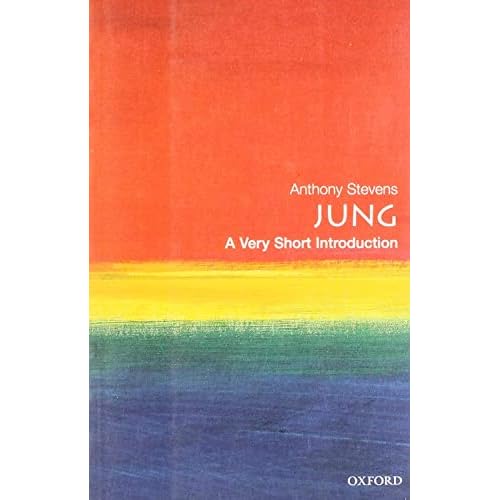
Best start Man and His Symbols | Best selection The Portable Jung | Fastest Jung: A Very Short Introduction | |
|---|---|---|---|
|
|
|
| |
| Length | 320 pages | 672 pages | 176 pages |
| Gives you | Images and explanation | The key papers | An honest overview |
| Difficulty | 3 /10 | 7 /10 | 2 /10 |
| Jung's own writing | Yes | Yes | No |
| Price | $19.93 | $44.70 | $12.99 |
| BUY NOW | BUY NOW | BUY NOW |
Picking the right entry point
Most archetype lists online descend from branding frameworks rather than from Jung.
What is proposed as inherited is a predisposition to form images, not the images themselves.
The collective unconscious is where mainstream psychology parts company with Jung.
This particular concept is easier to meet through pictures and myth than through definition.
Jung’s writing on the anima and animus carries early twentieth-century assumptions about gender that later Jungians have substantially revised.
What are Jungian archetypes?
Recurring patterns Jung believed are part of how human beings are built rather than something learned — the shadow, the anima and animus, the persona, the self, the mother, the trickster and others. He never fixed a number.
What are the 12 Jungian archetypes?
There are none, in Jung’s own work. The twelve-archetype system comes from The Hero and the Outlaw, a 2001 book on brand positioning by Margaret Mark and Carol Pearson. It borrows Jung’s vocabulary for marketing purposes.
Is the collective unconscious accepted by psychologists?
Not as Jung framed it. It is the least empirically supported part of his work and mainstream psychology does not use it. His influence today sits more in personality theory, therapy practice and the humanities.
What is the difference between the shadow and an archetype?
The shadow is one of the archetypes — the disowned material in a personality. Archetype is the general category; the shadow is a particular instance of it.
What is the difference between an archetype and a stereotype?
A stereotype is a fixed social generalisation, usually learned and usually reductive. Jung’s archetype is a proposed inherited tendency to form certain kinds of image, whose specific content comes from your own culture and life. The claims are different in kind, not degree.
What are the anima and animus?
Jung’s terms for the contrasexual element in the psyche — the feminine in a man, the masculine in a woman. The framing rests on assumptions about gender that were current in his time and are widely questioned now, which any current reading should take into account.
The short version
- No canonical twelve — that list is from marketing
- A tendency to form images, not the images
- The least empirically supported part of Jung
Archetypes are inherited tendencies to form certain kinds of image, not the images themselves. There is no list of twelve in Jung — that comes from a branding book. It is also the part of his work mainstream psychology does not accept, and any honest account says so.