The Best Mindfulness Books: 10 Picks from Clinical to Contemplative
Mindfulness publishing runs from clinical trial to incense smoke, and the shelf badly needs sorting. These ten books cover every honest entry point — the validated MBSR program, real meditation instruction, the contemplative classics, and the science-minded skeptic's route in.
The best mindfulness book overall is Jon Kabat-Zinn’s Wherever You Go, There You Are — the classic that brought the practice mainstream. For actual meditation instruction, Mindfulness in Plain English is unmatched, and Thich Nhat Hanh’s The Miracle of Mindfulness remains the warmest introduction of all.
- Match the book to the job Inspiration (Kabat-Zinn, Thich Nhat Hanh), instruction (Gunaratana), and treatment (Full Catastrophe Living) are three different purchases.
- The evidence is real but modest Mindfulness programs show reliable moderate effects for stress, anxiety, and relapse prevention — not the cure-all of the marketing.
- Warmth counts For readers whose obstacle is self-criticism rather than distraction, the compassion-based picks (Brach, Thich Nhat Hanh) work where technique alone fails.
This guide is part of our psychology books to understand yourself silo — attention turned inward is where all of that shelf begins.
What mindfulness is — and what the research actually shows
Strip the packaging and mindfulness is trainable attention: noticing present experience — breath, body, thought — without immediately fighting or feeding it. Kabat-Zinn’s insight in 1979 was that this skill could be taught secularly in a hospital; the eight-week MBSR program he built became the template for a clinical literature that now runs to thousands of trials.
The honest reading of that literature: moderate, reliable benefits for stress, anxiety, depression relapse, and chronic-pain coping — comparable to other active treatments, not miraculous, and dependent on actually practicing. The marketing version promises transformation in ten minutes a day; the books below were chosen partly for refusing that promise. Readers of this site will also notice the overlap with acceptance-based therapies — ACT’s defusion and the Stoics’ judgment-training are close cousins of this skill.
Choosing your door: inspiration, instruction, or treatment
The inspirational classics — Wherever You Go, There You Are, The Miracle of Mindfulness, Peace Is Every Step — convince you the practice matters and model the voice of someone shaped by it. What they don’t do is teach technique in depth. That job belongs to Mindfulness in Plain English, the one book here that reads like sitting beside a patient teacher who has answered every beginner question a thousand times.
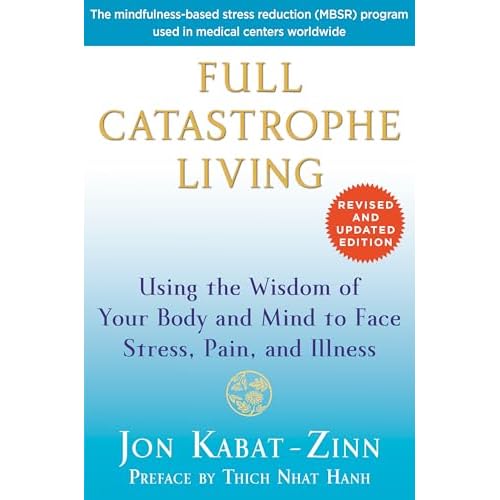
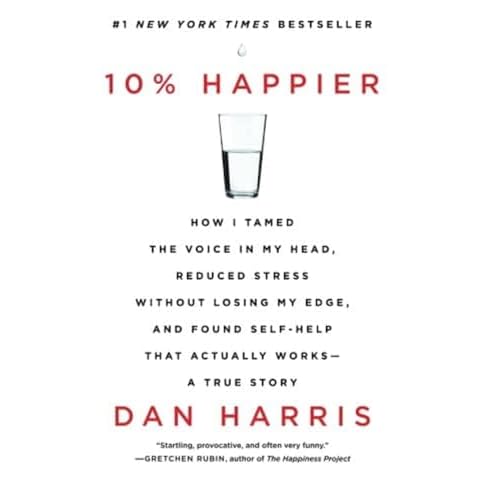
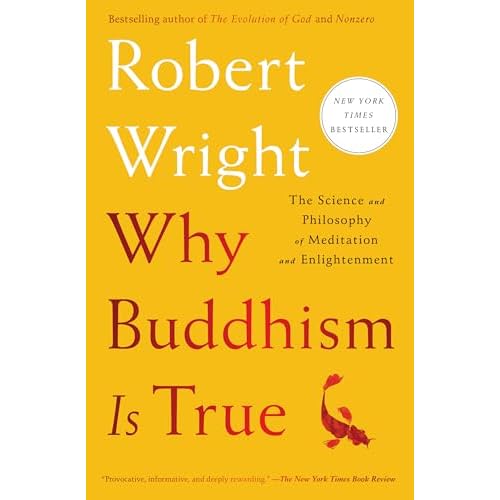
Full Catastrophe Living is the treatment door — the complete MBSR curriculum for readers facing real stress, pain, or illness, and the pick to pair with our anxiety and ACT guides. Radical Acceptance serves the reader whose real obstacle is the inner critic. And the skeptic’s wing — Harris, Wright, and the Goleman–Davidson research review — earns its place by arriving doubtful and showing its work.
Independently researched and ranked by our editorial team. As an Amazon Associate, this site earns from qualifying purchases made through the links below.





#1: Wherever You Go, There You Are — Best overall
Jon Kabat-Zinn
The book that carried mindfulness into Western living rooms — short chapters, no jargon, and the authority of the man who built the clinical field. An invitation rather than a manual.
- The mainstream classic — mindfulness without religion, jargon, or salesmanship
- Short chapters made for dipping; it practices the attention it preaches
- Kabat-Zinn’s authority as the founder of clinical mindfulness (MBSR)
- The aphoristic structure frustrates readers who want a step-by-step program
- Contains relatively little formal meditation instruction
#2: The Miracle of Mindfulness — Warmest introduction
Thich Nhat Hanh
Mindfulness taught through tangerines, dishes, and breathing — the gentlest classic in the field, written as letters from wartime Vietnam and still luminous fifty years on.
- Thich Nhat Hanh’s warm, concrete voice — washing dishes in order to wash dishes
- Brief, luminous, and endlessly re-readable
- Rooted in real practice, told through letters to a fellow worker in wartime
- The Buddhist framing may not suit strictly secular readers
- Contains no research talk at all, for those who need the evidence base
#3: Mindfulness in Plain English — Best instruction
Bhante Henepola Gunaratana
The best meditation instruction in print — direct answers to everything that goes wrong on the cushion, free of both mysticism and marketing. Own this one if you intend to sit.
- The best actual meditation instruction in print, bar none
- Direct answers to exactly what goes wrong on the cushion — pain, doubt, boredom, wandering
- Free of both mysticism and marketing
- Specific to Vipassana practice — other traditions differ on details
- Plain to the point of dryness; it teaches rather than inspires
#4: Full Catastrophe Living — The clinical program
Jon Kabat-Zinn
The complete MBSR curriculum — the eight-week program the clinical evidence actually tested — with deep, humane coverage of pain and stress. A course between covers, not a casual read.
- The complete MBSR curriculum — the clinically validated eight-week program in full
- Deep, humane coverage of chronic pain, stress, and illness
- The evidence-based anchor of the entire genre
- Over 600 pages — it is a course, not a read
- Even revised, its structure shows the 1990 original’s bones
#5: Radical Acceptance — Best for the inner critic
Tara Brach
Mindfulness merged with self-compassion — Brach’s ‘trance of unworthiness’ names what many readers actually struggle with, and her clinical stories land with real force.
- Merges mindfulness with self-compassion psychology before that pairing was common
- Brach’s clinical stories land with real emotional force
- The ‘trance of unworthiness’ names something readers instantly recognize
- More spiritual vocabulary than strictly secular readers may want
- Loosely structured; more essays than program
#6: The Power of Now — The polarizing mega-seller
Eckhart Tolle
One genuinely powerful insight — you are not your thoughts — wrapped in metaphysics the evidence doesn’t support. Take the insight, leave what you like; millions did.
- Reached millions of readers no other book on this list reaches
- Genuinely powerful on dis-identification from the thinking mind
- A simple core message that some readers find life-changing
- Metaphysical claims run far beyond any evidence
- Highly repetitive across its length
- The guru packaging puts many readers off before the useful part arrives
#7: Peace Is Every Step — Best off the cushion
Thich Nhat Hanh
Mindfulness carried into anger, relationships, and red lights — tiny self-contained chapters that make the whole day the practice ground. The most giftable book in the genre.
- Mindfulness carried into anger, relationships, traffic, and ordinary mess
- Tiny self-contained chapters — readable in any spare minute
- Perhaps the most giftable book in the genre
- Overlaps substantially with The Miracle of Mindfulness
- Aphoristic rather than systematic — no program to follow
How to choose a mindfulness book
- Inspiration, instruction, or treatment
The genre hides three different kinds of book under one label.
Look forKabat-Zinn or Thich Nhat Hanh to want to practice; Gunaratana to learn how; Full Catastrophe Living for clinical-grade structure.AvoidExpecting an inspirational classic to teach technique — that disappointment ends many practices early. - Evidence honesty
Claims in this genre range from cited to cosmic.
Look forBooks that name studies and admit limits — Altered Traits is the benchmark.AvoidAnything promising rewired brains or transformed lives in minutes a day. - Tone fit
Technique books and compassion books solve different failures.
Look forBrach or Thich Nhat Hanh if self-criticism is the obstacle; Gunaratana if distraction is.AvoidPrescribing yourself more discipline when the actual problem is self-attack.
What is the best book on mindfulness?
Jon Kabat-Zinn’s Wherever You Go, There You Are for the overall introduction — mainstream, secular, and written by the founder of clinical mindfulness. If you want to actually learn to meditate, pair it with Mindfulness in Plain English, the best instruction manual in print.
Does mindfulness actually work?
The research supports moderate, reliable benefits — for stress, anxiety, depression relapse prevention, and chronic-pain coping — comparable to other active treatments and dependent on sustained practice. The transformation-in-ten-minutes version is marketing. Altered Traits gives the honest audit of the evidence.
What's the difference between MBSR and just reading about mindfulness?
MBSR is a structured eight-week program — daily formal practice, body scans, and weekly themes — and it’s what most clinical trials actually tested. Full Catastrophe Living contains the entire curriculum; the inspirational classics describe the destination but not the training plan.
Which mindfulness book is best for a skeptic?
10% Happier — Dan Harris arrives hostile, investigates like the journalist he is, and concedes exactly as much as his experience forced him to. Robert Wright’s Why Buddhism Is True then supplies the strongest intellectual scaffolding for why the practice works.
Bottom line
Kabat-Zinn opens the door, Gunaratana teaches the sitting, and Full Catastrophe Living carries the clinical weight. Add Thich Nhat Hanh for warmth, Brach for the inner critic, and the skeptic wing for whoever needs convincing — then remember the books only work if you practice.