The Best Books on Habits: 8 Picks Beyond Atomic Habits
Habit books outsell almost everything in psychology, and most are the same three studies retold. These eight earn their shelf space — the practical systems, the actual science, and the honest answer to what the 21-day myth gets wrong.
The best book on habits is James Clear’s Atomic Habits — the clearest practical system, built on the four laws of behavior change. Read The Power of Habit for the science and stories behind the loop, and Wendy Wood’s Good Habits, Bad Habits for what the research actually shows.
- Systems beat willpower Every book worth reading here agrees: design the environment and shrink the behavior — motivation is weather, systems are climate.
- Practical and scientific are different shelves Clear and Fogg give you systems; Wood and Milkman give you the research — the strongest combination is one of each.
- Forget the 21 days The real median to automaticity in the research is about 66 days, with huge variation — plan for months and miss a day without drama.
This guide is part of our psychology books to understand yourself silo — habits are where self-knowledge either becomes behavior or stays trivia.
What the science of habit actually says
Strip the genre to its findings and they hold up well. Roughly forty percent of daily actions are habits — context-triggered behaviors running without deliberation, Wendy Wood’s research shows — which is why advice aimed at conscious willpower keeps failing: it lobbies the minority shareholder. The mechanism is the loop — cue, routine, reward — and the leverage is almost all at the cue: change the context and the behavior follows, which is why habits break on vacation and form fastest after a move.
The honest numbers matter too. The famous 21-day rule is folklore; the real study behind habit formation found a median of about 66 days to automaticity, ranging from three weeks to the better part of a year depending on the behavior. And missing a single day made no measurable difference — the catastrophizing after one lapse does more damage than the lapse. Every good book below builds on these findings; the bad ones in the genre ignore them.
Which book for which reader
For most people the answer is Atomic Habits: Clear synthesized the research into the cleanest working system — make it obvious, attractive, easy, satisfying — and the identity frame (every action is a vote for the person you’re becoming) is the book’s deepest idea. If Clear feels like too much system, BJ Fogg’s Tiny Habits is the gentler machine: shrink the behavior until it’s almost silly, anchor it to an existing routine, celebrate immediately. Between them they cover building.
Around them, the specialists. Duhigg’s The Power of Habit remains the best-told science story in the genre — read it for the loop and the keystone-habit idea. Wood’s Good Habits, Bad Habits is the researcher’s corrective to the whole shelf; Milkman’s How to Change adds tested tools the others lack — fresh starts, temptation bundling, commitment devices. The Heaths’ Switch is the pick when the habit that needs changing belongs to a family or a team rather than a person. Readers who want the deeper question — who is doing all this habit-building, and toward what — should pair any of these with the meaning-of-life shelf this silo links to.
Independently researched and ranked by our editorial team. As an Amazon Associate, this site earns from qualifying purchases made through the links below.
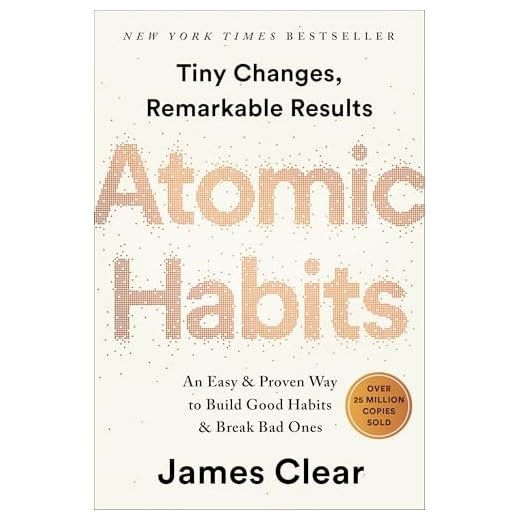




#1: Atomic Habits — Best overall
James Clear
Four laws — obvious, attractive, easy, satisfying — plus the identity frame that makes them stick: every action is a vote for who you’re becoming. The genre’s standard for a reason.
- The clearest habit system in print — cue, craving, response, reward turned into four practical laws
- Identity-based habits reframe the whole project: become the person, not just do the thing
- Compulsively actionable; the 1% framing genuinely motivates
- Synthesizes research rather than reporting it — scientists quibble with simplifications
- The compounding metaphor overpromises what habits alone deliver
#2: The Power of Habit — Best science storytelling
Charles Duhigg
The book that taught everyone cue-routine-reward, through Febreze, Alcoa, and a habit-driven murder trial. Journalism, not a manual — and the best-told version of the science.
- The book that made habit science popular — the cue-routine-reward loop starts here
- Superb reporting: Febreze, Alcoa, and the craving brain are unforgettable cases
- Organizational and societal habits get real chapters, not padding
- Stronger on story than system — readers finish inspired but unsure what to do
- Some flagship studies have aged into controversy
#3: Tiny Habits — Best for starting small
- From the Stanford behavior scientist whose model (B=MAP) underlies half the genre
- Starting absurdly small dissolves the motivation problem entirely
- Celebration as reinforcement is odd-feeling and effective
- Relentlessly upbeat tone grates on some readers
- Overlaps with Atomic Habits; the differentiator is emphasis, not substance
#4: Good Habits, Bad Habits — Best actual science
Wendy Wood
Wood ran much of the research the other books cite — 43% of daily behavior is habit, context beats willpower, friction is the master variable. The evidence, from the source.
- The actual researcher’s book — Wood ran much of the science others cite
- Friction and context, not willpower, as the real levers — with the studies to prove it
- Corrects popular myths the rest of the genre repeats
- Drier than its competitors; more evidence, less pep
- Practical program is implied more than laid out
#5: How to Change — Best toolbox
Katy Milkman
A Wharton behavioral scientist’s field-tested tools — the fresh start effect, temptation bundling, commitment devices — organized by the specific obstacle blocking you.
- Milkman’s field experiments — fresh starts, temptation bundling, commitment devices — are the genre’s best-tested tools
- Organized by obstacle, which is how change actually fails
- Wharton-rigorous and still breezy to read
- Toolkit rather than system — less cohesive than Clear or Fogg
- Some effects are modest in the original studies and larger in the prose
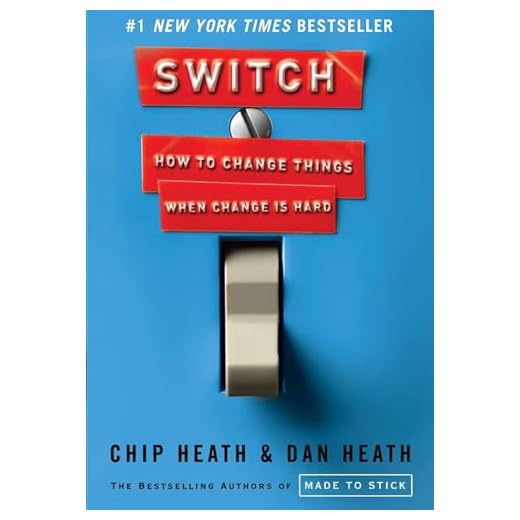
#6: Switch — Best for changing others
Chip Heath & Dan Heath
The rider, the elephant, and the path — the Heaths’ framework for change when the behavior that needs to move isn’t only yours. The organizational companion to this list.
- The rider-elephant-path framework makes change stick in memory instantly
- Covers personal, organizational, and social change with the same clean model
- The Heaths are the best pure writers in the genre
- Pre-dates the modern habit-science wave — cites an older literature
- Framework-first approach can feel formulaic by the end
2 more titles round out our list, all shown in the quick picks above: The Willpower Instinct by Kelly McGonigal (2011) — the willpower side the habit books wave away; Better Than Before by Gretchen Rubin (2015) — readers the one-size systems keep failing.
How the top picks compare
|
Best overall
Atomic Habits
|
Best science storytelling
The Power of Habit
|
Best actual science
Good Habits, Bad Habits
|
Best toolbox
How to Change
|
|
|---|---|---|---|---|
|
|
|
|
|
|
| Our rating | 9.3 /10 | 9.0 /10 | 8.8 /10 | 8.8 /10 |
| Format | Self-help / system | Science / nonfiction | Self-help / method | Science |
| First published | 2018 | 2012 | 2019 | 2019 |
| Price | $18.00 | $11.26 | $12.00 | $17.22 |
| BUY NOW | BUY NOW | BUY NOW | BUY NOW |
How to choose a habit book
-
System or scienceManuals and research books do different jobs.Look forOne system book (Clear or Fogg) plus one science book (Wood or Duhigg) — the pair covers the field.AvoidReading five systems in a row — past the second, you're collecting frameworks instead of building habits.
-
Realistic mechanicsThe genre's folklore dies hard.Look forBooks citing the ~66-day automaticity research and emphasizing context and friction over motivation.AvoidAnything promising 21 days, or treating a missed day as a broken streak that resets you to zero.
-
Whose behavior is changingSelf, other people, and organizations need different books.Look forClear and Fogg for yourself; Switch when the change involves a team or family; Milkman for specific obstacles.AvoidUsing a personal-habit book to redesign other people's behavior — that's Switch's job, and consent's.
How we chose these books
-
Firsthand reading
Rankings start from our editors’ full reads of every title on the list — including the slow middles and the failed first attempts — not from publisher copy.
-
Reader-review analysis
We mined verified-purchase reviews, Goodreads consensus, and Reddit reading threads for recurring, specific complaints: print size, abridgments, translation quality, abandonment points.
-
Edition comparison
Where multiple translations or editions exist, we compared them and linked the printing most readers should actually buy — and flagged the known trade-offs.
What is the best book on habits?
Atomic Habits — James Clear’s four-laws system is the clearest practical synthesis of the research, and the identity framing gives it staying power. Pair it with Wendy Wood’s Good Habits, Bad Habits if you want the science underneath verified by the person who ran much of it.
Is Atomic Habits better than The Power of Habit?
They’re different books. Duhigg wrote science journalism — the habit loop, brilliantly told; Clear wrote the instruction manual. If you want to change a habit this month, Clear. If you want to understand the machinery first, Duhigg. Many readers profitably read both, in that order.
How long does it really take to form a habit?
The research median is about 66 days to automaticity — not the mythical 21 — and the range runs from three weeks to nearly a year depending on the behavior’s complexity. Encouragingly, the same study found that missing a single day made no measurable difference.
Do habit books actually work?
The mechanisms are well-supported: cue design, friction, small starts, and context change all have real evidence. The honest caveat is that reading about habits is itself a way of not starting — pick one book, one habit, and one cue, and let the shelf wait.
Bottom line
Clear for the system, Duhigg for the story, Wood for the science, Fogg when everything else has failed. Plan for 66 days, engineer the cue, forgive the missed day — and read one of these instead of all eight.