The Best Books on OCD: For the Doubt That Demands Certainty
OCD is the doubting disease — a brain alarm that misfires on 'what if,' then sells compulsions as the cure that keeps the alarm alive. It afflicts roughly one in forty adults, hides in mental rituals as often as handwashing, and responds well to a treatment most sufferers have never properly met: exposure and response prevention. Eight books, ranked.
The best book on OCD is Jonathan Grayson’s Freedom from Obsessive-Compulsive Disorder — the deepest treatment of the disorder’s real engine, intolerance of uncertainty, with full ERP guidance. Add Brain Lock for the classic four steps, and Winston and Seif if intrusive thoughts are the core torment.
- Compulsions feed the obsession The core mechanism every book teaches: rituals and reassurance buy seconds of relief and confirm the threat was real — the compulsion is the disorder’s fuel line, not its management.
- The content is noise; the process is the disorder Contamination, harm, blasphemy, orientation — themes rotate, but the machinery (intrusive thought, catastrophic appraisal, compulsive neutralizing) is identical. Chasing content-specific certainty is the trap itself.
- ERP works, and it's specific Exposure and response prevention has decades of trial evidence and is the first-line treatment — but generic talk therapy and reassurance often make OCD worse, which makes the right book unusually consequential.
This guide is part of our psychology books to understand yourself silo — OCD is a false story about the self told with perfect conviction, and learning to hold doubt without buying certainty is self-knowledge under fire.
What OCD actually is — and why reassurance backfires
Nearly everyone has intrusive thoughts — the studies are unanimous, and the content of non-sufferers’ intrusions matches sufferers’ almost exactly. The disorder begins at the appraisal: the OCD-prone mind reads the intrusion as significant, dangerous, or revealing (what kind of person thinks this?), and the alarm demands neutralizing — washing, checking, confessing, mentally reviewing, or the endless reassurance question. Each ritual buys relief and teaches the brain the threat was real, ratcheting the loop tighter. That’s why OCD is called the doubting disease: it runs on an intolerance of uncertainty that no amount of certainty ever satisfies.
The treatment implication is brutal and hopeful at once. Reassurance — from loved ones, from Google, from a well-meaning but untrained therapist — is a compulsion delivered by another person, and it feeds the machine; generic talk therapy that explores the content (“let’s discuss why you fear harming your child”) can deepen the trap. What works is exposure and response prevention: approaching the feared thought or situation and staying present without the ritual, until the brain relearns that uncertainty is survivable. The books below are ranked largely by how honestly they deliver that uncomfortable, well-evidenced core.
Which book for which sufferer
Grayson’s Freedom from Obsessive-Compulsive Disorder is the fullest single book: the uncertainty engine named as the true diagnosis, ERP explained with scripts and hierarchies for every major theme, and unusual honesty about living with the disorder’s chronicity. Schwartz’s Brain Lock is the famous four steps — relabel, reattribute, refocus, revalue — and the friendliest starting point, especially for readers who need the it’s-my-brain-not-me reframe before they can face exposure.
The specialist wing matters unusually here. Winston and Seif’s Overcoming Unwanted Intrusive Thoughts is the best book on the taboo intrusions — harm, sexual, blasphemous — that sufferers hide longest; its message (thoughts are not impulses, and the horror is the proof it’s not you) has ended years of silent torment. Hershfield and Corboy’s Mindfulness Workbook for OCD adds the acceptance layer to ERP; Abramowitz’s Getting Over OCD is the most systematic self-directed program; Adam’s The Man Who Couldn’t Stop supplies the memoir-and-science company; Baer’s Imp of the Mind remains the classic on bad thoughts; and Hershfield’s family guide arms the household that’s been drafted into the rituals.
Independently researched and ranked by our editorial team. As an Amazon Associate, this site earns from qualifying purchases made through the links below.


#1: Freedom from Obsessive-Compulsive Disorder — Best overall
- Names the real engine — intolerance of uncertainty — and treats it, not just the themes
- Full ERP guidance with scripts and hierarchies for every major presentation
- Honest about maintenance and relapse — recovery as practice, not cure
- Grayson’s decades of specialty practice show in the edge cases he anticipates
- Dense for a first book — sufferers in crisis may need Brain Lock’s on-ramp first
- Exposure scripts demand real commitment; halfway use teaches the wrong lesson
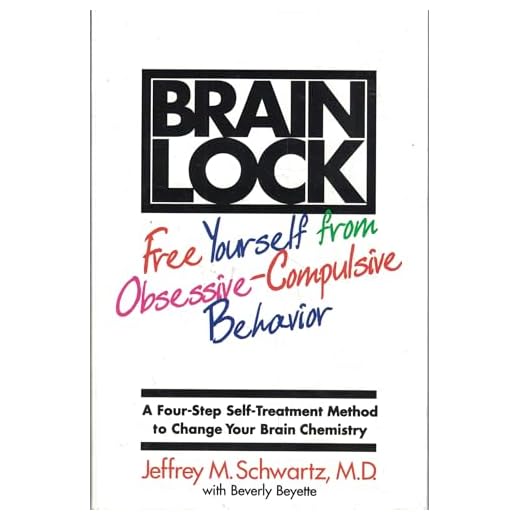
#2: Brain Lock — The classic four steps
Jeffrey M. Schwartz
Relabel, reattribute, refocus, revalue: Schwartz’s four-step self-treatment, wrapped in the brain-imaging research that showed behavior change physically calming the OCD circuit. Dated in places, beloved for a reason.
- The four steps — relabel, reattribute, refocus, revalue — are memorable and immediately usable
- The imaging research showing behavior change calming the OCD circuit is a genuine consolation
- It’s-your-brain-not-you framing lifts shame off the sufferer on page one
- Still the friendliest first book for someone newly diagnosed
- 1990s science and examples show their age
- Lighter on full exposure work than modern ERP standards — a starting point, not the whole treatment
#3: Overcoming Unwanted Intrusive Thoughts — Best on taboo thoughts
Sally M. Winston & Martin N. Seif
The book that ends years of silent suffering: why awful thoughts arrive unbidden, why the horror they cause is evidence of your values rather than your danger, and how to let them pass without rituals.
- The clearest explanation anywhere of why the worst thought means nothing about you
- Sticky-mind framing and the alarm-versus-content distinction defuse the core terror
- Teaches the response — allow, float past, don’t engage — with precision
- Short enough to finish inside the crisis that usually prompts the purchase
- Focused on the intrusive-thought presentation; compulsion-heavy OCD needs a fuller program
- Repetitive by design — the point is overlearning, but it reads repetitively
#4: The Mindfulness Workbook for OCD — Best workbook
Jon Hershfield & Tom Corboy
Hershfield and Corboy blend mindfulness with exposure: notice the thought, allow the uncertainty, skip the ritual — worked through contamination, checking, harm, relationship, and scrupulosity themes in turn.
- ERP with an acceptance engine — notice, allow uncertainty, skip the ritual
- Theme-by-theme chapters: contamination, checking, harm, relationship, scrupulosity
- Hershfield’s own OCD history gives the voice unusual credibility with sufferers
- Workbook structure that converts reading into practice
- Assumes basic mindfulness tolerance — allergic readers need the CBT-only route
- Coverage per theme is compact; deep single-theme sufferers may want a specialist volume
#5: Getting Over OCD — Most systematic program
Jonathan S. Abramowitz
From one of the field’s leading researchers: assessment, hierarchy-building, exposure, and relapse prevention in proper clinical sequence — the closest thing to a course of therapy between covers.
- From a leading researcher — the program reflects the actual evidence base
- Proper clinical sequence: assessment, hierarchy, exposure, relapse prevention
- The closest thing to a self-directed course of therapy in print
- Second edition updated with inhibitory-learning thinking
- Workbook dryness — it reads like the treatment manual it essentially is
- Less warmth and company than Adam or Schwartz; motivation must come from elsewhere
#6: The Man Who Couldn't Stop — Best memoir + science
David Adam
Adam, a Nature editor with twenty years of intrusive-thought OCD, braids his own case with the science and history of the disorder. The book to read for company, or to hand someone who needs to understand.
- A Nature editor’s twenty-year intrusive-thought case, told from inside with journalistic discipline
- The science and history woven through are accurate and vivid
- Gives sufferers company and families comprehension — the dual-use book on the list
- Unflinching about the disorder’s costs without voyeurism
- Not a treatment program — pair it with Grayson or Abramowitz for the work
- The history detours occasionally outpace the memoir’s momentum
2 more titles round out our list, all shown in the quick picks above: The Imp of the Mind by Lee Baer (2001) — the original deep dive on intrusive thoughts; When a Family Member Has OCD by Jon Hershfield (2015) — the household drafted into the rituals.
How the top picks compare
|
The classic four steps
Brain Lock
|
Best on taboo thoughts
Overcoming Unwanted Intrusive Thoughts
|
Best workbook
The Mindfulness Workbook for OCD
|
Most systematic program
Getting Over OCD
|
|
|---|---|---|---|---|
|
|
|
|
|
|
| Our rating | 9.1 /10 | 8.7 /10 | 9.0 /10 | 8.6 /10 |
| Format | Psychology / ERP program | Psychology / self-help | CBT self-help | CBT / mindfulness workbook |
| First published | 2014 | 1996 | 2017 | 2013 |
| Price | $15.32 | $11.15 | $10.93 | $21.39 |
| BUY NOW | BUY NOW | BUY NOW | BUY NOW |
How to choose an OCD book
-
Your dominant themeThe machinery is one; the doorways differ.Look forWinston and Seif or Baer for taboo intrusive thoughts; Grayson or Abramowitz for contamination, checking, and the classic presentations; Hershfield for mental rituals.AvoidBooks or forums that offer theme-specific reassurance — certainty about this theme is the compulsion, and the disorder will simply change themes.
-
Readiness for ERPExposure is the treatment, and it costs discomfort up front.Look forBrain Lock or Adam's memoir if you need understanding and hope first; Grayson, Abramowitz, or the Hershfield workbook when you're ready to actually do exposures.AvoidEndless preparation reading as ritual — at some point the book must be put down mid-anxiety, which is the exercise.
-
Who else is involvedOCD recruits households, partners, and sometimes faith communities.Look forHershfield's family guide for accommodation patterns; scrupulosity coverage (Grayson is strong) when the theme wears religious clothes.AvoidLoved ones providing on-demand reassurance while everyone reads — support means warmth toward the person and bankruptcy for the ritual.
How we chose these books
-
Firsthand reading
Rankings start from our editors’ full reads of every title on the list — including the slow middles and the failed first attempts — not from publisher copy.
-
Reader-review analysis
We mined verified-purchase reviews, Goodreads consensus, and Reddit reading threads for recurring, specific complaints: print size, abridgments, translation quality, abandonment points.
-
Edition comparison
Where multiple translations or editions exist, we compared them and linked the printing most readers should actually buy — and flagged the known trade-offs.
Which OCD book should I read first?
Grayson’s Freedom from OCD if you’re ready to work; Brain Lock if you need the gentler on-ramp first. If your OCD is unwanted horrible thoughts rather than visible rituals, start with Winston and Seif — it was written for exactly you.
Are intrusive thoughts normal?
Yes — studies find nearly everyone has them, with content indistinguishable from OCD sufferers’. The difference is appraisal: most minds let the thought pass; the OCD-prone mind treats it as significant and dangerous, then rituals against it. The thought was never the problem; the war against it is.
Why does reassurance make OCD worse?
Because reassurance is a compulsion outsourced — it buys the same temporary relief as a ritual and teaches the brain the doubt deserved an answer. The relief fades, the question returns hungrier, and the loop tightens. Every serious book here asks loved ones to stop answering the question, kindly.
Can OCD be cured?
Managed to the point of a full life, very often; erased, usually not — and the best books are honest about it. ERP reliably shrinks symptoms and returns territory, medication helps many, and relapse-prevention skills handle flare-ups. The realistic goal is uncertainty tolerated, not certainty achieved.
Bottom line
Grayson for the full treatment, Brain Lock for the on-ramp, Winston and Seif for the thoughts you’ve told no one. The compulsion is the fuel line, reassurance is a ritual in disguise, and the goal is uncertainty survived — not certainty found.