The Best Books on Overthinking: How to Quiet the Loop
Overthinking is the mind's problem-solving machinery running without an off switch — replaying the past, rehearsing the future, and mistaking the churn for progress. The research is blunt: rumination doesn't produce insight, it produces depression, anxiety, and worse decisions. Eight books, ranked, from the lab-grounded to the immediately usable.
The best book on overthinking is Ethan Kross’s Chatter — the clearest science of the inner voice and a genuine toolbox for turning it down. Add Susan Nolen-Hoeksema’s Women Who Think Too Much for the rumination research underneath, and The Worry Trick when the loop runs on what-ifs.
- Rumination feels like thinking but isn't Nolen-Hoeksema’s core finding: going over it again doesn’t yield insight — ruminators solve problems worse, not better, while feeling more thorough. The churn is the symptom, not the method.
- Distance beats suppression Kross’s lab shows you can’t silence the voice, but you can zoom out — distanced self-talk, temporal distancing, even ritual — and the voice becomes a coach instead of a heckler.
- Worry is a trick, not a warning Carbonell’s frame: chronic worry survives by posing as preparation. Treating what-ifs as danger signals feeds them; treating them as background noise starves them.
This guide is part of our psychology books to understand yourself silo — overthinking is self-knowledge gone feral: the examining instrument stuck in a loop, examining itself.
What overthinking actually is — rumination, worry, and the churn
The research splits the loop into two rotations: rumination spins backward — replaying the mistake, the conversation, the verdict — and worry spins forward through what-ifs. Both wear the costume of diligence. Nolen-Hoeksema’s decades of data dismantled the costume: ruminators feel like they’re processing, but they generate fewer solutions, act on them less, and sink deeper into the mood that started the spin. The loop isn’t analysis; it’s the feeling of analysis, running on a mood.
Kross’s contribution is mechanical: the inner voice is a feature — planning, simulating, narrating a self — that fails ugly under stress, collapsing into chatter that hijacks working memory and shows up in cortisol and cardiovascular load. Which is why the exits are not think harder but change position: distanced self-talk (your own name, second person), temporal distancing (where does this sit in a year?), attention redirected outward. The books below are ranked by how honestly they trade in these mechanics rather than in the command to relax.
Which book for which loop
For the science with tools attached, Kross’s Chatter is the modern standard — a researcher’s own lab distilled into a genuinely useful appendix of techniques. Nolen-Hoeksema’s Women Who Think Too Much is the research classic on rumination itself — titled for the gender gap her data found, useful to everyone. Carbonell’s The Worry Trick is the best pure treatment of the what-if loop: worry as a con game, and the counterintuitive CBT moves that stop paying it.
For deeper machinery, Hayes’s Get Out of Your Mind and Into Your Life brings ACT’s heavier artillery — defusion, acceptance, values — for minds that argue back. Singer’s The Untethered Soul is the contemplative reframe: you are the one hearing the voice, not the voice itself — a single idea worth the whole book. Acuff’s Soundtracks is the lightest and most practical: overthinking as broken soundtracks you can audit and replace. Nguyen and Trenton round out the shelf for readers who want the short direct version.
Independently researched and ranked by our editorial team. As an Amazon Associate, this site earns from qualifying purchases made through the links below.
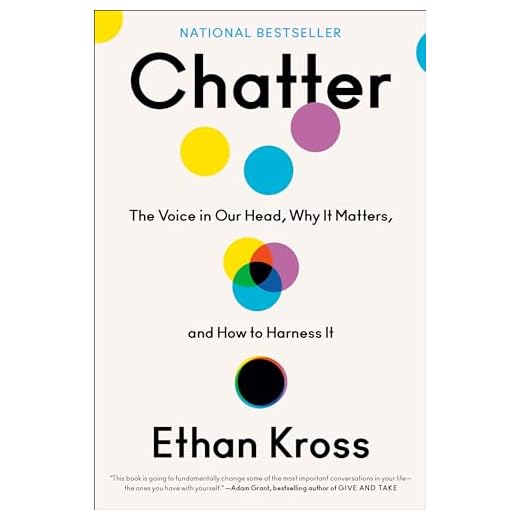


#1: Chatter — Best overall
Ethan Kross
Kross’s lab work on why the voice in your head turns on you under stress — and the tested exits: distanced self-talk, temporal distancing, awe, order. The rare science book with an appendix you’ll actually use.
- A working scientist’s own lab distilled — mechanisms, not vibes
- The toolbox appendix is genuinely usable: distanced self-talk, temporal distancing, awe, tidying
- Honest about trade-offs — venting to friends, it shows, often makes chatter worse
- Readable case-driven prose that never dumbs down the research
- Tool-per-chapter structure can feel like a listicle wearing a lab coat
- Light on clinical-grade rumination — this is for the worried well, not severe depression
#2: Women Who Think Too Much — The research classic
Susan Nolen-Hoeksema
From the researcher who defined rumination: why going over it again deepens depression instead of resolving it, who’s most vulnerable, and the evidence-based ways out. Titled for her gender-gap data, useful to every ruminator.
- From the researcher who defined rumination — the science is first-hand
- Clear on the central finding: replaying problems degrades problem-solving while feeling thorough
- Concrete breaking-free strategies organized by life domain
- The gender-gap analysis explains who gets caught and why
- The title narrows the audience the content deserves — men ruminate too
- Early-2000s examples and framing show their age
#3: The Worry Trick — Best on worry
David A. Carbonell
Worry survives by impersonating preparation. Carbonell’s CBT program is built on the trick: stop arguing with what-ifs, stop seeking certainty, and treat the alarm as noise — with humor that makes the medicine go down.
- The best single reframe on the shelf: worry as a con that sells uncertainty as danger
- Counterintuitive CBT moves — humoring the what-ifs, scheduling worry — that actually starve the loop
- Genuinely funny, which lowers the guard the worry needs
- Precise on why arguing with worry and seeking reassurance backfire
- Focused on worry — backward-looking rumination gets less coverage
- The paradoxical techniques need real commitment before they feel sane
#4: Get Out of Your Mind and Into Your Life — Best deep program
Steven C. Hayes
The founder of ACT’s workbook: thoughts defused rather than debated, discomfort accepted rather than managed, and a life steered by values instead of by the loop. Heavier lifting, deeper foundation.
- The full ACT arsenal from its founder — defusion, acceptance, values, committed action
- Built for minds that out-argue every reframe: you stop debating thoughts entirely
- Worksheet-dense — a program, not a pep talk
- The values work reorients life beyond symptom relief
- The heaviest lift on the shelf — exercises demand sustained effort
- ACT jargon (cognitive fusion, experiential avoidance) takes adjustment
#5: The Untethered Soul — Best contemplative
Michael A. Singer
The spiritual treatment of the inner roommate: notice the voice, stop identifying with it, and let energy pass instead of closing around it. Light on method, potent on perspective.
- One genuinely liberating idea: you are the awareness hearing the voice, not the voice
- The inner-roommate framing makes the loop instantly visible and slightly absurd
- Short chapters that work as repeated medicine rather than one-time reading
- Bridges readers from self-help toward contemplative practice
- Method-light — notice and release is nearly the whole toolkit
- The energy language will lose strictly secular readers in places
#6: Soundtracks — Most practical
Jon Acuff
Overthinking as retired soundtracks playing on repeat — audit them (is it true, helpful, kind?), replace them, and borrow better ones. The lightest book here, and the easiest to actually do.
- The most immediately actionable frame: thoughts as soundtracks you can audit and replace
- Three-question test — true, helpful, kind? — is portable and fast
- Funny, light, and honest about the author’s own broken loops
- The borrowed-soundtrack move (steal better thoughts) lowers the creative burden
- Thin on the science underneath — mechanisms live in Kross and Nolen-Hoeksema
- Business-book DNA shows: anecdotes and catchphrases carry a lot of weight
2 more titles round out our list, all shown in the quick picks above: Don’t Believe Everything You Think by Joseph Nguyen (2022) — the minimalist case against thought-chasing; Stop Overthinking by Nick Trenton (2021) — 23 techniques, no theory required.
How the top picks compare
|
Best overall
Chatter
|
The research classic
Women Who Think Too Much
|
Best on worry
The Worry Trick
|
Best deep program
Get Out of Your Mind and Into Your Life
|
Best contemplative
The Untethered Soul
|
|
|---|---|---|---|---|---|
|
|
|
|
|
|
|
| Our rating | 9.0 /10 | 8.7 /10 | 8.7 /10 | 8.6 /10 | 8.4 /10 |
| Format | Psychology / science | Psychology | CBT self-help | ACT workbook | Spirituality / psychology |
| First published | 2021 | 2003 | 2016 | 2005 | 2007 |
| Price | $14.48 | $11.70 | $11.93 | $24.94 | $10.23 |
| BUY NOW | BUY NOW | BUY NOW | BUY NOW | BUY NOW |
How to choose an overthinking book
-
Which loop is yoursBackward rumination and forward worry respond to different tools.Look forNolen-Hoeksema for replay and self-blame; Carbonell when the loop runs on what-ifs and reassurance-seeking.AvoidGeneric 'stop negative thinking' books that never distinguish the two — the mechanics matter.
-
Science, program, or reframeThe shelf offers explanations, workbooks, and single liberating ideas.Look forKross for mechanisms with tools, Hayes for the full program, Singer or Nguyen for the perspective shift that makes tools unnecessary on good days.AvoidReading about overthinking as a higher form of overthinking — pick one practice and run it for two weeks.
-
How entrenched it isA busy mind and clinical rumination are different sizes of problem.Look forAcuff or Trenton for everyday churn; Hayes, Carbonell, or a therapist when the loop is eating sleep, work, and mood.AvoidTreating rumination that tracks with depression as a productivity issue — it's a clinical signal, and the depression shelf is next door.
How we chose these books
-
Firsthand reading
Rankings start from our editors’ full reads of every title on the list — including the slow middles and the failed first attempts — not from publisher copy.
-
Reader-review analysis
We mined verified-purchase reviews, Goodreads consensus, and Reddit reading threads for recurring, specific complaints: print size, abridgments, translation quality, abandonment points.
-
Edition comparison
Where multiple translations or editions exist, we compared them and linked the printing most readers should actually buy — and flagged the known trade-offs.
Which overthinking book should I read first?
Chatter — Kross explains why the voice misfires and hands you the tested exits. Pair it with The Worry Trick if your loop is anxious what-ifs, or Women Who Think Too Much if it’s backward-looking replay and self-blame.
Is overthinking the same as anxiety?
They overlap but aren’t identical. Worry is the cognitive engine of anxiety; rumination the engine of low mood. Overthinking is the shared loop — and it responds to the same core moves: distance from the thought, attention outward, action despite uncertainty.
Why can't I just stop overthinking?
Because suppression backfires — commanding a thought to leave books it a return visit. The books that work don’t teach stopping; they teach changing your relationship to the loop: distancing (Kross), defusion (Hayes), or refusing the worry con (Carbonell).
Does journaling help or make it worse?
Depends on the mode. Expressive writing and structured worry-postponement help; open-ended venting can become rumination with a pen. Kross’s rule of thumb: write to get distance and make meaning, not to relive the loop in longhand.
Bottom line
Kross for the science and the toolbox, Nolen-Hoeksema for the rumination research, Carbonell for the worry con, Hayes when the mind argues back. The loop isn’t analysis — it’s the feeling of analysis, and distance is the exit.