The Best Books on Procrastination: What the Science Says About Finally Starting
Procrastination research converged on an uncomfortable finding: it's not a time-management problem, it's an emotion-management problem — we delay to escape how a task makes us feel. The books that help are the ones built on that insight. Eight picks, ranked, from the science to the pep talks.
The best book on procrastination is Neil Fiore’s The Now Habit — still the deepest treatment of why we delay and the only classic built on the insight that procrastination is anxiety management, not laziness. Add Pychyl’s short Solving the Procrastination Puzzle for the modern science, and The War of Art if the stalled thing is creative.
- It's mood repair, not laziness The research consensus: we procrastinate to escape the feelings a task triggers — anxiety, boredom, resentment, self-doubt — trading tomorrow’s self for tonight’s relief.
- Self-forgiveness outperforms self-punishment Studies found students who forgave themselves for procrastinating procrastinated less on the next exam — shame is fuel for the cycle, not a cure.
- Start ugly, start small Every serious book converges on the same lever: shrink the first action until starting is easier than avoiding — motivation follows action, not the reverse.
This guide is part of our psychology books to understand yourself silo — procrastination is self-knowledge territory disguised as a scheduling problem: what you avoid maps what you fear.
Why you procrastinate — the actual mechanism
The field’s core finding, laid out in Pychyl’s work and Steel’s Procrastination Equation: procrastination is short-term mood repair. The task triggers something unpleasant — anxiety about being judged, boredom, resentment at the assignment itself — and avoidance deletes the feeling instantly. The relief is real and the lesson your brain learns is real, which is why the habit deepens. Time-management systems fail here because the calendar was never the problem; the feeling was.
Fiore saw this decades before the research caught up: The Now Habit is built on the observation that procrastinators are often perfectionists whose self-worth is welded to performance — delay protects the self-image, because a rushed job explains a bad result. His counterintuitive prescriptions follow: schedule the guilt-free play first, use the “unschedule,” start for fifteen minutes with no commitment to finish. The goal is dismantling the threat, not tightening the discipline.
Which book fits which stall
For the general case, The Now Habit plus Pychyl’s Solving the Procrastination Puzzle — the second is barely a hundred pages of distilled research and pairs perfectly with Fiore’s program. If your stalled thing is creative work — the book unwritten, the studio unentered — Pressfield’s The War of Art names the enemy Resistance and treats showing up as a professional discipline; it is a sermon rather than a study, and for creative paralysis sermons work. Burka and Yuen’s Procrastination goes deepest on roots — family history, fear of success as well as failure, control battles.
The rest of the shelf serves specific readers. Steel’s Procrastination Equation is for the analytically minded — expectancy, value, impulsiveness, delay, with the math shown. Getting Things Done earns its place for one insight: much delay is really ambiguity, and Allen’s “next physical action” question dissolves it. Eat That Frog! is the honest pep talk — thin science, useful energy. And Burkeman’s Four Thousand Weeks is the deep end: some procrastination is your life telling you the task belongs to someone else’s values — the existential diagnosis the productivity shelf can’t make.
Independently researched and ranked by our editorial team. As an Amazon Associate, this site earns from qualifying purchases made through the links below.




#1: The Now Habit — Best overall
Neil Fiore
Perfectionism, protected self-worth, and the unschedule — Fiore’s program treats delay as a threat response, not a character flaw, and its tools have outlived every productivity fad since.
- The core diagnosis — delay as anxiety management protecting self-worth — fits more procrastinators than any other model
- The unschedule remains the single cleverest scheduling idea in the genre
- Guilt-free play as strategy, not indulgence — decades ahead of the research
- Tools still work verbatim thirty-five years later
- The 1980s workbook prose shows its age
- Light on the modern research vocabulary — Pychyl supplies what Fiore intuited
#2: Solving the Procrastination Puzzle — Best science, shortest
Timothy A. Pychyl
The field’s leading researcher distills it: mood repair, implementation intentions, self-forgiveness, and ‘just get started.’ The highest insight-per-page ratio on this list.
- The field’s leading researcher, distilled to under 110 pages
- Mood repair, implementation intentions, self-forgiveness — the actual evidence, plainly stated
- ‘Just get started’ is defended rigorously, not offered as a platitude
- Perfect pairing with Fiore — the science under the classic program
- Brevity means little hand-holding — it tells you what works and moves on
- Readers wanting deep roots (family history, fear of success) need Burka and Yuen
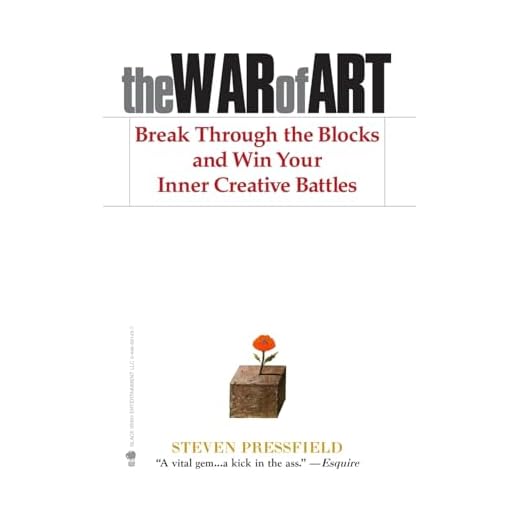
#3: The War of Art — Best for creatives
Steven Pressfield
Not science — scripture. Resistance is the force that keeps you from the work that matters most, and turning pro is the answer. For stalled creative projects, nothing hits harder.
- Names the enemy — Resistance — and the naming alone unsticks people
- The amateur-versus-professional distinction reorganizes creative working life
- Short, aphoristic, built to be reread before work sessions
- For creative paralysis specifically, nothing hits harder
- Not science and doesn’t pretend to be — mechanism-hungry readers will bounce
- The muse-and-angels metaphysics of part three loses some readers
#4: Procrastination: Why You Do It, What to Do About It Now — Best on the roots
Jane B. Burka & Lenora M. Yuen
Two psychologists who ran procrastination groups for decades on the fears underneath delay — including the strange ones: fear of success, of separation, of being controlled.
- The deepest root-cause account — fear of failure, success, control, and separation
- Decades of procrastination-group clinical experience behind every chapter
- Honest that some procrastination defends identity, not just comfort
- Strong practical section often overlooked behind the theory
- Longer and slower than the rest of the shelf
- The psychodynamic frame is a detour if your case is simple task aversion
#5: The Procrastination Equation — Best for analysts
Piers Steel
Steel’s meta-analysis of the entire field, compressed into one equation and a toolkit per variable. The book for readers who want the mechanism before the method.
- The whole research field compressed into one equation — expectancy, value, impulsiveness, delay
- A toolkit chapter per variable, so diagnosis leads directly to method
- Meta-analytic backbone — this is what the data actually say
- Good on environment design against impulsiveness, the variable that matters most
- The formula framing can feel mechanical applied to emotional stalls
- Drier prose than the rest of the shelf
#6: Getting Things Done — The system
David Allen
GTD’s enduring insight for procrastinators: much avoidance is an undefined next step. Capture everything, decide the next physical action, and half the resistance evaporates.
- The next-physical-action question dissolves the ambiguity behind much delay
- Capture-everything relieves the background hum that makes tasks aversive
- The two-minute rule alone repays the book’s price
- A complete trusted system for readers whose problem is overwhelm, not fear
- Full GTD is heavy machinery — many readers need three ideas, not the whole system
- Doesn’t touch emotional avoidance — wrong tool for the anxious stall
2 more titles round out our list, all shown in the quick picks above: Eat That Frog! by Brian Tracy (2017) — quick energy and one good rule — hardest thing first; Four Thousand Weeks by Oliver Burkeman (2021) — when the procrastination is telling you something true.
How the top picks compare
|
Best overall
The Now Habit
|
Best science, shortest
Solving the Procrastination Puzzle
|
Best for creatives
The War of Art
|
Best on the roots
Procrastination: Why You Do It, What to Do About It Now
|
Best for analysts
The Procrastination Equation
|
|
|---|---|---|---|---|---|
|
|
|
|
|
|
|
| Our rating | 9.0 /10 | 8.9 /10 | 8.8 /10 | 8.6 /10 | 8.4 /10 |
| Format | Psychology / self-help | Psychology | Creativity / motivation | Psychology | Psychology / science |
| First published | 1989 | 2013 | 2002 | 2008 | 2010 |
| Price | $18.00 | $13.98 | $17.05 | $11.07 | $13.69 |
| BUY NOW | BUY NOW | BUY NOW | BUY NOW | BUY NOW |
How to choose a procrastination book
-
What kind of stallCreative paralysis, anxious avoidance, and ambiguous to-do lists are different diseases.Look forPressfield for the creative stall, Fiore and Pychyl for anxious avoidance, Allen when the real problem is undefined next steps.AvoidBuying a productivity system for an anxiety problem — tighter scheduling of what you fear increases the fear.
-
Mechanism appetiteSome readers need the why before any how sticks.Look forSteel or Pychyl if understanding drives your compliance; Tracy if you just want the push.AvoidEndless research-reading as a procrastination method in itself — a known and well-documented irony.
-
Shame levelThe evidence says self-punishment feeds the cycle.Look forBooks built on self-forgiveness and small starts — Fiore and Pychyl explicitly; the research is on their side.AvoidDrill-sergeant content if shame is your engine — it produces sprints, then longer collapses.
How we chose these books
-
Firsthand reading
Rankings start from our editors’ full reads of every title on the list — including the slow middles and the failed first attempts — not from publisher copy.
-
Reader-review analysis
We mined verified-purchase reviews, Goodreads consensus, and Reddit reading threads for recurring, specific complaints: print size, abridgments, translation quality, abandonment points.
-
Edition comparison
Where multiple translations or editions exist, we compared them and linked the printing most readers should actually buy — and flagged the known trade-offs.
Which procrastination book should I read first?
The Now Habit — Fiore’s diagnosis (delay as self-worth protection) fits more readers than any other, and his tools are concrete. Pair it with Pychyl’s hundred-page Solving the Procrastination Puzzle for the current science; the two cover the territory between them.
Is procrastination just laziness?
No — the research is unambiguous. Procrastinators typically work hard, late, and anxiously; the delay is emotion regulation, escaping what the task makes them feel. Laziness doesn’t lie awake at 2 a.m. hating itself. That reframe alone — from character flaw to feeling to be handled — is half the cure.
Why does self-forgiveness help procrastination?
Because shame is the cycle’s fuel: feeling terrible about delaying makes the task even more aversive, which triggers more avoidance. The well-known study found students who forgave themselves for procrastinating on one exam procrastinated less on the next. Cutting the shame cuts the aversion.
What if I only ever procrastinate on one particular project?
That’s diagnostic gold. Global procrastination suggests habits and mood repair; selective procrastination usually means the specific project carries a specific threat — judgment, perfectionism, or the possibility that it’s the wrong project. Burka and Yuen dig at those roots; Burkeman asks the values question directly.
Bottom line
Fiore for the classic program, Pychyl for the science in one sitting, Pressfield for the stalled creative work, Burkeman when the avoidance might be information. Forgive yourself, shrink the first step, start ugly — the motivation arrives after.