Jungian Archetypes Explained: What Jung Meant, and What He Did Not
Most of what circulates online as Jungian archetypes is not from Jung: not the list of twelve, not the personality quiz, not the fixed illustrations.
This page starts with what the term does not mean, then works through the figures Jung actually wrote about: the persona, the shadow, the anima and animus, the Self, and the mythic figures such as the wise old man, the mother, the child and the trickster. It ends with where the idea is contested and which books put you in front of Jung’s own words.
For Jung, an archetype is an inherited tendency to form certain kinds of image, not the image itself and not a personality type. He never fixed a number; the popular wheel of twelve comes from The Hero and the Outlaw, a 2001 branding book by Margaret Mark and Carol Pearson. The figures he did write about include the persona, shadow, anima and animus, Self, wise old man, mother, child and trickster, and the theory has little empirical support.
Three things Jungian archetypes are not
There is no canonical list of twelve. Search for Jungian archetypes and you will meet a wheel: the Innocent, the Sage, the Explorer, the Outlaw, the Magician, the Hero, the Lover, the Jester, the Everyman, the Caregiver, the Ruler and the Creator. That wheel was assembled for brand strategy in The Hero and the Outlaw, a 2001 book by Margaret Mark and Carol Pearson, building on Pearson’s earlier self-development writing. It borrows Jung’s vocabulary and some of his figures, but Jung never produced a fixed set. He wrote about a handful of archetypes at length, mentioned many others in passing, and said more than once that their number could not be settled. The wheel is a reasonable tool for writing ad copy. It is not his theory.
An archetype is not a personality type. “You are a Caregiver” is a typology statement: it sorts people into boxes. Jung did write a typology, Psychological Types (1921), the book the Myers-Briggs indicator was later built from, but that is a separate part of his work about introversion, extraversion and four mental functions. Archetypes are not categories of person. In Jung’s account everyone carries all of them as potentials, and they show up as figures in dreams, myths and the people we react to, not as a label you wear. The same caution applies here as on our page about attachment styles and why they are not fixed types: the popular version turns a pattern into an identity.
An archetype is not the picture. This is the distinction that matters most and the one popular accounts drop. Jung separated the archetype as such, which he thought could never be seen directly, from the archetypal images through which it appears. A wise figure may arrive as a robed elder, a grandmother, a schoolteacher or a talking animal. On Jung’s view, what is inherited is the disposition to organise experience into that shape; the costume comes from your culture and your life. Publishing one fixed illustration per archetype does exactly what Jung said could not be done. For where archetypes sit among the other ideas on this site, our guide to core psychology concepts, from transference to the shadow gives the wider map.
Archetype as such versus archetypal image in Jung's writing
Jung’s earlier term was primordial image, and his early writing does sometimes sound as if whole pictures were inherited. He tightened this over time. In his later essays, especially On the Nature of the Psyche, he treats the archetype as something closer to an instinct seen from the inside: a predisposition, empty of content, that shapes how certain kinds of experience get organised. One image he used was the axial system of a crystal, which fixes the structure the crystal will grow into without containing any actual crystal. Only when experience fills the structure do you get an image you can describe.
This is also where the archetypes connect to Jung’s idea of the collective unconscious: a layer of the psyche shared by the species rather than built from personal memory. The personal unconscious, in his scheme, holds forgotten and pushed-away material from your own history; the collective layer holds the archetypal dispositions. The distinction is what set Jung apart from Freud, and it is the part of his work mainstream psychology left behind. Our page on what the unconscious means for Freud, Jung and modern research sets out that argument and what the evidence does and does not show.
The practical consequence is that an archetype is recognised by its function, not its appearance. A guide figure helps the hero at a turning point and then withdraws; a trickster upends whatever order is in place. Two figures that look nothing alike can carry the same archetype, and two that look identical may not. That makes the idea flexible for reading myths and dreams, and, as the last sections explain, hard to test.
Persona and shadow: the archetypes nearest the surface
The persona takes its name from the Latin word for an actor’s mask. It is the face you present to the world: the professional manner, the role at a family gathering, the version of yourself that fits what a setting expects. Jung did not treat it as fake or bad; social life needs it. The trouble starts when someone identifies with the mask so completely that nothing is left behind it, the doctor who is a doctor even at home. He discussed the persona at length in Two Essays on Analytical Psychology.
The shadow is the archetype most people actually meet. It is everything about yourself you have decided is not you, and it is not simply your evil side: it holds disowned strengths as often as disowned faults, what later Jungians called the golden shadow. You usually find it indirectly, through a disproportionate irritation at a trait in someone else, which is why it overlaps with what psychology calls projection, the habit of seeing your own qualities in others. Our full page on the Jungian shadow and what it is not covers the work of acknowledging it, which is acknowledgement rather than elimination.
Anima and animus, and why Jung's gender framing has dated
Jung’s terms for the contrasexual element in the psyche are the anima, the feminine image in a man, and the animus, the masculine image in a woman. In his account this inner figure appears in dreams and fantasies, and it is projected onto real people, which he used to explain the overwhelming, out-of-proportion quality of falling in love with someone you barely know. He treated it as a bridge to the deeper unconscious, a step past the shadow. The central treatment is in Aion, where the shadow, the anima and animus and the Self each get a chapter.
This is the part of the theory that has aged worst. It rests on assumptions about what is masculine and feminine that were ordinary in Jung’s era and are widely questioned now, and his descriptions of the animus in particular can read as a catalogue of complaints about opinionated women. Many contemporary Jungian writers keep the underlying idea, that each of us carries an inner figure unlike the conscious self, while dropping the strict pairing of anima with men and animus with women. Any current reading should hold the idea and the dated framing apart.
The Self as Jung's archetype of wholeness
Jung capitalised the Self to separate it from the everyday self. The ego, in his scheme, is the centre of consciousness: the part that says I. The Self is the centre and the whole of the psyche, conscious and unconscious together, and he called it the archetype of wholeness. It tends to appear in images of order and completeness: circles, squares, mandalas, a divine child, a figure who seems to know more about you than you do. Jung drew his own mandalas for years and came to read them as pictures of the psyche reorganising itself.
The Self matters because it is what the other archetypes are moving toward in Jung’s account of development. That process he called individuation: becoming a whole person rather than a better one, integrating what the conscious personality has excluded, starting with the shadow. He placed it mostly in the second half of life and gave it no completion point. Our page on individuation, Jung’s idea of becoming whole follows that process step by step.
Wise old man, mother, child, trickster: Jung's mythic figures
Beyond the structural archetypes, Jung wrote separate essays on figures he found across myth, religion and folklore, most collected in volume 9, part 1 of the Collected Works, The Archetypes and the Collective Unconscious. The wise old man, discussed in his essay on the spirit in fairy tales, is the guide who appears when the hero is stuck and offers insight rather than force: the hermit, the magician, the old woman at the crossroads. The mother archetype covers far more than a parent: it includes nurture and fertility, but also the devouring side, the witch and the swallowing sea. Jung insisted on that double face.
The child archetype points forward rather than back. In Jung’s essay on it, the divine or abandoned child of myth stands for potential, the future personality not yet formed, which is why it so often appears as a fragile infant who survives against the odds. The trickster, which he wrote about in a commentary on Paul Radin’s study of Native American trickster myths, is the shape-shifter and rule-breaker: clumsy, crude, funny, and the source of change because it refuses whatever order is in place. Jung also wrote about the hero, the maiden and rebirth, and he never claimed these figures made a complete set.
Read side by side, these essays show what Jung was actually doing: comparative reading of myths, alchemical texts and patients’ dreams, looking for recurring structures. That method has influenced literary criticism and the study of myth far more than it has influenced psychology, and it is worth reading in that spirit.
One dream figure read two ways: the quiz versus Jung
Take a composite reader we will call Dana, in her late forties. She takes an online quiz and is told she is a Caregiver, with a paragraph about warmth and self-sacrifice. Around the same time she has a recurring dream: an old woman she does not recognise stands in a kitchen and, without saying anything, hands her a key. The quiz has told her something about how she sees herself. It has not touched the dream.
A Jungian reading would not ask which of twelve boxes Dana belongs in. It would ask what the dream figure is doing. An older woman who knows something Dana does not, gives rather than sells, and appears at what may be a turning point carries the shape Jung associated with the wise old man and with the positive side of the mother. The archetype is that shape. The particular woman, the kitchen and the key are the archetypal image, built from Dana’s own memories and culture.
The reading would then turn personal: what in Dana’s waking life feels locked, and what capacity she has been leaving to other people. This is where it overlaps with the shadow, since the key might stand for an authority she has disowned in herself. None of this proves anything about inherited structures; a non-Jungian would explain the same dream through ordinary memory and concern. What the example shows is the difference in kind: the quiz assigns an identity, while Jung’s frame treats the figure as a question about the dreamer.
Where the archetype theory is contested, and why
Mainstream academic psychology does not use archetypes or the collective unconscious, and it is worth being plain about why. The first problem is testability. If an archetype can appear as almost any image, then almost any image can be read as confirming it, and it becomes hard to say what observation would count against the theory. The second is the evidence Jung offered. It was mostly interpretive: parallels between patients’ dreams and myths they supposedly had not read. Critics have shown that some of his best-known cases are weaker than he presented them, since the patient may well have met the material through ordinary cultural channels.
The third problem is inheritance. Jung needed some way for image-forming tendencies to be passed down, and no known mechanism carries anything so specific. Defenders reply that he meant something closer to general predispositions, and there are researchers who argue that evolved tendencies in perception and attachment could do some of the work Jung assigned to archetypes. That is a modest, plausible claim. It is also much smaller than the theory as Jung wrote it.
A useful test is to ask what an archetype predicts. If the claim is that most cultures tell stories about a helper who appears at the hero’s lowest point and then withdraws, that is a modest prediction about narrative and it holds up reasonably well. If the claim is that you are a Sage and should build your career around it, that is typology in Jungian costume, and nothing in his work supports it. Jung remains influential in therapy practice, in the humanities and in how people read their own dreams; our guide to the best books on dreams covers his approach alongside the scientific ones.
Where to read Jung on archetypes in his own words
Jung’s own essays on archetypes are dense, and volume 9 of the Collected Works is not a place to start cold. The three books below get you to his ideas in a sensible order: the illustrated overview first, then an anthology of the original essays, with the short introduction as a map if you want one. For the wider order across all of Jung’s books, see our guide to which Carl Jung books to read first.

Carl G. Jung and collaborators
Jung’s last project, conceived for a general audience and published in 1964, after his death. He wrote the opening chapter, Approaching the Unconscious; his collaborators wrote the rest, including chapters on myth, individuation and symbolism in art. It is the clearest way to see archetypal images in practice. The trade-off is that much of the book is not by Jung himself.

Edited by Joseph Campbell, translated by R. F. C. Hull
Joseph Campbell’s selection from the Collected Works, in the standard Hull translation. It includes essays on the structure of the psyche and the collective unconscious, so you read Jung’s own argument rather than a summary. It is long and demanding, and it works best after an overview.
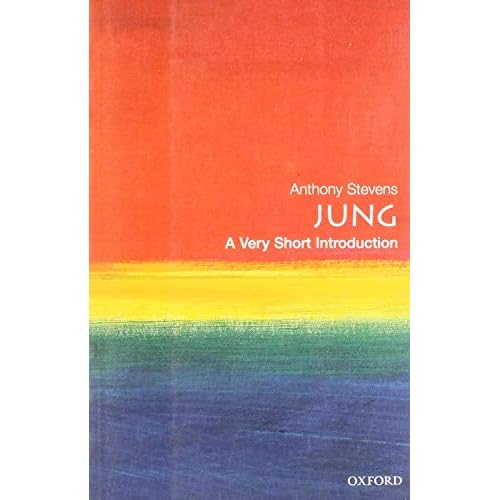
Anthony Stevens
Anthony Stevens, a Jungian analyst, sets out Jung’s main ideas, archetypes included, in a small Oxford paperback. It is a sympathetic account, so read it for structure rather than for the criticism. Useful as a map before or alongside the primary texts.
What are the 12 Jungian archetypes?
There are none in Jung’s own work. The twelve-archetype wheel comes from The Hero and the Outlaw, a 2001 brand-positioning book by Margaret Mark and Carol Pearson. Jung never fixed a number.
What are the main archetypes Jung wrote about?
The persona, the shadow, the anima and animus, and the Self, plus mythic figures he traced in separate essays: the wise old man, the mother, the child, the trickster, the hero and rebirth.
Is an archetype the same as a personality type?
No. Jung’s typology of introversion, extraversion and four functions is a different part of his work. Archetypes are potentials everyone carries, appearing as figures in dreams and myth, not categories of person.
What is the difference between an archetype and an archetypal image?
The archetype as such is an inherited tendency that cannot be seen directly. The archetypal image is the particular figure it takes, such as a grandmother or a hermit, whose details come from your culture and life.
Is the collective unconscious accepted by psychologists?
Not as Jung framed it. It is hard to test, his evidence was mostly interpretive, and no mechanism for inheriting such tendencies is known. His influence today sits mainly in therapy practice and the humanities.
Is the shadow an archetype?
Yes. Archetype is the general category; the shadow is one archetype within it, holding what you have decided is not you, including disowned strengths.
Jung's archetypes are a theory about form, not a list of types
Set aside the wheel of twelve and the quiz results and what remains is a claim that the mind organises experience into recurring shapes, which appear as images drawn from your own life. The persona, shadow, anima and animus, Self and the mythic figures are Jung’s best-known examples, not a closed set. The idea is useful for reading myths and dreams and has little empirical support as psychology; hold both of those at once.