Milan Kundera Books in Order: Where to Start with the Novelist of Lightness
Kundera wrote novels that think — essayistic, erotic, political, and built around one obsession: what a single, unrepeatable life can mean. Exiled from Czechoslovakia, banned at home, he became Europe's great novelist of memory and forgetting. Here are his eight essential books in the right order.
Start Milan Kundera with The Unbearable Lightness of Being — the masterpiece, and the fullest statement of his great question: does life’s unrepeatability make it weightless or precious? Then The Book of Laughter and Forgetting for the wilder form, and The Joke to see where it all began.
- One question runs through everything Einmal ist keinmal — ‘once is never’: if life happens only once, unrepeatable and unrehearsed, does that make it unbearably light? Every major Kundera turns this stone.
- The novels think on purpose Kundera interrupts his stories to essay — on kitsch, forgetting, litost — and considers the interruptions the point; he called the novel the form where thought stays exploratory.
- Read the Czech period first The books written in and about Czechoslovakia — The Joke through Immortality — are the essential core; the late French novellas are codas for the converted.
This guide is part of our existentialism for readers silo — Kundera turned Nietzsche’s eternal return into a novel and made lightness versus weight the century’s most readable existential question.
Lightness, weight, and kitsch — the Kundera questions
The Unbearable Lightness of Being opens not with a character but with Nietzsche — the eternal return — and the counter-thought that defines Kundera: our lives happen once, without rehearsal or repeat, einmal ist keinmal. From that metaphysical coin flip come Tomas and Tereza, Sabina and Franz: lightness as freedom that risks meaninglessness, weight as commitment that risks crushing. That a novel of ideas became a global bestseller says everything about how good the storytelling is under the philosophy.
His other great coinage is kitsch — not bad taste but “the absolute denial of shit”: the sentimental lie that existence is harmonious and death has been arranged elsewhere. Political kitsch, romantic kitsch, the categorical agreement with being — Kundera treats it as totalitarianism’s aesthetic and everyday life’s temptation. Readers of this site will hear the existential rhyme: kitsch is death-denial with better production values, and the novels are devices for catching yourself mid-denial.
The reading order that works
Start with The Unbearable Lightness of Being — it is the masterpiece and the fullest single statement. Then The Book of Laughter and Forgetting, the stranger, wilder book: seven movements in variation form on memory, erasure, and the organized forgetting his country was subjected to — the book that got his citizenship revoked. Third, The Joke: the début, where a postcard prank (‘Optimism is the opium of the people!’) destroys a life and the whole machinery of his themes appears already assembled.
After the core: Immortality is the biggest and most essayistic — his last Czech-language masterwork, on the immortal gestures and images we mistake for selves. Laughable Loves, the early stories, is the funniest — Don Juans undone by their own games; the right sampler for hesitant readers. The Art of the Novel is his aesthetics in essay form and doubles the pleasure of everything else. Of the late French novellas, Slowness is the keeper — a small, sly meditation on speed and memory. Life Is Elsewhere, on the lyric poet as a young executioner of others’ lives, completes the essential shelf.
Independently researched and ranked by our editorial team. As an Amazon Associate, this site earns from qualifying purchases made through the links below.





#1: The Unbearable Lightness of Being — The masterpiece
Milan Kundera
Tomas, Tereza, Sabina, and the question under every life: does happening only once make existence weightless or precious? A novel of ideas that reads like a love story, because it is one.
- The lightness-versus-weight question gives the love story permanent philosophical stakes
- Four unforgettable characters, each an answer to the same question
- The essayistic interruptions deepen rather than derail — the signature trick at its best
- Prague 1968 rendered with the authority of exile
- The narrator’s gaze at his women characters draws fair modern criticism
- Readers wanting immersive realism resist the authorial intrusions
#2: The Book of Laughter and Forgetting — The wilder form
Milan Kundera
Seven movements — story, essay, dream, history — on how regimes and people erase the past. The book that cost him his citizenship and invented his mature form.
- The variation form — seven movements, one theme — is Kundera’s own invention, fully realized
- The strongest thing ever written on organized forgetting and the airbrushed past
- Litost and the circle dances — concepts readers keep for life
- The hinge book: the exile perspective arrives, the mature form clicks
- Not a conventional novel — readers expecting through-plot will be disoriented
- The fragment structure means some movements land harder than others
#3: The Joke — The début
- The complete Kundera machinery already present in the 1967 début
- One sarcastic postcard unspooling into a ruined life — the tightest plot he ever built
- Four narrators, each wrong differently — the polyphony works
- The revenge-into-farce ending is among the great deflations in modern fiction
- Requires some feel for the Czechoslovak 1950s to land fully
- Darker and more conventional than the later variations — a different pleasure
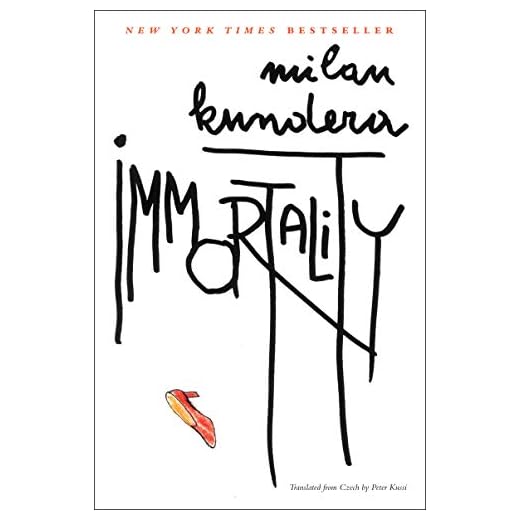
#4: Immortality — The summa
Milan Kundera
Born from a single gesture glimpsed at a pool: the selves we perform, the images that outlive us, Goethe and Hemingway bickering in heaven. His last Czech-language masterwork.
- The biggest canvas — fame, images, gestures, the selves that outlive us
- Goethe and Hemingway bickering in the afterlife: the essay-novel at full liberty
- Agnes’s gesture is one of the great generative images in his work
- Prophetic about image culture decades before the platforms arrived
- The most essayistic and least plotted — wrong as a first Kundera
- Its length tests readers who loved the compression of the early books
#5: Laughable Loves — The funniest
Milan Kundera
Seven stories of Don Juans, hitchhiking games, and borrowed identities where the joke always lands on the joker. The lightest entry point, and Kundera’s own favorite among his early work.
- The lightest entry point — seven seduction games that turn and bite
- The hitchhiking game is an anthology-grade masterpiece
- The Don Juan figures already carry the later novels’ whole philosophy
- Genuinely funny, which the reputation undersells
- Stories, not a novel — less cumulative force than the major books
- The seducer’s-eye view has aged into fair controversy
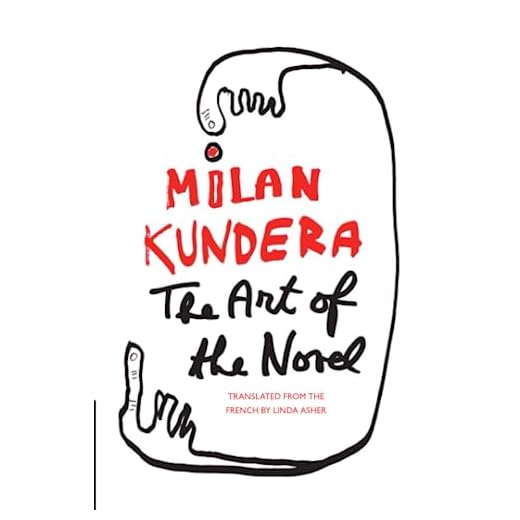
#6: The Art of the Novel — The aesthetics
Milan Kundera
Seven essays on the novel as the form of exploratory thought — Cervantes’ legacy, Kafka, kitsch, and his personal dictionary. Doubles the pleasure of every novel on this list.
- His theory of the novel — exploratory thought, not message delivery — in seven essays
- The Cervantes and Kafka essays reframe the whole European tradition
- The personal dictionary is a delight: kitsch, litost, lightness, defined by their author
- Doubles the pleasure of every novel on the list
- Assumes you’ve read some Kundera — it’s a companion, not an introduction
- Magisterial pronouncements invite argument; he’d have wanted that
2 more titles round out our list, all shown in the quick picks above: Slowness by Milan Kundera (1995) — the French period’s keeper — speed, memory, and hedonism; Life Is Elsewhere by Milan Kundera (1973) — the lyric temperament unmasked — poetry meets the police state.
How the top picks compare
|
The masterpiece
The Unbearable Lightness of Being
|
The wilder form
The Book of Laughter and Forgetting
|
The summa
Immortality
|
The funniest
Laughable Loves
|
|
|---|---|---|---|---|
|
|
|
|
|
|
| Our rating | 9.4 /10 | 9.0 /10 | 8.8 /10 | 8.7 /10 |
| Format | Novel | Novel / variations | Novel | Novel / essays |
| First published | 1984 | 1979 | 1967 | 1990 |
| Price | $13.27 | $11.90 | $10.84 | $15.19 |
| BUY NOW | BUY NOW | BUY NOW | BUY NOW |
How to choose your Kundera
-
Novel or sampler firstThe masterpiece is a commitment; the stories are a taste.Look forUnbearable Lightness if you're ready; Laughable Loves if you want to test the sensibility in an evening.AvoidStarting with the French novellas — they assume you already love him.
-
Tolerance for essayistic interruptionKundera stops the story to think, on purpose, often.Look forThe variation-form books (Laughter and Forgetting, Immortality) if you enjoy the interruptions; The Joke if you want the straightest narrative.AvoidReading the digressions as flaws — in Kundera the digression is the destination.
-
The politics questionThe Czech books are political without being tracts.Look forThe Joke and Laughter and Forgetting for history's weight on private life — the theme totalitarianism handed him.AvoidReading him as only a dissident writer — he insisted the novels are about existence, and they are.
How we chose these books
-
Firsthand reading
Rankings start from our editors’ full reads of every title on the list — including the slow middles and the failed first attempts — not from publisher copy.
-
Reader-review analysis
We mined verified-purchase reviews, Goodreads consensus, and Reddit reading threads for recurring, specific complaints: print size, abridgments, translation quality, abandonment points.
-
Edition comparison
Where multiple translations or editions exist, we compared them and linked the printing most readers should actually buy — and flagged the known trade-offs.
Which Milan Kundera book should I read first?
The Unbearable Lightness of Being — it’s the masterpiece and the fullest statement of his themes, and it needs no preparation. If you’d rather sample first, the stories in Laughable Loves deliver the sensibility in an evening; The Joke is the best starting novel after Lightness.
What does 'the unbearable lightness of being' actually mean?
If, as Nietzsche imagined, everything recurred eternally, each choice would carry infinite weight. But life happens once — unrepeatable, unrehearsed — so nothing can be compared or corrected: einmal ist keinmal. That weightlessness is the lightness, and whether it’s freedom or horror is the novel’s open question.
What did Kundera mean by kitsch?
Not bad taste but ‘the absolute denial of shit’ — the sentimental insistence that existence is harmonious, suffering is meaningful by default, and death has been handled elsewhere. Political rallies, greeting cards, and totalitarian art share it. The opposite of kitsch, for Kundera, is the novel’s job: keeping the uncomfortable questions open.
Should I read Kundera in publication order?
No — start with the mature masterpieces and circle back. The useful order is Lightness, Laughter and Forgetting, The Joke, then Immortality. His revisions complicate strict chronology anyway: he disowned some early work and considered the French texts of his novels definitive.
Bottom line
Unbearable Lightness first and unhurried, Laughter and Forgetting for the invented form, The Joke for the origin, Immortality for the summa. Let him interrupt the story to think — the thinking is the story.