Rilke’s Books: Where to Start With the Poet of the Inner Life
Rilke is the poet people reach for at thresholds — grief, love, vocation, the question of what a life is for. He wrote in German, died in 1926, and sells more today than most living poets, largely on the strength of ten letters he dashed off to a stranger. Here's the shelf, ordered for a reader coming to him now.
Start Rilke with Letters to a Young Poet — ten short letters of counsel that have steadied readers for a century. Then Stephen Mitchell’s Selected Poetry for the essential poems in the best English versions, and the Duino Elegies when you’re ready for the summit. The Book of Hours is the devotional side door.
- Start with the letters, not the poems Letters to a Young Poet needs no German, no context, and no tolerance for difficulty — it’s the whole Rilke sensibility in ten pieces of advice to a stranger.
- Translation is everything Rilke in English is only as good as his translator — Mitchell’s versions are the modern standard, and comparing translations of one elegy teaches you more than any introduction.
- The difficulty is the point The Duino Elegies took ten years and a famous storm of inspiration to finish — they repay slow reading aloud, and nobody gets them entirely on the first pass.
This guide is part of our books on the meaning of life silo — Rilke’s entire project was the inward turn the meaning question demands: live the questions now, he told his young poet, and the answers arrive as a life.
The shape of Rilke's work
Three phases, roughly. The early Rilke of The Book of Hours (1905) prays his way toward a God he’s half-inventing — circling, ecstatic poems that read like devotions with the theology left open. The middle Rilke, transformed by watching Rodin work in Paris, wrote the New Poems — the famous “thing-poems” like “The Panther,” where attention itself becomes the discipline — and the strange, modern prose Notebooks of Malte Laurids Brigge (1910), his only novel: a young poet in Paris learning to see, and being unmade by it.
Then the late summit: the Duino Elegies, begun in 1912 at a cliffside castle and finished in a legendary rush in February 1922, alongside the Sonnets to Orpheus — fifty-five sonnets written in the same few weeks. The elegies ask the permanent questions — what are we for, why is consciousness both gift and exile, what do the dead ask of us — in some of the most quoted lines of the century: Who, if I cried out, would hear me among the angels’ hierarchies? This is the Rilke the poets revere; earn it by arriving via the letters and the selected poems first.
Where to start and how to continue
Letters to a Young Poet first — an hour’s read, a lifetime’s furniture. Go slowly with letter four (live the questions) and letter seven (love as two solitudes that protect and border and greet each other). Then Mitchell’s Selected Poetry, which gathers the essential poems across all periods with facing German — the single best one-volume Rilke in English. If the devotional register is what draws you, Barrows and Macy’s Rilke’s Book of Hours is the warmest translation of the early poems.
After that, choose your door. The Duino Elegies and Sonnets to Orpheus together are the masterpiece — read aloud, a few pages a night. Malte is for fiction readers and anyone who loved the letters’ Paris. The Dark Interval collects his astonishing condolence letters — Rilke on grief is Rilke at his most useful, and this small book belongs beside any loss. And Corbett’s You Must Change Your Life tells the Rodin years as a double biography — the best way in for readers who want the life before the work.
Independently researched and ranked by our editorial team. As an Amazon Associate, this site earns from qualifying purchases made through the links below.



#1: Letters to a Young Poet — Start here
Rainer Maria Rilke
Advice to a young stranger that became a permanent companion for readers at thresholds: live the questions, go into yourself, love your solitude. The essential first Rilke.
- The complete Rilke sensibility — solitude, patience, lived questions — in ten short letters
- Letter four’s ‘live the questions’ and letter seven on love justify the century of devotion
- Readable in an evening; furnishing for a lifetime
- No poetry tolerance required — the ideal first Rilke
- Advice register can obscure that the poems go deeper still
- Kappus’s side of the correspondence is absent in most editions
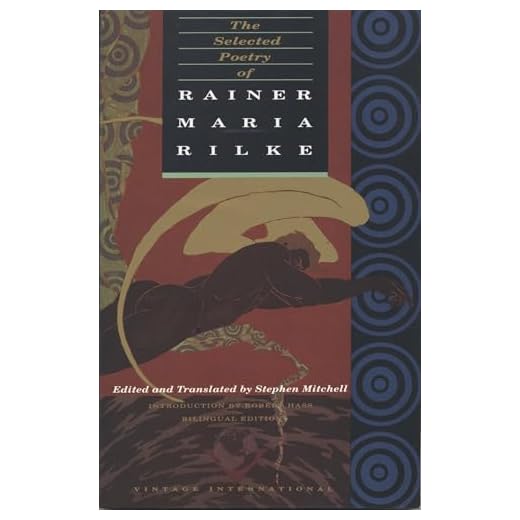
#2: The Selected Poetry of Rainer Maria Rilke — Best collection
Rainer Maria Rilke, trans. Stephen Mitchell
Mitchell’s versions — The Panther, the Archaic Torso’s ‘You must change your life,’ generous selections from the Elegies and Sonnets — with facing German. The one-volume Rilke.
- Mitchell’s translations are the modern English standard — exact and speakable
- The essential poems across all periods, with facing German
- The Panther, the Archaic Torso, and generous Elegies selections in one volume
- The single best one-volume Rilke in English
- Selections mean the full Elegies and Sonnets cycles need the dedicated volume
- Mitchell’s smoothness occasionally sands down Rilke’s strangeness
#3: Duino Elegies & The Sonnets to Orpheus — The masterpieces
Rainer Maria Rilke, trans. Stephen Mitchell
Ten elegies and fifty-five sonnets on consciousness, death, praise, and what humans are for — finished in one miraculous month in 1922. Difficult, and worth every rereading.
- Both late cycles complete — the masterpiece, in the standard translation
- The permanent questions — what are we for, what do the dead ask — at maximum pressure
- Facing German rewards even dictionary-level readers
- Repays rereading like almost nothing else in modern poetry
- Genuinely difficult — unearned, it reads as fog; arrive via the letters and selections
- The non-Christian angels and dense syntax need patience by design
#4: The Notebooks of Malte Laurids Brigge — The novel
Rainer Maria Rilke
Fragmentary, haunted, decades ahead of its time: Malte’s Paris notebooks on fear, poverty, childhood, and the work of seeing. The prose counterpart to the letters.
- Rilke’s only novel — the prose counterpart to the letters’ Paris
- Decades ahead of its time formally: fragments, memory, the fear chapters
- The ‘learning to see’ passages are the poet’s method in prose
- Haunting on childhood, poverty, and the terror under city life
- Plotless by design — readers wanting story will drift
- The bleakness is real; this is not the consoling Rilke
#5: Rilke's Book of Hours — The devotional
Rainer Maria Rilke, trans. Barrows & Macy
Love Poems to God — the young Rilke circling the divine in ecstatic, doubting verse. Barrows and Macy’s translation made these the most quoted Rilke after the letters.
- Barrows and Macy’s translation is the warmest Rilke in English
- The early prayer-poems — ecstatic, doubting, circling — in their most quotable form
- The devotional door: spiritual readers often connect here first
- Facing German, compact and giftable
- Free translations — scholars prefer stricter versions
- Early Rilke’s repetitive circling isn’t the mature precision
#6: The Dark Interval — Best on grief
Rainer Maria Rilke, trans. Ulrich Baer
Letters to the bereaved, gathered as a book of consolation: death as the side of life turned away from us, grief as love’s continuation. Small, precise, genuinely helpful.
- Rilke’s condolence letters — the most directly useful thing he wrote
- Death as the side of life turned away from us: consolation that doesn’t lie
- Baer’s translation and notes frame each letter’s occasion
- Small enough to give, precise enough to help
- Occasional letters mean some repetition of themes across recipients
- Not an introduction to the poetry — a companion for one occasion
2 more titles round out our list, all shown in the quick picks above: You Must Change Your Life by Rachel Corbett (2016) — Rilke and Rodin — the apprenticeship that made the poet; Rilke on Love and Other Difficulties by Rainer Maria Rilke, ed. John J. L. Mood (1975) — the love-and-solitude passages gathered in one small book.
How the top picks compare
|
Start here
Letters to a Young Poet
|
Best collection
The Selected Poetry of Rainer Maria Rilke
|
The masterpieces
Duino Elegies & The Sonnets to Orpheus
|
The novel
The Notebooks of Malte Laurids Brigge
|
The devotional
Rilke's Book of Hours
|
|
|---|---|---|---|---|---|
|
|
|
|
|
|
|
| Our rating | 9.3 /10 | 9.1 /10 | 9.0 /10 | 8.7 /10 | 8.6 /10 |
| Format | Letters | Poetry | Poetry | Fiction | Poetry |
| First published | 1929 | 1982 | 1923 | 1910 | 1905 |
| Price | $7.82 | $14.21 | $13.81 | $13.39 | $8.85 |
| BUY NOW | BUY NOW | BUY NOW | BUY NOW | BUY NOW |
How to choose your Rilke
-
TranslationRilke in English varies enormously by translator — this choice outweighs every other.Look forMitchell for the standard modern voice; Barrows and Macy for warmth in the Book of Hours; compare one poem across translators before committing.AvoidJudging Rilke from an anonymous public-domain translation — the stiffness is usually the translator's, not his.
-
Prose door or poetry doorThe letters and Malte need no poetry tolerance; the Elegies demand it.Look forLetters first in almost every case — then Selected Poetry before attempting the Elegies cold.AvoidStarting with the Duino Elegies because they're the masterpiece — unearned, they read as fog.
-
What threshold you're atRilke is a poet people arrive at through occasions — grief, vocation, love.Look forThe Dark Interval for loss; letters four and seven for love and vocation; the Book of Hours for the spiritual register.AvoidTreating him as an advice dispenser — the counsel works because the whole sensibility comes with it.
How we chose these books
-
Firsthand reading
Rankings start from our editors’ full reads of every title on the list — including the slow middles and the failed first attempts — not from publisher copy.
-
Reader-review analysis
We mined verified-purchase reviews, Goodreads consensus, and Reddit reading threads for recurring, specific complaints: print size, abridgments, translation quality, abandonment points.
-
Edition comparison
Where multiple translations or editions exist, we compared them and linked the printing most readers should actually buy — and flagged the known trade-offs.
Where should I start with Rilke?
Letters to a Young Poet — ten short letters, readable in an evening, containing the whole Rilke posture: solitude honored, questions lived, difficulty trusted. Then Mitchell’s Selected Poetry for the poems themselves, and the Duino Elegies once the voice is familiar.
What's the best Rilke translation?
Stephen Mitchell’s versions are the modern standard for the major poems — exact and speakable. Barrows and Macy’s Book of Hours is the loveliest early-Rilke volume. There’s no single right answer; comparing translations of one elegy is the fastest education in what each translator trades.
Are the Duino Elegies really that difficult?
Yes and no. The syntax is dense and the angels are not Christian angels, so first passes blur. But read aloud, slowly, a single elegy at a time, they open — the first and ninth are the common favorites. Difficulty here is load-bearing: the poems enact the straining they describe.
Why is Rilke so popular for grief and hard times?
Because he refused the consolations that don’t work. His letters treat death as part of life rather than its opposite, grief as continued relation rather than a problem to solve — and readers in loss report feeling accompanied rather than advised. The Dark Interval exists for exactly this use.
Bottom line
Letters first, Mitchell’s Selected Poetry second, the Elegies when you’re ready — with The Dark Interval beside any grief and Corbett’s biography for the life. Live the questions; the answers arrive as a life.