Books Like Attached: 6 Next Reads on Attachment
Attached gives you a vocabulary in an afternoon. The trouble with a vocabulary that good is that it starts explaining everything, including things it does not explain.
The anxious, avoidant and secure categories are a genuinely useful simplification of decades of research. What comes next depends on whether you want to work on a relationship, understand the actual science, or look at where the popular version oversimplifies.
- Hold Me Tight if you want to work on a relationship you are in
- Becoming Attached if you want the research the categories came from
- Polysecure if the standard framing did not fit your situation
Hold Me Tight by Sue Johnson if you want to act on it inside a relationship, Becoming Attached by Robert Karen for the research the three categories came from, and Polysecure if the standard couple-centred framing does not fit your situation. Keep the framework pointed at yourself, not at a partner.
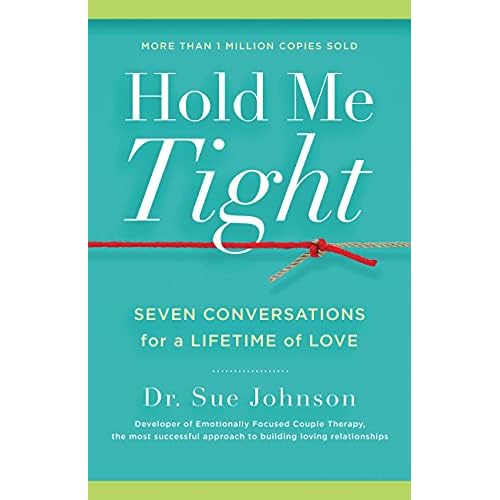


Start here: Hold Me Tight
Sue Johnson · 2008 · 320 pages
Attached tells you what your pattern is. This tells you what to do about it with the person you are actually with — seven structured conversations, drawn from a couples therapy with a real evidence base, that address the specific moments where attachment patterns collide.
- Concrete conversations rather than concepts
- Built on a therapy with genuine trial support
- Works whether or not your partner reads it
- Addresses the specific moments things go wrong
- Aimed at couples, less use if single
- The conversation scripts feel stilted at first
- Assumes both people want to repair
Worked example: one couple, three next books
A composite reader finishes Attached, recognises herself as anxious and her partner, with some satisfaction, as avoidant, and goes looking for the next book. Which one she should pick depends on a question the first book does not ask: what does she want to do with the vocabulary?
If the answer is to change something in the relationship she is in, the next book is Hold Me Tight, and the reason is practical. Sue Johnson’s seven conversations are structured so that both people do them, which quietly removes the thing Attached made possible: one partner holding the theory over the other. The first conversation, on recognising the pursue-and-withdraw cycle, is the one most couples report as the turning point, and it works precisely because it refuses to assign a style to either person.
If the answer is that the categories started to feel too neat, the next book is Becoming Attached, and it will be a slower read. Robert Karen’s history shows that Ainsworth’s three patterns came out of one-year-olds in a laboratory room, that the fourth was added later, and that the move to adult romance was an inference that the field argued about for a decade. Readers who come out the other side still find the framework useful, but they stop saying “I’m an avoidant” as if it were a blood type.
If the answer is that her situation is not the one the standard books assume, because the relationship is not a couple, or not only a couple, Polysecure is the one that was written for her, and it also happens to contain the clearest short account of attachment trauma in this group. All three next books sit on the attachment theory reading list; the attachment styles explainer covers what the four patterns actually claim; and the popular psychology hub is where this cluster sits among its neighbours, including the codependency shelf that many Attached readers reach next and the couples therapy books that Hold Me Tight belongs to. Whichever she picks, the test of the next book is the same as the test of the first: it should make her more curious about her own side of the pattern and less certain about her partner’s.
The most common misuse of this material is deciding someone else’s attachment style and then interpreting everything they do through it. The framework is most useful pointed at yourself. Used on a partner it tends to become a way of winning arguments rather than understanding them.
Side by side
Picking the right entry point
Understanding your pattern and changing how a relationship goes are separate projects.
The popular version compresses decades of nuanced work into three labels.
Most attachment writing assumes a monogamous couple. Not everyone’s does.
The framework is a tool for self-understanding, and it degrades quickly when used to categorise someone else.
What should I read after Attached?
Hold Me Tight by Sue Johnson if you want to act on it within a relationship. Becoming Attached by Robert Karen if you want the research the three categories were drawn from. Polysecure if the standard couple-centred framing does not fit your situation.
Are attachment styles real?
The underlying research is substantial, particularly on infant attachment. Extending it to adult romantic relationships is a real but debated inferential step, and the popular three-category version compresses a much more nuanced literature.
Can your attachment style change?
The research treats these as patterns rather than fixed types, and they can shift with circumstance, relationship and deliberate work. The popular framing makes them sound more permanent than the evidence suggests.
Is it useful to know my partner's attachment style?
Cautiously. Recognising patterns can build understanding, but deciding someone’s category and reading their behaviour through it tends to become a way of winning arguments. The framework works best pointed at yourself.
The short version
- Practice and theory are different next books
- The categories are patterns, not fixed types
- Diagnosing a partner rarely helps
Hold Me Tight if you want to use it in a relationship, Becoming Attached if the three categories started feeling too neat, Polysecure if your situation is not the one the standard books assume. And keep the framework pointed at yourself.